
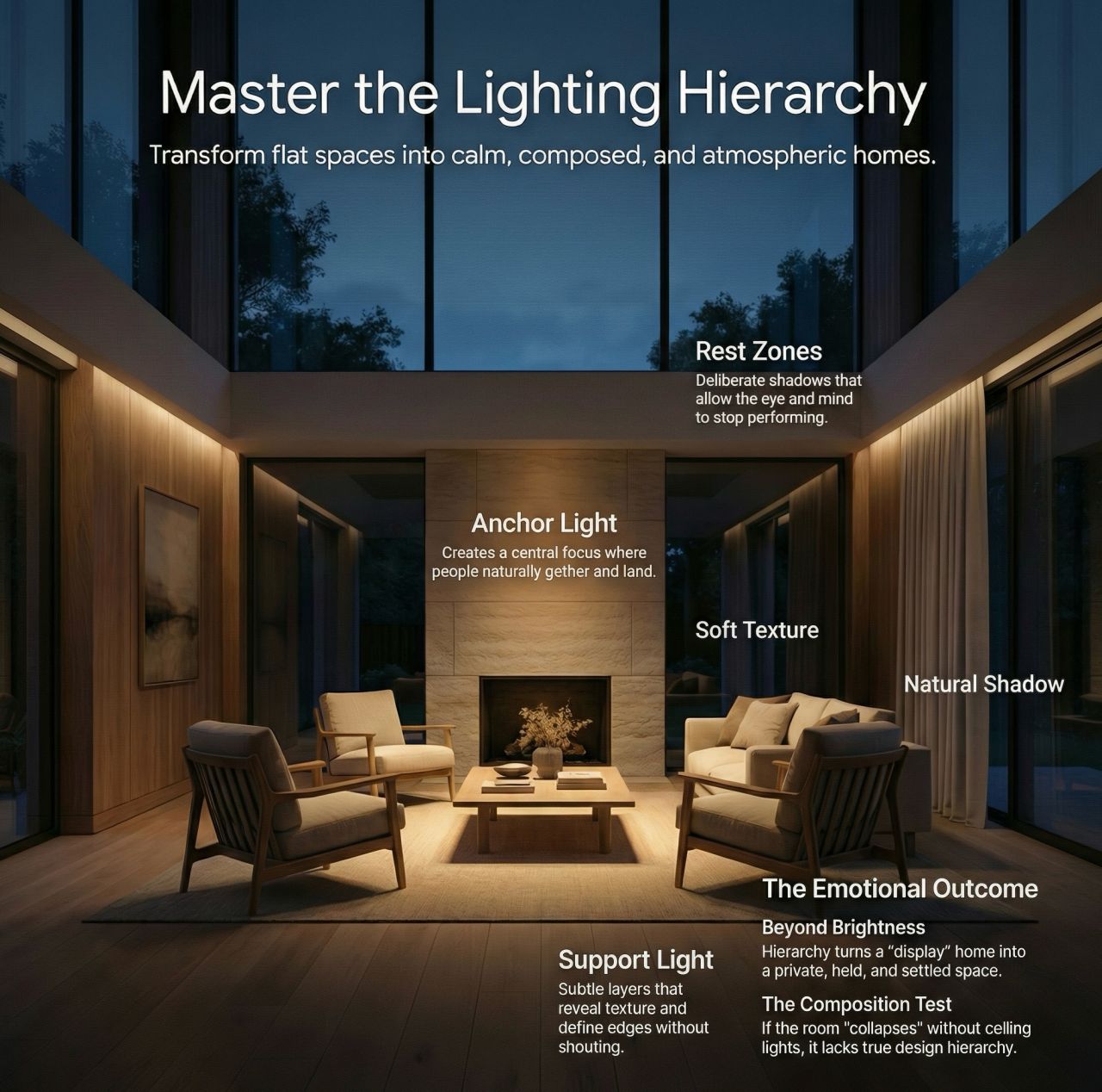
Most homes do not have a lighting problem. They have a hierarchy problem. Step into a lot of “high end” rooms after dark and you see the same pattern. Everything is lit the same. Everything is treat…
2141917100 viral
Lighting Design7 months ago

LinkedIn Content Strategy & Writing Style
Most design for the sun. I design for life after dark. Acclaimed Author on emotional lighting, I fix the flaw no one talks about, spaces that fade when the sun goes down. Now you know who to call to create your vision.
1 person tracking this creator on ViralBrain
Michael Bamling positions himself as a specialist in emotional lighting design, moving beyond mere aesthetics to address the psychological and physiological impact of "life after dark." His content strategy centers on the tension between daylight-centric architecture and the lived reality of evening environments, championing the transition from "showhome" visibility to circadian-aligned recovery. He is notable for his rejection of the industry’s reliance on uniform ceiling brightness, instead advocating for "darkness on purpose" and the strategic use of shadow to create depth. By framing lighting as a wellbeing intervention rather than a finishing touch, Bamling creates a compelling intersection between luxury interior design, sensory health, and architectural transparency.
2.3K
1.8K
53
6.7
247
1
Most homes do not have a lighting problem. They have a hierarchy problem. Step into a lot of “high end” rooms after dark and you see the same pattern. Everything is lit the same. Everything is treat…
If a home looks incredible and still does not help the client unwind, the design is not complete. It might be finished visually. It is not finished emotionally. That one idea explains a lot of the…
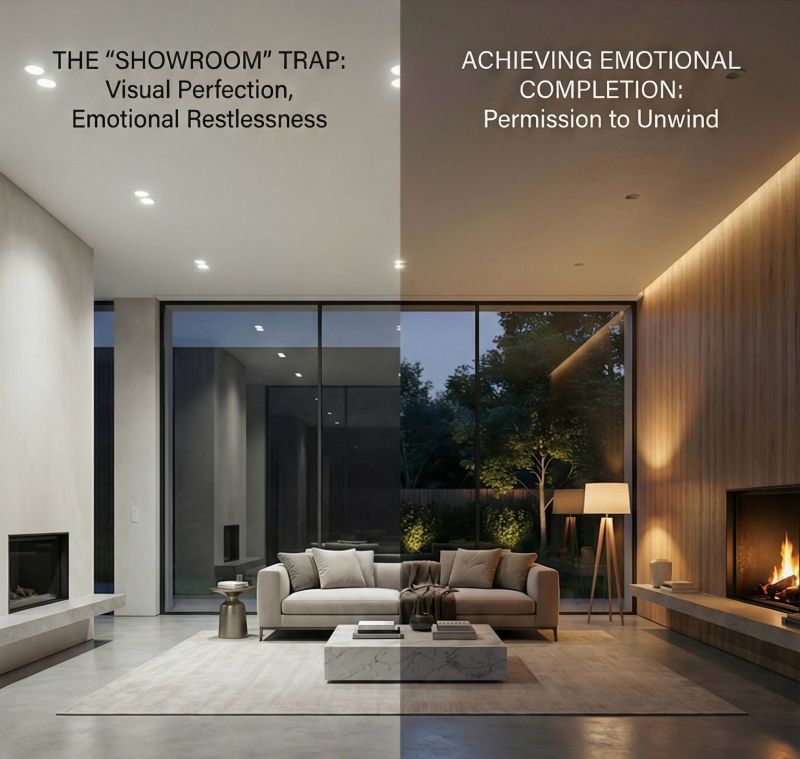
Since the start of the year, I have felt a shift in the design world. Not towards new finishes, bigger budgets, or bolder statements, but towards something far more interesting. Health and wellbeing…
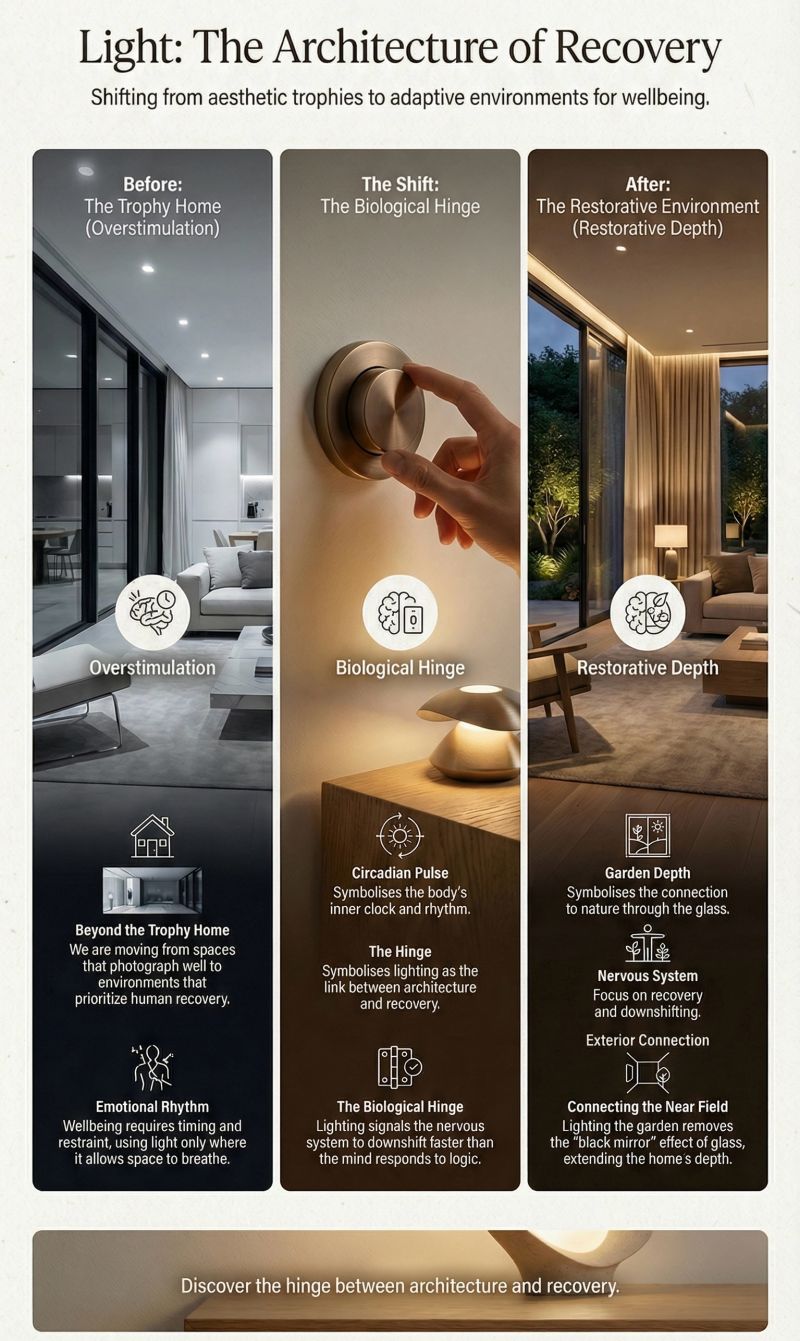
The Fastest Way to Calm a Room? Remove the Glare Glare is one of the quietest ways a beautiful home can fail at night. Not because the lighting is wrong on paper. Because the light is landing in the…

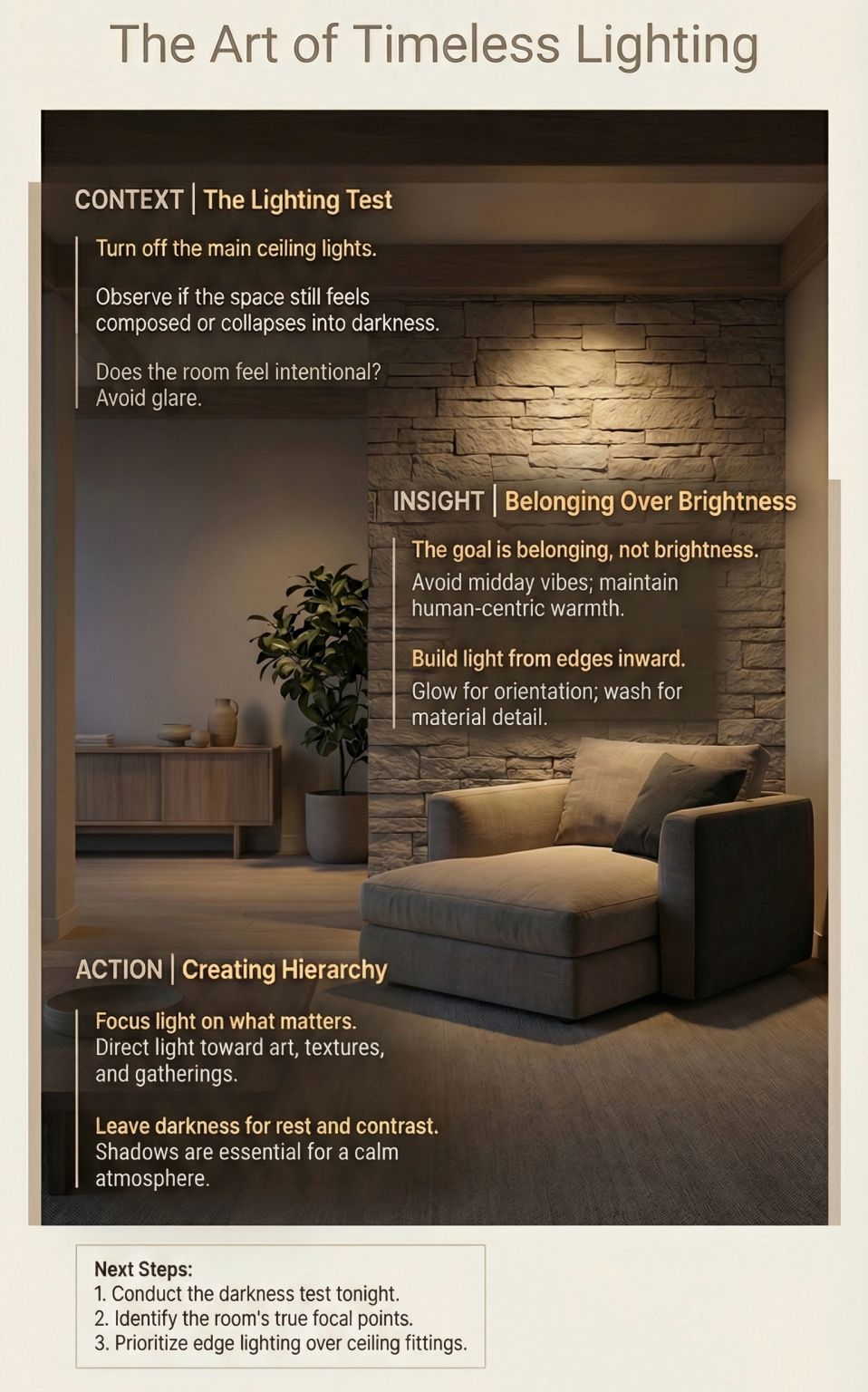
When darkness is allowed to exist on purpose. We have been conditioned to believe a “good” home is one where everything is visible. Every corner covered. Every surface lit. Every ceiling doing the h…

A simple test. Tonight, turn off the main ceiling lights. If your home collapses into darkness, or you are forced into harsh glare from one or two fittings, the scheme was never designed. It was sim…
6.7 posts/week
Posts / Week
1.2 days
Days Between Posts
1
Total Posts Analyzed
HIGH
Posting Frequency
52.66666666666666%
Avg Engagement Rate
STABLE
Performance Trend
420
Avg Length (Words)
HIGH
Depth Level
ADVANCED
Expertise Level
0.86/10
Uniqueness Score
YES
Question Usage
0%
Response Rate
Writing style breakdown
<start of post>
The most expensive mistake in a renovation is designing for the eyes, but forgetting the nervous system.
We spend months choosing the stone. The timber. The exact shade of off-white for the joinery. We obsess over the 'look' of the room in the middle of the day.
But we don't live in a photograph.
We live in a sequence of moments. And the most critical moment for a home is the transition from 'doing' to 'being'.
This is where the lighting usually fails.
If your evening lighting is just a dimmed-down version of your daytime lighting, the room will always feel unresolved. It will feel like a workspace that has been forced to go to sleep.
The body knows the difference.
Glare is the primary culprit. It is the 'noise' of the visual world. When light hits the eye directly from a ceiling fitting, it triggers alertness. It keeps the mind in performance mode.
To fix a room that feels 'flat' or 'cold' at night, you don't need more light.
You need more intention.
Sign in to unlock the full writing analysis
Free tools to help you write, score, and benchmark in the same style.
Other creators worth studying alongside Michael Bamling.

Ed Elson
Co-Host, Prof G Markets
53 Viral Score

Nikolai Golos
Product & Growth at Fluently AI (YC W24) | Improve your English speaking skills with AI
99 Viral Score

Stanislav Beliaev
Co-Founder & CTO at GetFluently.App (YC W24), ex Nvidia
88 Viral Score

Alex Banks
Building a better future with AI
39 Viral Score

Julien Renaux
Software Engineer - AI guru
1,102 Viral Score

Eric Blaauboer
Schrijver van "Je Laatste: stoppen met roken, op weg naar nicotinix"
139 Viral Score
ViralBrain plans, writes, and schedules your LinkedIn content, using official LinkedIn APIs so your account stays safe.
Write like Michael Bamling.