
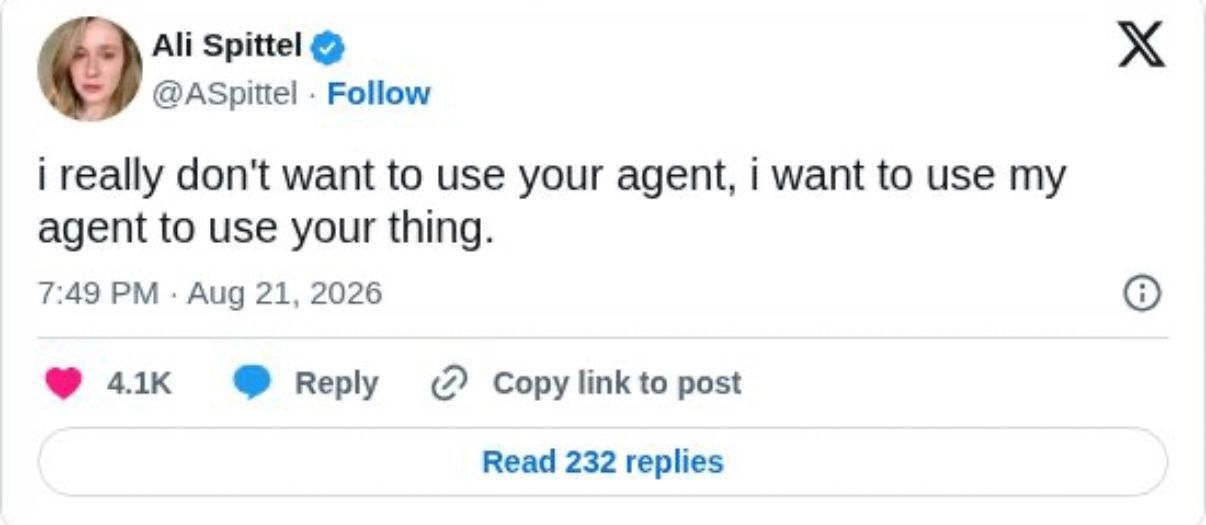
Yeah, this is it isn’t it. I don’t want to use your agent, I want to use mine to use your thing. The web started well didn’t it, the browser is my user agent to use your stuff. I don’t need a differe…
1294788 viral
AI26 days ago
LinkedIn Content Strategy & Writing Style
Independent AI Advisor | AI Implementation & Organisational Design | Author of UNHYPED | Turning AI capability into organisational capability
1 person tracking this creator on ViralBrain
Stuart Winter-Tear positions himself as a high-level architect of the AI-era enterprise, moving beyond simple tech adoption to focus on organisational design and operational capability. His content strategy centers on the "implementation as discovery" thesis, arguing that the true challenge of AI isn't the software itself, but the way it forces a redesign of decision rights, governance, and human-machine coordination. He is notable for his refusal to offer linear, "three-box" solutions, instead treating the enterprise as a complex adaptive sociotechnical system where AI acts as a new form of non-human operational intelligence. The most compelling intersection in his work is the bridge between technical harness architecture and management theory, where he translates complex engineering papers into profound questions about where accountability sits when intelligence is distributed.
55.5K
25.0K
56
14
1
Yeah, this is it isn’t it. I don’t want to use your agent, I want to use mine to use your thing. The web started well didn’t it, the browser is my user agent to use your stuff. I don’t need a differe…
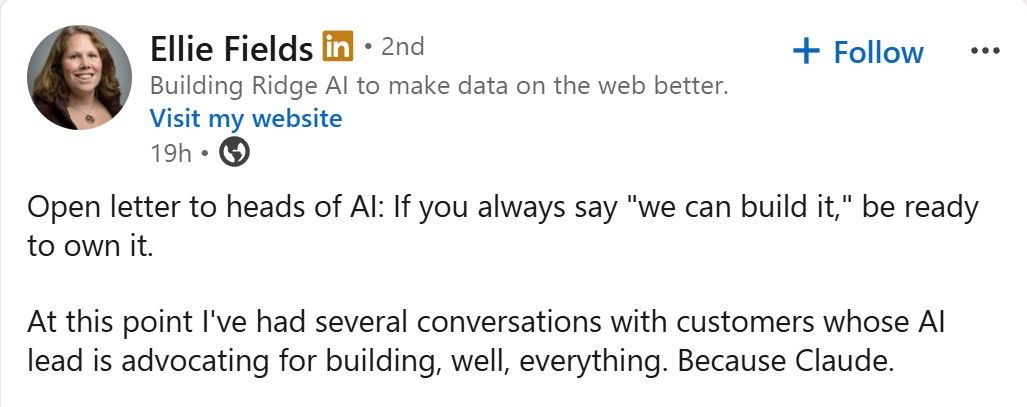
The cost of building software is collapsing faster than the cost of owning software. AI changes the economics of creation, but everything created enters an organisational system: maintenance, integra…
I wanted to briefly explain why I keep writing about the things I do. Adoption, ROI, human skills, management, organisational learning, workflow redesign and governance can look like separate problem…
Me: I work in AI. 8-year-old granddaughter: “Oh, so you basically do ChatGPT.” Yes, darling. Basically. A pretty reasonable eight-year-old summary of the entire AI industry. 😂

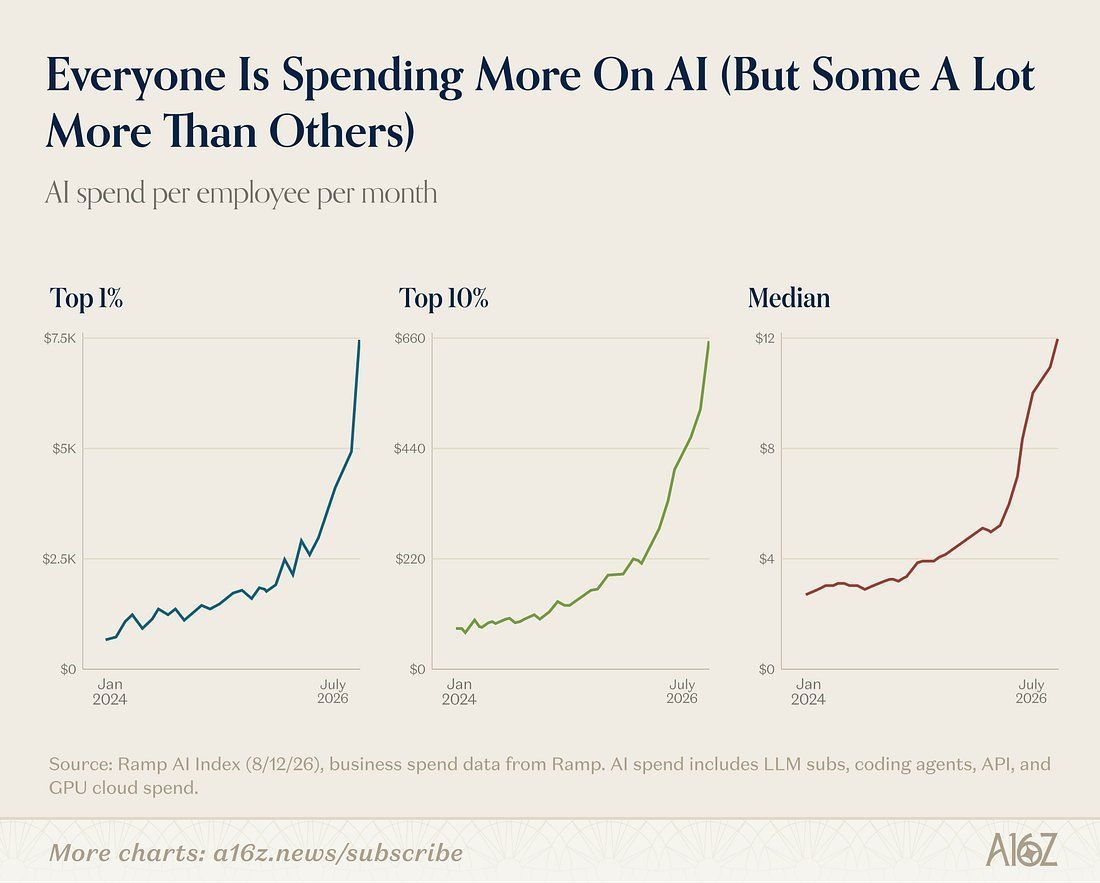
Again, another fairly meaningless proxy for AI success being passed around, with comments like “We’ve never seen an adoption gap like this” and claims that it shows the emergence of “two completely di…
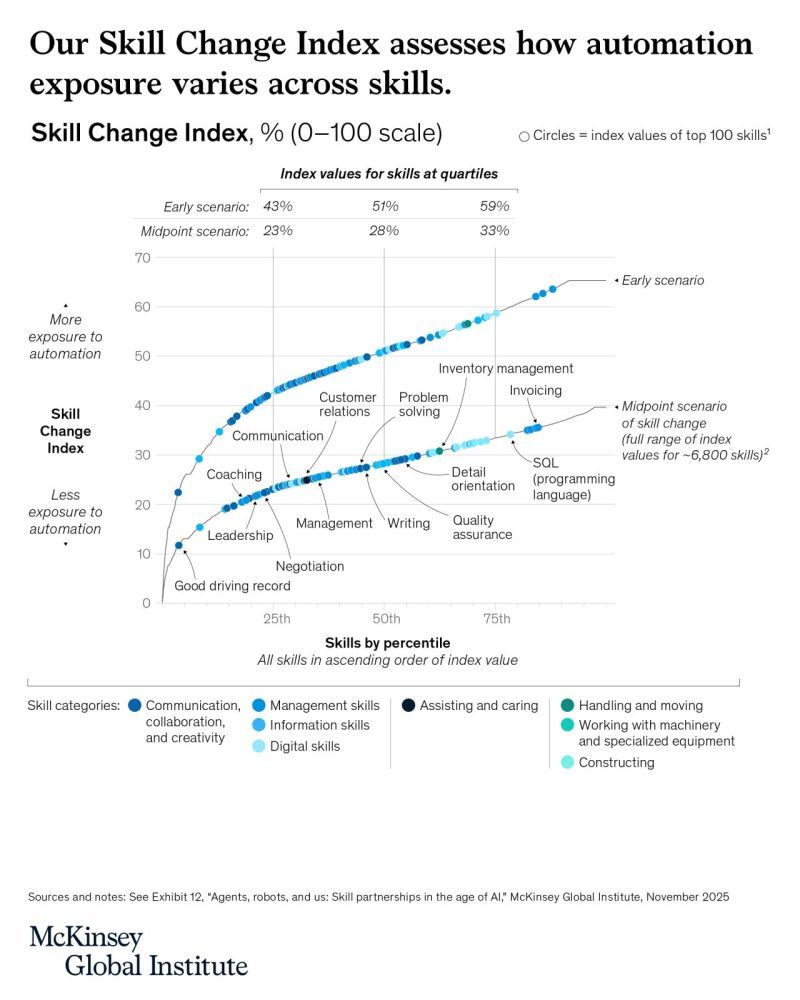
Ah, the pleasant and familiar hum of “some human skills may become more valuable in AI” from McKinsey. I don’t disagree with it, funnily enough. Their Skill Change Index puts things like leadership…
5.0 posts/week
Posts / Week
1
Total Posts Analyzed
HIGH
Posting Frequency
56.3%
Avg Engagement Rate
STABLE
Performance Trend
280
Avg Length (Words)
HIGH
Depth Level
ADVANCED
Expertise Level
0.95/10
Uniqueness Score
YES
Question Usage
0.85%
Response Rate
Writing style breakdown
<start of post>
I’ve been thinking about the difference between 'using AI' and 'being an AI-augmented organisation'.
Most people are currently stuck in the former. They treat the LLM like a faster intern—a way to get the same tasks done in less time. But that’s just efficiency. It isn't transformation.
The real shift happens when you stop looking at the tool and start looking at the workflow.
If a system can now perform the synthesis, the drafting, and the initial critique, why is the process still designed around a human doing those things? We are essentially putting a jet engine on a horse-drawn carriage and wondering why the wheels are falling off.
It’s an operating model problem.
I caught a glimpse of this in a recent paper on 'Agentic Workflows'. The researchers found that when you give an agent the ability to iterate on its own work, the quality doesn't just improve—it compounds.
But here is the catch.
To make that work in a company, you have to change who has the authority to sign off on the 'first draft'. If the human still has to check every single step, you’ve just created a new bottleneck. You’ve traded a production problem for a supervision problem.
How much 'unsupervised intelligence' can an organisation actually tolerate before the governance structure breaks?
Perhaps the goal isn't to automate the work we do now. Perhaps the goal is to design work that only becomes possible when intelligence is abundant and cheap.
Told you it was going to be a big deal.
Give it a think.
<end of post>
Sign in to unlock the full writing analysis
Free tools to help you write, score, and benchmark in the same style.
Other creators worth studying alongside Stuart Winter-Tear.

Hans Stegeman
Chief Economist, Triodos Bank | Columnist | PhD Transforming Economics for Sustainability
68 Viral Score

Mayank Mittal
Head of Strategy@CleverViral | (Replacing fragmented outbound with automated revenue infrastructure)
61 Viral Score

Philip Hemme
Founder & CEO @ Flot.bio
111 Viral Score

Tanay Kothari
CEO at Wispr Flow | IOI Medalist | Forbes 30 under 30 | Stanford CS + AI
229 Viral Score

Jagdish Patel
AgTech Illustrator & Storyteller (Ex-Soil Scientist) | Product Infographics & Explainer Videos for Ag Brands | Soil Science Writer | Visuals for Sales & Product Communication
40 Viral Score

Ethan (Yudian) Zheng
Co-Founder@Jobright.ai | AI PhD | Ex-Twitter AI Lead
10 Viral Score
ViralBrain plans, writes, and schedules your LinkedIn content, using official LinkedIn APIs so your account stays safe.
Write like Stuart Winter-Tear.