
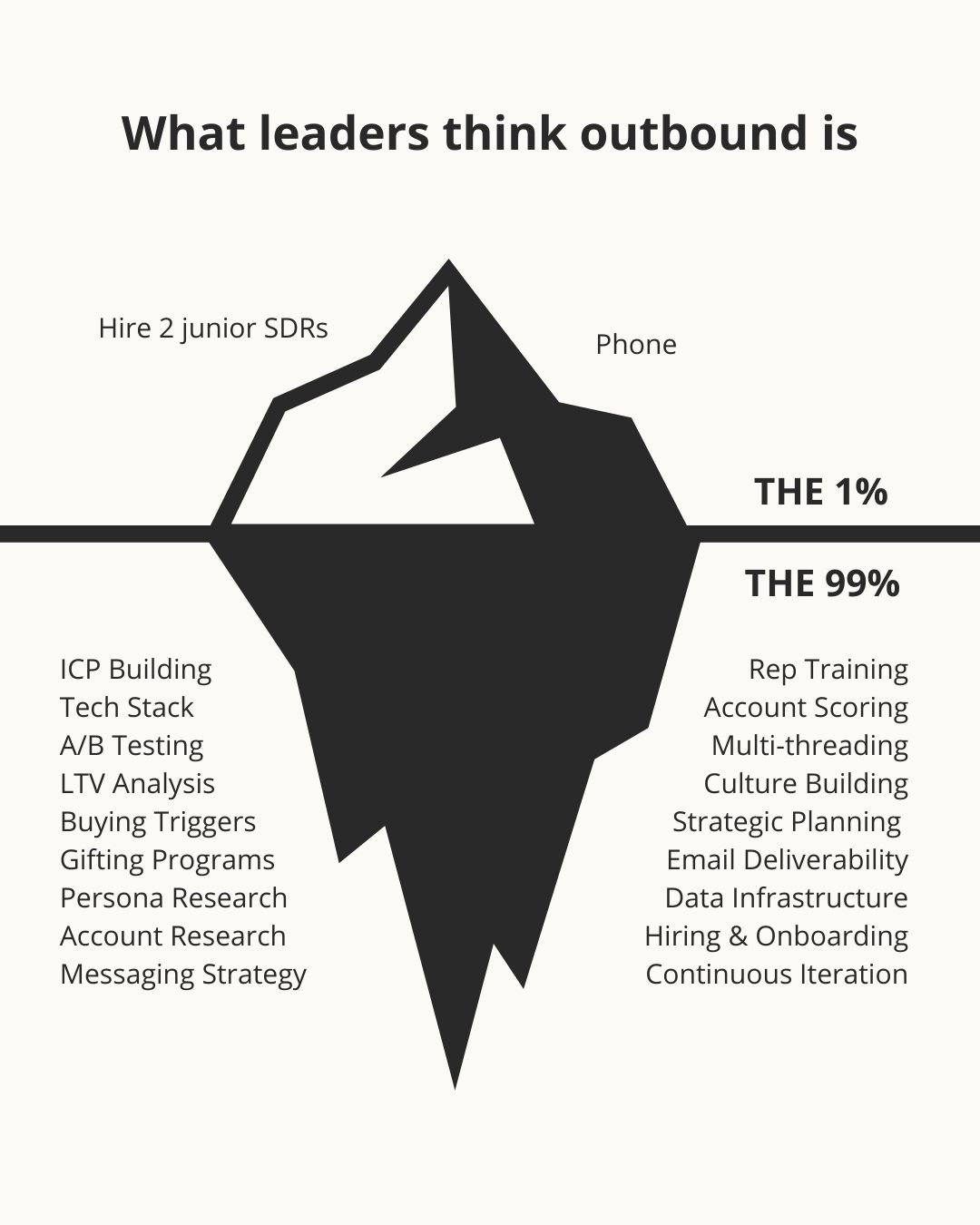
CEO: "We told the team to start doing outbound." 90 days later: nothing. Most leaders think outbound is simple: Hire 2 junior SDRs Buy 1-2 tools Hand them a phone Let them figure out Watch pipeline…
12462810 viral
Sales10 months ago

LinkedIn Content Strategy & Writing Style
I build outbound systems for B2B SaaS | Outbound is a function, not prospecting
1 person tracking this creator on ViralBrain
Elric Legloire positions himself as a high-level architect of outbound systems, moving the conversation away from "spray and pray" tactics toward a rigorous, product-led engineering mindset. His content strategy centers on deconstructing the playbooks of hyper-growth companies like Snowflake and Gorgias, offering a value proposition rooted in strategic prioritization and data infrastructure rather than simple messaging tweaks. He is notable for his "Outbound Chef" persona, which bridges the gap between raw data and actionable "recipes" for B2B SaaS leaders. By exploring the intersection of AI-driven automation and human-centric hiring, Elric provides a sophisticated roadmap for scaling revenue without the traditional bloat of massive, unoptimized SDR teams.
41.6K
26.5K
60
7.8
24
1
CEO: "We told the team to start doing outbound." 90 days later: nothing. Most leaders think outbound is simple: Hire 2 junior SDRs Buy 1-2 tools Hand them a phone Let them figure out Watch pipeline…
My go-to outbound resources that actually make a difference: Not the obvious ones. The ones showing me problems I didn't know existed. 𝗧𝗲𝗮𝗺𝘀 𝗜 𝗦𝘁𝘂𝗱𝘆: Snowflake, Ramp, Rippling, Owner, Pi…
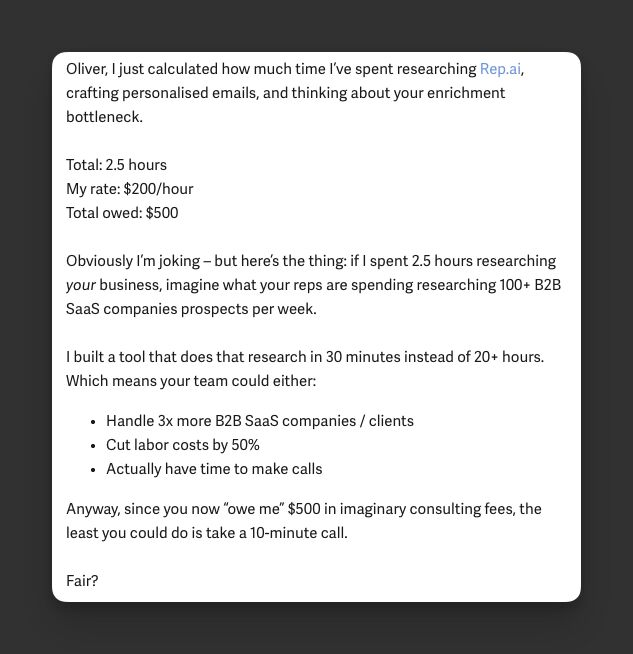
Oliver got a cold email claiming "2.5h of research." But it showed 0 actual research. This is the trust gap destroying outbound in 2025. 𝗧𝗵𝗲 𝗣𝗿𝗼𝗯𝗹𝗲𝗺: When the tactic is "trick you with f…
Scaling outbound from 0 to 2,300 meetings. I sat down with Matthew Roberts, Head of Sales Dev at Mosaic.tech (Acquired by HiBob), who built an outbound machine from scratch. Here are the 5 biggest t…
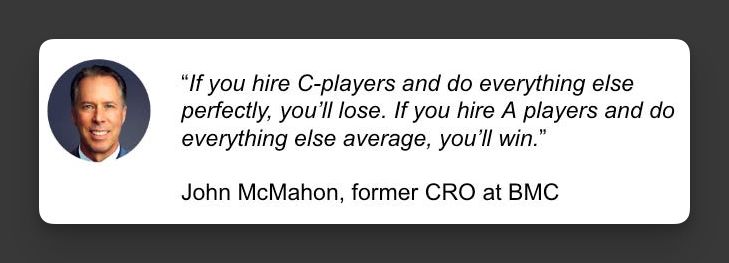
Most outbound leaders focus on optimizing their tech stack. Wrong lever. Your biggest ROI? Hiring A-players. I see this pattern constantly: Leaders spend weeks testing new sales engagement platform…
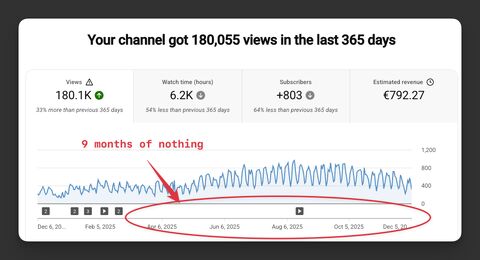
I got too busy. My podcast stopped. Now I'm fixing that. For 9 months, Outbound Kitchen sat there. Silent. I was focused on client work and the newsletter. The podcast, the thing I actually love doin…
7.8 posts/week
Posts / Week
1 days
Days Between Posts
1
Total Posts Analyzed
HIGH
Posting Frequency
59.8%
Avg Engagement Rate
INCREASING
Performance Trend
230
Avg Length (Words)
HIGH
Depth Level
ADVANCED
Expertise Level
0.82/10
Uniqueness Score
YES
Question Usage
0.68%
Response Rate
Writing style breakdown
Overall tone: professional, expert, and opinionated with a conversational edge. Feels like a seasoned operator speaking directly to other GTM / sales leaders and practitioners.
Purpose: to teach outbound strategy, challenge bad assumptions, and position the author as a systems thinker / practitioner (not a theorist).
Style is clear, concise, and highly structured. Almost all content is “utility-first”: frameworks, breakdowns, lessons, and patterns.
Voice is confident and often prescriptive. The author presents strong takes, then backs them up with data, examples, or named authorities.
Semi-formal: more formal than casual social media chatter, but less formal than academic writing.
Uses business jargon comfortably (ICP, TAM, SDR, GTM, RevOps, unit economics) without over-explaining, assuming a knowledgeable B2B SaaS audience.
Uses contractions and colloquial expressions (“That’s the mistake.” “Wrong lever.” “Let them figure out.” “That’s just spray and pray with extra steps.”).
Moderate-to-high energy, but controlled and grounded.
Emotions: frustration with bad practices, excitement about systems thinking, respect for high-performing teams, motivation toward better execution.
Frequent use of tension: “Most leaders think X. Wrong.” “Most teams do Y. That’s why they fail.”
Anger or annoyance is directed at broken systems and lazy thinking, not individuals.
Strong hooks that challenge common beliefs or behaviors (“Most outbound strategies skip straight to tactics.” “Your outbound isn’t broken because ‘cold doesn’t work anymore.’”).
Clear contrast structures: old way vs new way, myth vs reality, belief vs truth, problem vs solution.
Heavy use of mini-frameworks and numbered lists.
Repetition for emphasis: repeating core lines with slight variation (“You can’t message your way out of bad targeting. You can’t A/B test your way out of broken fundamentals.”).
Occasional metaphors tied to cooking (“Outbound Chef”, “recipes”, “throwing spaghetti at a wall”) and physical imagery (“tip of the iceberg”).
Direct, almost blunt statements followed by explanation: “Wrong lever.” “That’s the mistake.” “That’s backwards.”
Primarily second-person (“you”, “your team”, “your outbound”, “your job as GTM leader”).
Occasional first-person singular (“I sat down with…”, “I’ve audited…”, “I spent 20+ hours…”, “I’m back. And I’m doing it differently.”).
Occasional first-person plural when referencing his own teams or shared perspective (“Here’s a framework I’ve started using with my teams.” “We told the team…”).
Uses direct commands frequently: “Do the strategic work first.” “Master your samples before you scale your outreach.” “Stop telling. Start showing.”
Mix of hard directives (“Stop claiming research you didn’t do.” “You nail the motion first… then scale.”) and softer invitations (“If you’re ready to fix it…” “If you want the full breakdown…”).
Sign in to unlock the full writing analysis
Free tools to help you write, score, and benchmark in the same style.
Other creators worth studying alongside Elric Legloire.
Emily Kramer
Founder & Gen Marketer at MKT1 Newsletter + Dear Marketers Podcast | B2B Marketing Advisor
47 Viral Score

Will McTighe
LinkedIn & B2B Marketing Whisperer | Helped 600+ Founders & Execs Build Influence
43 Viral Score

Amy Watts
B2B marketing…but make it ✨fun✨ | Social Strategist + Content Creator 👩🏻💻
545 Viral Score

Mischa Collins
Growing on LinkedIn made simple 🌱 I build personal brands that increase visibility and drive revenue.
238 Viral Score
Colby Kultgen
Founder of 1% Better™ | Former accountant, future author | Follow me for the best self-development content on LinkedIn
67 Viral Score

Charlie Hills
I help you (actually) use AI for content.
96 Viral Score
ViralBrain plans, writes, and schedules your LinkedIn content, using official LinkedIn APIs so your account stays safe.
Write like Elric Legloire.