
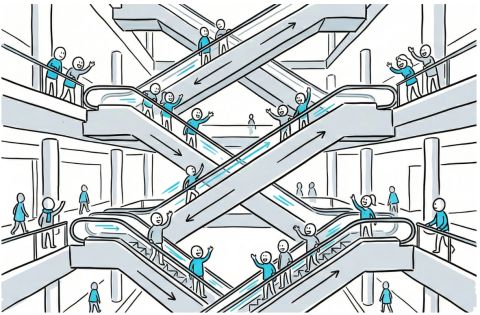
When Moderna combined HR and IT, it was seen as a bold new experiment. But orgs have been building "Chief of Work" style functions for years. We just keep forgetting. During my WeWork (Powered by We)…
642137 viral
Future of Work10 months ago

LinkedIn Content Strategy & Writing Style
Work Operating System Strategist | Aligning People, Place & Tech for Measurable Change | ex-McKinsey, WeWork, JLL, Credit Suisse | Keynote Speaker | Guide of The Workline | LinkedIn Top Voice
2 people tracking this creator on ViralBrain
Phil Kirschner positions himself as a high-level architect of the modern employee experience, operating at the critical intersection of HR, IT, and corporate real estate. His content strategy centers on the "Work Operating System," where he treats organizational design as a product that requires continuous iteration rather than static management. He is notable for his ability to bridge the gap between elite consulting frameworks and the messy reality of change management, often using his McKinsey and WeWork pedigree to validate radical ideas like public employee handbooks or the necessity of a Chief Work Officer. By blending deep historical context with a "no-agenda" community approach through his virtual office hours, Kirschner creates a unique value proposition of operational transparency and adaptive leadership for an era of hybrid work.
23.4K
9.1K
37
6.5
22
1
When Moderna combined HR and IT, it was seen as a bold new experiment. But orgs have been building "Chief of Work" style functions for years. We just keep forgetting. During my WeWork (Powered by We)…
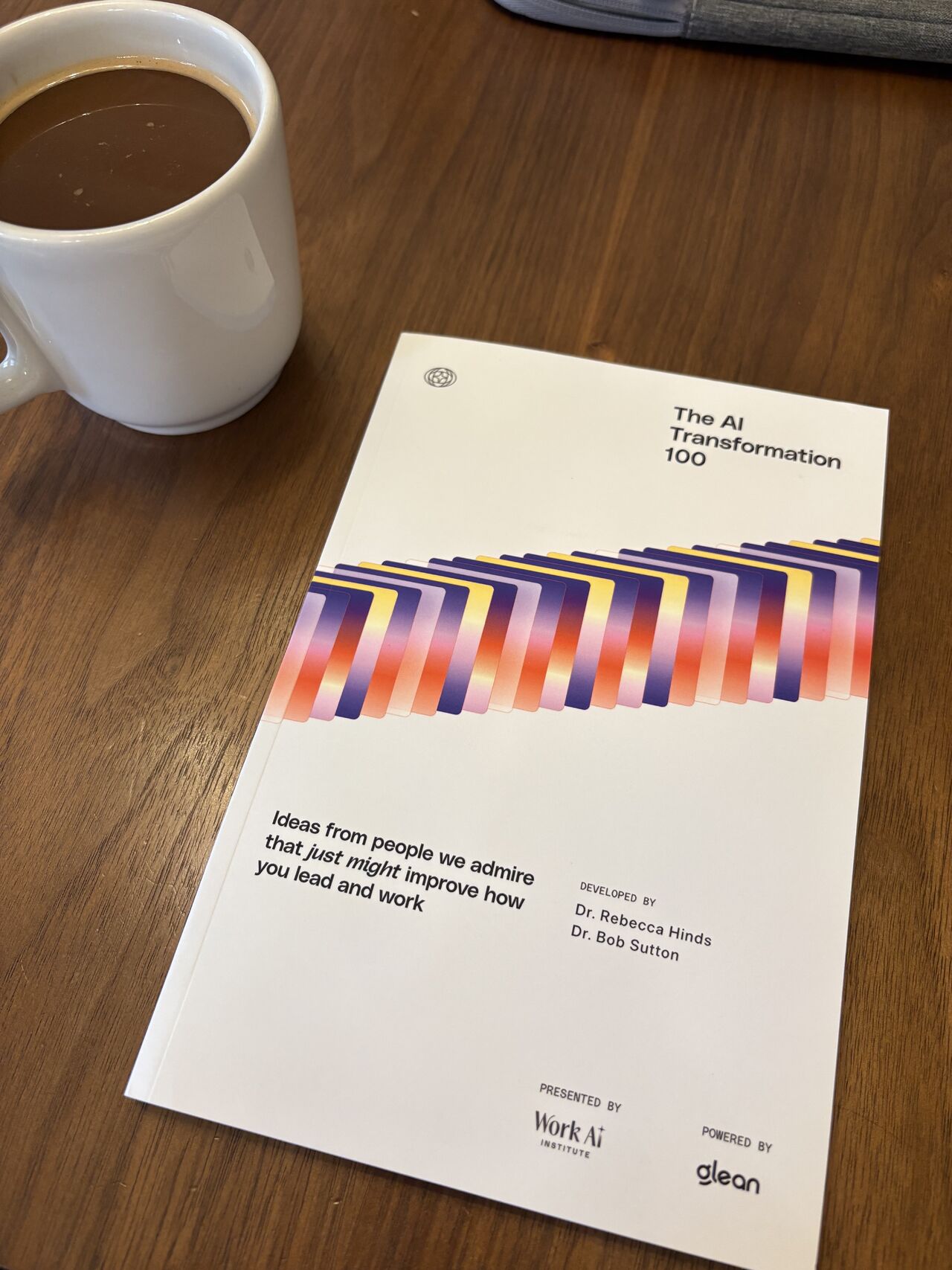
There are so many reasons I'm excited for the AI Transformation 100 report from Glean's new Work AI Institute, but one has to do with my small contribution and a serendipitous sequence of events. Fir…
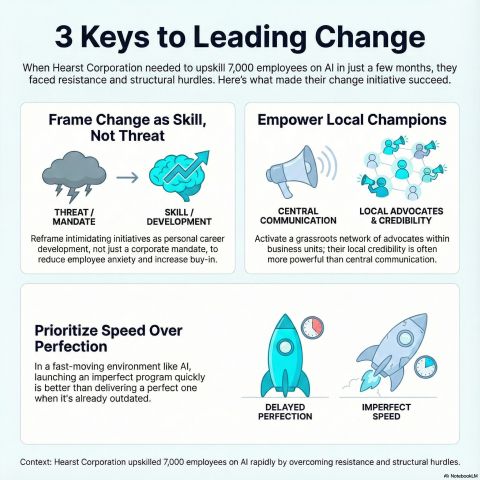
HR gets handed the impossible all the time: "Roll out this transformation in 5 months. The business unit leaders will come around eventually." Maris Krieger, and her L&D colleagues at Hearst, had to…
I've been tracking Chief Work Officer chatter for months, but only just met someone with that actual title... at a startup where the whole team fits in a meeting room! So what is she the "Chief" of, e…
I opened my virtual office doors again today, and eight leaders showed up from homes and offices across the US, a car on the side of the road in France, and a hotel in Türkiye. It's incredible how no-…
I'm opening my virtual office doors again for anyone who wants to meet new people and talk about how work is (or isn't changing). No agenda, no slides, just a chance to share, vent, and meet new peopl…
6.5 posts/week
Posts / Week
1.2 days
Days Between Posts
1
Total Posts Analyzed
HIGH
Posting Frequency
36.6%
Avg Engagement Rate
STABLE
Performance Trend
230
Avg Length (Words)
HIGH
Depth Level
ADVANCED
Expertise Level
8/10
Uniqueness Score
YES
Question Usage
0.6%
Response Rate
Writing style breakdown
Professional but conversational, clearly aimed at a business / LinkedIn audience.
Informative and analytical with a strong storytelling component.
Warm, human, and relational: often name-checks people, thanks collaborators, and highlights others’ work.
Tone is confident and authoritative but not boastful; the writer positions themselves as a thoughtful practitioner and curator rather than a hype-driven guru.
There is light wit and playfulness (e.g., “Try saying that three times fast!”, “How cool is that!?!”) but it never overshadows the core informational goal.
Mid-level formality: polished grammar and vocabulary, but phrased like a smart colleague speaking, not a dense academic article.
Uses contractions freely (“I’ve”, “I’m”, “don’t”, “it’s”) to maintain a natural spoken feel.
Jargon is used selectively and purposefully (“EX,” “org chart,” “cross-functional,” “change program”) but is always grounded in specific examples to stay accessible.
Generally upbeat, optimistic, and curious.
Energy is moderate-to-high but controlled: not breathless or salesy, more like an excited expert sharing something genuinely interesting.
Enthusiasm spikes when highlighting serendipity or clever ideas (“crazy serendipity part”, “How cool is that!?!”).
Excitement about innovative roles or ideas (Chief Work Officer, work as a product, AI transformation).
Respect and admiration for specific people and organizations.
Mild frustration or critique framed positively (e.g., banning notetaker bots framed as sane, practical advice, not a rant).
Rhetorical questions, often to transition the reader into reflection or CTA.
Short, standalone sentences for emphasis (“It worked. Then she left. And the org chart reverted.”).
Parenthetical asides for humor, color, or clarification (“(A converted shopping mall!)”, “(Try saying that three times fast!)”).
Direct quotes from interviewees or article titles to add credibility and texture.
Occasional playful phrasing or loops (“the work of designing work is work worth doing”).
Highlight bullets (🧠, 💪, 🏎️).
Convey tone (👏👏👏, 🤯 ‼️, ⚽️🇺🇸, 👉).
Often brings in very specific, concrete details (numbers of employees, dates, exact phrases like “[TBR]”) to ground the narrative.
Mix of first person singular (“I”, “I’ve been tracking…”, “I opened my virtual office doors…”) and occasional “we” when referencing shared experiences or broader truths.
Questions: “Do you agree…?”, “Do you like the ‘mark as TBR’ approach…?”, “Does your HR org have to pull extra weight…?”
Invitations: “If you’re interested…drop your email here:”
Often gentle but clear imperatives: “Read the whole story…”, “I encourage you to check out the report…”, “You can read more about what happened last time here:”
Tone is invitational rather than pushy: “Curious to hear what the hive mind thinks.”, “Do you agree…?”
Sign in to unlock the full writing analysis
Free tools to help you write, score, and benchmark in the same style.
Other creators worth studying alongside Phil Kirschner.

Maria Inês Amaro
Editor in Chief @TheSocialGrowthEngineers
207 Viral Score

Abhishek T.
AI Search @ vespa.ai
3 Viral Score

Michael T.
Building Cursor
498 Viral Score

Liam Ottley
Founder of Morningside AI, AAA Accelerator & Agentive | AI Educator & Creator of the AI Automation Agency Model
256 Viral Score
Nate Herkelman
Scale Without Increasing Headcount | Founder & CEO @ Uppit AI
82 Viral Score

42 Viral Score
ViralBrain plans, writes, and schedules your LinkedIn content, using official LinkedIn APIs so your account stays safe.
Write like Phil Kirschner.