
The smartphone just declared war on the camera industry Xiaomi just dropped a wild idea: a smartphone with a detachable pro-grade camera lens. A phone that snaps on a real lens with magnets. Yes, ma…
3.6K3572565 viral
AI11 months ago

LinkedIn Content Strategy & Writing Style
#1 Top Voice in AI & Automation | Award-Winning Expert | Best-Selling Author | Recognized Keynote Speaker | Agentic AI Pioneer | Forbes Tech Council | 2M+ Followers ✔️
1 person tracking this creator on ViralBrain
Pascal Bornet positions himself as the premier bridge between high-level executive strategy and the technical frontier of Agentic AI and automation. His content strategy centers on extracting profound business lessons from unexpected analogies—comparing F1 racing margins to corporate efficiency or NFL rule changes to radical digital transformation—to move leaders beyond incrementalism. He is notable for his ability to humanize complex systems, often highlighting the intersection of industrial-scale AI and social impact, such as low-cost prosthetics or educational accessibility. By blending his roles as a global keynote speaker and an "ambassador" for tech giants, Bornet delivers a unique value proposition: he provides the strategic "micro-edge" needed for resilience in an era where software and algorithms have replaced hardware as the primary drivers of innovation.
1.5M
30.0K
1.5K
13.8
11
1
The smartphone just declared war on the camera industry Xiaomi just dropped a wild idea: a smartphone with a detachable pro-grade camera lens. A phone that snaps on a real lens with magnets. Yes, ma…
🔐 “Cybersecurity has been hard for humans for a long time.” In my conversation with John Velisaris (IBM Cybersecurity Services), he captured the shift happening in security operations: AI isn’t her…
Math Comes Alive When Students Stop Listening and Start Playing Most tools teach. GeoGebra lets you experiment. I’ve always believed the fastest way to understand anything is to touch it, move it, b…
🚀 How IBM Became “Client Zero” for Its Own AI Transformation In this part of my conversation with Chris McGuire (Global Microsoft Practice Lead, IBM Consulting), he explained a shift that few compan…
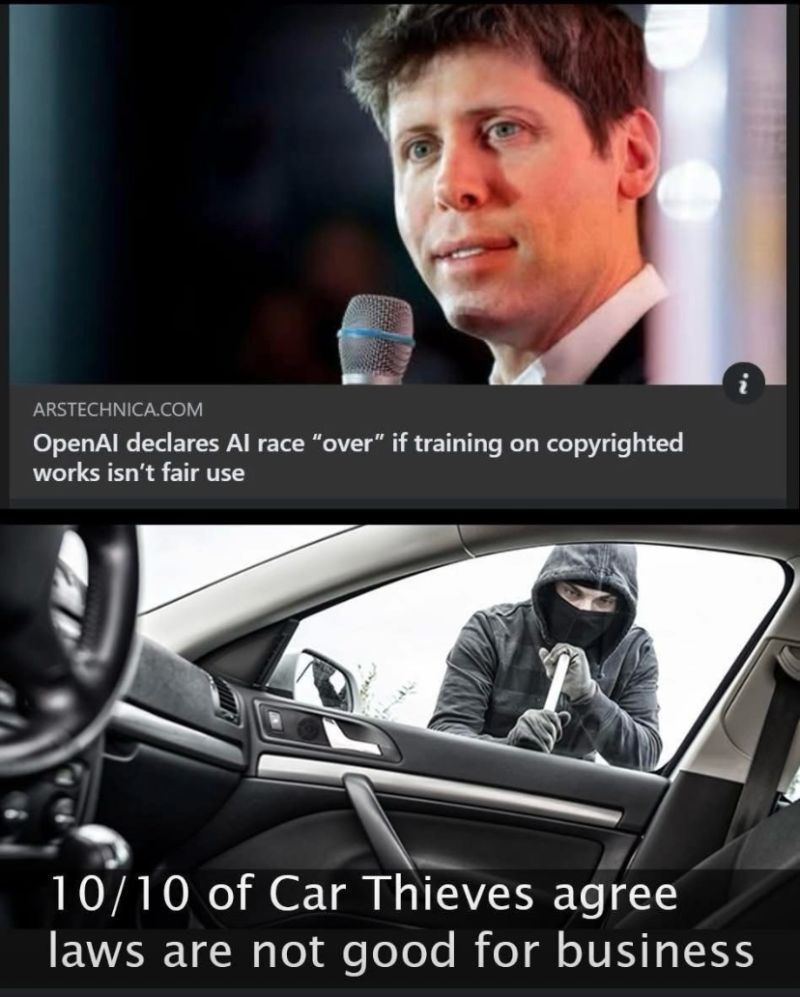
Breaking news: The people who built fortunes on “free access to everything” are now shocked that… not everything should be free. If you can’t take what isn’t yours anymore, Does innovation suddenly…
A 17-year-old just built a mind-controlled prosthetic arm for $300. Yes, $300. For something that usually costs $450,000. Let that hit you. A teenager, working from home, used AI, cheap materials…
13.8 posts/week
Posts / Week
0.6 days
Days Between Posts
1
Total Posts Analyzed
HIGH
Posting Frequency
0%
Avg Engagement Rate
STABLE
Performance Trend
230
Avg Length (Words)
HIGH
Depth Level
ADVANCED
Expertise Level
0.8/10
Uniqueness Score
YES
Question Usage
0.5%
Response Rate
Writing style breakdown
Professional, polished, and authoritative, but written in a very accessible, conversational way.
Strongly informative and analytical with a clear “thought-leadership” angle.
Persuasive and provocative without being sensationalistic.
Tone is confident, calm, and incisive, with carefully controlled emotional peaks.
Mid-formal: business-appropriate but not stiff.
Uses contractions regularly (don’t, isn’t, won’t, they’re).
Avoids slang, Internet-speak, or profanity.
Vocabulary is clear and modern, with selective use of domain jargon (AI, data strategy, enterprise, transformation, reinforcement learning, agentic AI).
Medium-to-high energy.
Posts often open with a sharp hook (stat, contrast, bold statement) and then maintain a steady, deliberate pace.
awe or admiration at innovation,
concern or warning about implications,
curiosity and invitation to reflect.
Drama is created through contrast and structure, not through exclamation overload.
Rhetorical questions (“Which one do you trust?”, “What does that say about innovation?”)
Contrasts and reversals (“This is not a feel-good story. It’s a warning shot.”)
Parallelism and repetition (“Every sensor. Every millisecond. Every mistake.”)
Framing sections (“Why it matters”, “What this enables”, “The deeper insight”).
Compares current examples to well-known stories (NFL, Kodak, Netflix).
Uses specific use cases and “lessons for leaders”.
Conversation posts always pull out short, punchy direct quotes from interviewees: “As John put it:” → followed by quoted line.
Primarily second-person (“you”, “your data”, “a question for you:”) when drawing lessons or asking questions.
First-person singular (“I learned this…”, “I’m at the Sports Forum…”) to provide context and authority.
Occasional first-person plural (“we’ve spent years training AI…”) for shared perspective.
Frequent direct questions to the reader, especially as CTAs: “What’s your take…?”, “What do you think…?”
Imperatives: “Think about Kodak.”, “Let that hit you.”
Soft prompts: “A question for you:”, “If you looked at your data with a ‘rewrite the rules’ mindset…”
Observes something concrete,
Extracts a principle,
Asks the reader to apply it to their own context,
Ends on an open, thought-provoking question.
Sign in to unlock the full writing analysis
Free tools to help you write, score, and benchmark in the same style.
Other creators worth studying alongside Pascal BORNET.

David Green 🇺🇦
Co-Author of Excellence in People Analytics | People Analytics leader | Director, Insight222 & myHRfuture.com | Conference speaker | Host, Digital HR Leaders Podcast
13 Viral Score

Dr. Marc Sniukas
Founder, The Better Strategy School → Where strategy becomes a leadership capability. 20+ years of global strategy work, helping leadership teams make better strategy.
37 Viral Score

Morgan J Ingram
Coaching B2B sales teams to sound human in their outbound when everyone else sounds like AI | CEO @ AMP Social | SKO Speaker
18 Viral Score
Scott Brinker
Martech Analyst & Advisor | “Godfather of Martech” – AdAge | Ex-HubSpot VP Platform Ecosystem
28 Viral Score

Tom Madders
Campaigns and Communications Consultant
246 Viral Score

Jack Roberts
Top-100 UK Entrepreneur, Teddy AI | Proven Systems to grow your business. AI Expert, Speaker, Educator.
920 Viral Score
ViralBrain plans, writes, and schedules your LinkedIn content, using official LinkedIn APIs so your account stays safe.
Write like Pascal BORNET.