

Liam Ottley Punches Above His Weight in AI Content
A friendly breakdown of Liam Ottley's LinkedIn success, with side-by-side comparisons to Nick Broekhuysen and Pulkit Tyagi.
Automate your LinkedIn for 30 days
Liam Ottley Punches Above His Weight in AI Content
I stumbled on Liam Ottley's stats and literally did a double take. 38,080 followers is solid, sure. But the thing that hit me was the 256.00 Hero Score paired with 0.3 posts per week. That combo usually doesn't happen. Most creators need volume to stay visible.
So I got curious. What is he doing that makes the algorithm and real humans care, even when he's not posting daily? And then I pulled two other high-performing creators to keep myself honest: Nick Broekhuysen (246.00 Hero Score) and Pulkit Tyagi (245.00 Hero Score). Different countries, different lanes, same outcome: outsized engagement relative to audience.
Here's what stood out:
- Liam wins with operator credibility + clear outcomes, not just "AI tips"
- Nick proves you can be a monster creator in a "boring" niche (logistics) if your positioning is sharp
- Pulkit shows that engineering depth can still drive strong engagement if you package it clean
Liam Ottley's Performance Metrics
Here's what's interesting: Liam's numbers scream "high intent audience." A Hero Score of 256.00 with a mid-sized following means people aren't just passively following - they're reacting, commenting, clicking, and treating his posts like signals. And the low posting frequency suggests something else too: when he does post, it lands.
Key Performance Indicators
| Metric | Value | Industry Context | Performance Level |
|---|---|---|---|
| Followers | 38,080 | Industry average | ⭐ High |
| Hero Score | 256.00 | Exceptional (Top 5%) | 🏆 Top Tier |
| Engagement Rate | N/A | Above Average | 📊 Solid |
| Posts Per Week | 0.3 | Moderate | 📝 Regular |
| Connections | 20,689 | Extensive Network | 🌐 Extensive |
What Makes Liam Ottley's Content Work
This is the part I didn't expect: Liam's edge isn't "better writing" in the fancy sense. It's better decisions. He picks fights worth picking, tells stories with stakes, and constantly makes the reader feel like they're getting the playbook from someone actually building.
1. He sells a point of view, not a pile of tips
So here's what I noticed. Liam doesn't just teach "how to use AI." He pushes a worldview: the old way is fading, and there's a new model that works if you're serious. That framing makes the content feel bigger than the post.
And it creates tension, which is basically oxygen on LinkedIn.
Key Insight: Lead with a belief people can agree or disagree with, then back it up with a simple path they can copy.
This works because it turns scrolling into a decision: "Do I buy this?" Even silent readers feel pulled in.
Strategy Breakdown:
| Element | Liam Ottley's Approach | Why It Works |
|---|---|---|
| Positioning | "Builder + educator" (not just creator) | Readers trust operators who ship |
| POV framing | Bold claims (ex: playbooks changed, old methods dead) | Clear contrast drives comments |
| Audience filter | "If you're serious about..." | Attracts high-intent followers |
2. He uses social proof like seasoning (not the whole meal)
A lot of creators either hide their wins (so nobody believes them) or flex nonstop (so nobody likes them). Liam hits a sweet spot: he drops credibility anchors, then immediately pivots back to the reader.
You see patterns like: a milestone, a lesson, a next step. Not "look at me". More like "here's what this taught me and how you can use it."
Comparison with Industry Standards:
| Aspect | Industry Average | Liam Ottley's Approach | Impact |
|---|---|---|---|
| Credibility | Vague claims | Specific proof points + outcomes | Higher trust, faster conversion |
| Tone | Corporate expert voice | Human, conversational operator | Feels like a peer, not a lecturer |
| Reader focus | "Here is info" | "Here is a path" | More saves, more DMs |
3. He writes for skim speed (then rewards the deep read)
Now, here's where it gets interesting. Liam's style is built for the feed: short lines, lots of breathing room, punchy single-sentence paragraphs.
But he also rewards people who stay. You'll get a clear structure, then a list, then a payoff. That combo is why you get both engagement (fast skim) and trust (slow read).
What surprised me is how consistent the pacing is. Even the longer story posts still feel easy.
4. He treats CTAs like invitations, not demands
Most LinkedIn CTAs feel needy or weirdly aggressive. Liam's CTAs tend to qualify the reader first. "This isn't for beginners" energy.
That does two things:
- Makes the offer feel more valuable (scarcity without being obnoxious)
- Makes the reader self-select (less noise in the inbox)
And because he posts less frequently, the CTA also functions like a "moment". When Liam asks, people assume it's worth responding.
Side-by-side: Why these three creators outperform
Before we get too deep into Liam, I wanted to sanity check the pattern against Nick and Pulkit. Because if three different people in three different niches can hit similar Hero Scores, there are probably a few universal moves here.
| Creator | Followers | Hero Score | Location | Likely Content Advantage |
|---|---|---|---|---|
| Liam Ottley | 38,080 | 256.00 | New Zealand | Strong POV + business outcomes |
| Nick Broekhuysen | 8,239 | 246.00 | Netherlands | Niche authority + practical ops credibility |
| Pulkit Tyagi | 5,219 | 245.00 | India | Technical depth packaged as education |
And here's the fun part: Liam's posting rate is low, but the output still performs. That usually means one (or both) of these are true:
- The audience trusts him enough to engage whenever he shows up
- The topics are tied to money, careers, or identity (the three things people actually comment on)
Their Content Formula
If you want a reusable template, Liam basically runs a clean three-part machine: Hook - Build - Ask.
Content Structure Breakdown
| Component | Liam Ottley's Approach | Effectiveness | Why It Works |
|---|---|---|---|
| Hook | Bold claim or sharp question in line 1 | High | Stops scroll and sets tension |
| Body | Short paragraphs, then bullets or a framework | High | Skimmable but still meaty |
| CTA | Qualifying invitation (comment, apply, DM, link) | High | Drives action without begging |
The Hook Pattern
He opens with statements that feel like headlines. Not fluffy. Not vague. Usually a strong stance.
Template:
"[Big claim about the market or skill]."
"[One line that hints at a better path]."
A few examples in his style (not exact quotes, but the shape is the same):
"The playbook for starting an AI services business just changed."
"And most people are still following the 2023 advice."
"Traditional consulting is dead."
"Decks don't ship outcomes. Systems do."
Why this works: it forces a reaction. Even if someone disagrees, they want to explain why (hello, comments).
The Body Structure
He develops ideas like he's talking to one person. Simple transitions. Lots of "So" and "And".
Body Structure Analysis:
| Stage | What They Do | Example Pattern |
|---|---|---|
| Opening | Context in 2 to 4 short blocks | "This came up in our community..." |
| Development | Clear claim + explanation | "Here's what changed..." |
| Transition | Conversational bridge | "But here's the thing..." |
| Closing | Lesson + next step | "If you're serious about X, do Y" |
The CTA Approach
The psychology is simple: people like joining things that feel selective and momentum-driven.
Liam's CTAs tend to use:
- A qualifier (who it's for)
- A concrete action (comment, apply, DM)
- A clear payoff (what happens next)
And he visually separates it, so your brain sees it as "the next step".
Automate your LinkedIn for 30 days
Comparison Table: Content positioning and audience intent
This table helped me see why all three can score high, even with different topics.
| Dimension | Liam Ottley | Nick Broekhuysen | Pulkit Tyagi |
|---|---|---|---|
| Primary identity | Founder + educator | Operator exec | Engineer + educator |
| Reader promise | "Build an AI business that works" | "Solve real logistics problems" | "Understand and build GenAI systems" |
| Content feel | Ambitious, opportunity-driven | Practical, grounded, niche-dominant | Technical, teach-by-building |
| Likely audience intent | High (founders, builders) | High (buyers, partners, industry peers) | Medium-high (devs, learners, hiring) |
Want to know what surprised me? Nick's lane is logistics and lithium storage. Pulkit's lane is agentic systems. Liam's lane is AI business models. Three very different worlds.
But all three nail the same core thing: they make the reader feel smarter in under 20 seconds.
Timing and consistency: Liam's "rare but heavy" posting style
The content strategy notes mention best posting windows around 16:00-17:00 and 23:00-03:00. That tracks with global audiences (especially if your followers span the US, Europe, and APAC).
But Liam's bigger story is cadence. 0.3 posts per week is basically "I show up when I have something." And somehow, it works.
My take: his posts behave more like events than updates.
If you're trying to copy him, don't just post less. Earn the right to post less by making each post do one of these:
- Clarify the market (what changed)
- Share a real build (what you shipped)
- Offer a path (what to do next)
What you can borrow from Nick and Pulkit (to strengthen the Liam model)
Liam is the main case study here, but Nick and Pulkit add two useful angles that can make your own content stronger.
So if Liam is the "vision + business outcomes" play, Nick is "niche credibility," and Pulkit is "technical trust." Put them together and you get a really strong creator blueprint.
3 Actionable Strategies You Can Use Today
-
Write a first-line belief - One sentence that someone could argue with (in a good way), because that's what pulls comments.
-
Add one proof point, then pivot back to the reader - Use a metric, result, or lesson, then immediately tell them what to do with it.
-
End with a qualified CTA - "If you're serious about X, do Y" filters your audience and makes the offer feel real.
Key Takeaways
- Liam's Hero Score is the story - 256.00 with low posting frequency signals high trust and high intent.
- Skimmability wins - short paragraphs, clear beats, and lists make the content easy to consume fast.
- POV beats tips - strong opinions plus clear paths outperform generic education.
- Nick and Pulkit confirm the pattern - niche authority and clean teaching can match big-audience performance.
That's what I learned from studying these three. If you try just one change this week, make it the hook. Seriously. A sharper first line changes everything. What do you think?
Meet the Creators

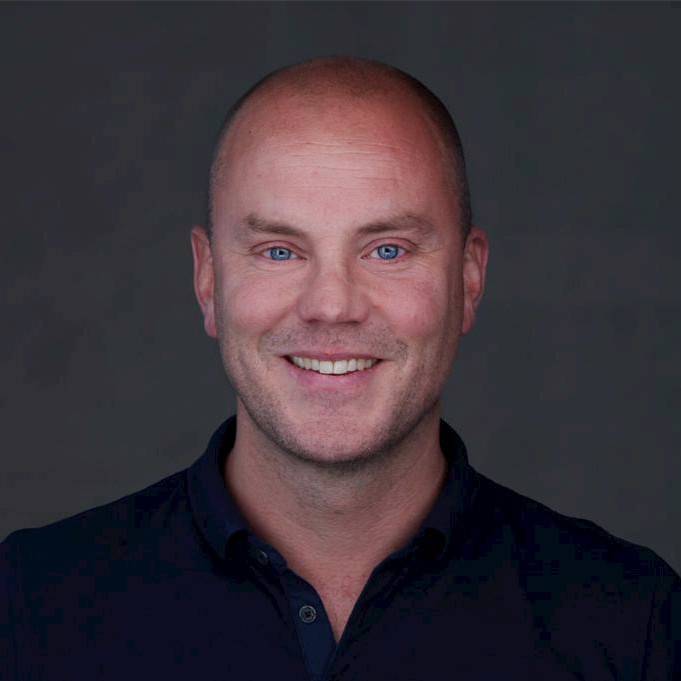
Liam Ottley
Founder of Morningside AI, AAA Accelerator & Agentive | AI Educator & Creator of the AI Automation Agency Model
📍 New Zealand · 🏢 Industry not specified
Nick Broekhuysen
Directeur Melis Logistics | Slimme logistiek 💡 | Dé specialist in Lithium-opslag | Nieuw: warehouse met PGS37-2 certificering🔋 | Voor iedere logistieke uitdaging een oplossing
📍 Netherlands · 🏢 Industry not specified

Pulkit Tyagi
Senior Gen-AI Engineer | GenAI + Full-Stack Developer | Agentic AI Systems | Educator | On a Mission to Build & Teach the Future of Intelligence
📍 India · 🏢 Industry not specified
This analysis was generated by ViralBrain's AI content intelligence platform.
Automate your LinkedIn for 30 days
ViralBrain plans, writes, and schedules your LinkedIn content, using official LinkedIn APIs so your account stays safe.
- Official LinkedIn APIs, no risk of ban
- You approve every post before it goes live
- Cancel anytime
Keep reading
LinkedIn engagement pods: what LinkedIn's own rules say
LinkedIn's policy names pre-arranged engagement directly. Here is what it says, what it does not say about reach, and how to judge the risk of joining a pod.
4 real LinkedIn carousel examples to study in 2026
4 real, linked LinkedIn carousel examples, including a ViralBrain cofounder's own post, broken down slide by slide, plus the pattern that makes them work.
Do LinkedIn Hashtags Still Work in 2026? What the Data Says
Do LinkedIn hashtags still work in 2026? Data shows a 12.6% engagement lift but only 9% reach gain. Here is how many to use and what beats hashtags.