

How to Find Your Target Audience Without Wasting Time
How to Find Your Target Audience: how to find your target audience using your existing data to identify and reach your ideal customers, step by step.
To find your target audience, you have to do the work. Dig into your customer data, watch your competitors, and talk to actual people. This is a practical process that replaces guesswork with facts. Doing this work first is the fastest way I know to stop lighting your marketing budget on fire.
Automate your LinkedIn for 30 days
Stop Marketing to Everyone

Let's be honest. Marketing to "everyone" is a great way to connect with no one. It is a lazy strategy that burns time and money with little to show for it. When your audience is vague, your message is generic and your product features miss the mark. Your content disappears into the noise.
Your target audience is the group of people most likely to buy from you. These are the people whose problems you actually solve. Finding this group is about focus, not exclusion.
A small audience that loves you is more valuable than a huge audience that is just lukewarm. As we've seen with experts like Domitille De Saint Exupéry, a small audience can create a massive impact when you get it right. Read more about her approach here, https, //www.viralbrain.ai/blog/domitille-de-saint-exupery-small-audience-big-impact
Without focus, you are just shouting into the void.
Set Clear Goals for Your Research
Before you open a spreadsheet, you must know what you are looking for. Your goals are the compass for your research. They keep you from getting lost in irrelevant data. Maybe you want more engagement on your posts. Or your sales team is complaining about lead quality.
Set specific goals from the start. What are you trying to accomplish?
- Improve engagement rates, find people who will read, like, and comment.
- Generate better leads, attract prospects who have a real need for your solution.
- Increase conversion rates, sharpen your messaging to match their pain points.
- Refine product features, build what your ideal user wants, not what you think they want.
Setting these goals makes audience research a practical tool. If you want to stop marketing to everyone, you first need to understand how to identify your target audience effectively. This planning ensures your work leads to measurable results.
Here is a simple framework that outlines the process.
Audience Discovery Framework
This table breaks down the first steps for defining your ideal audience.
| Step | Action | Why It Matters |
|---|---|---|
| Define Goals | Set specific, measurable objectives for your research. | Gives your work direction and stops you from wasting time. |
| Analyze Data | Review your existing customer and analytics information. | Builds your strategy on facts, not feelings. |
| Study Others | Look at your direct competitors and top industry leaders. | Helps you spot market gaps and what your audience already likes. |
Following this structure provides a clear path. It turns a big task into manageable actions.
Start with the Data You Already Have

You are probably sitting on a goldmine of audience data. Before you spend money on tools, look under your nose. This is the fastest way to get a factual starting point.
Start with existing customers, website analytics, and social media followers. These people have already shown interest. The goal is to build a preliminary picture based on facts, not a gut feeling about who you think your audience should be.
Dig Into Your Analytics
Your website and social media analytics are packed with clues. In Google Analytics, the Audience tab gives you basic demographic info. The real value is in the "Interests" report. It tells you what your audience cares about outside of your brand.
For B2B, LinkedIn Analytics is very useful. It gives you a direct look at the professional details of people engaging with your content. You see their job titles, company sizes, and industries. These are hard facts about who finds your work relevant.
For example, a huge part of LinkedIn's user base is in the early to mid career phase. About 60% of users are between 25 and 34 years old. This group is actively looking for professional insights. Knowing this can help you focus on a massive, motivated demographic.
The most valuable insights come from spotting patterns. Do not just look at the raw numbers. Find connections between your most engaged followers and your best customers.
Who are the people that follow you and buy from you? Look for the overlap in their job titles, company sizes, and the content they interact with most. To really understand them, you will want to analyze qualitative data from comments and feedback. This turns conversations into real insights.
Identify Your Best Customers
Your sales data tells a story, but you have to know how to read it. Your best customers are not always the ones who make the biggest purchase. Instead, look for repeat buyers, clients with high lifetime value, and the ones who refer others to you.
Once you have identified this group, dissect their journey.
- What problems were they trying to solve before they found you?
- How did they hear about you?
- Which features of your product do they use most?
This information helps you build a profile of your ideal customer. A real person with real challenges. You can then use a tool like ViralBrain's Niche Radar to find more people like them on LinkedIn. This evidence based approach is more reliable than shooting in the dark.
Analyze Your Competitors and Industry Heroes
Your competitors already spent time and money figuring out who their customers are. Let's be smart and learn from their work. Studying them is not about imitation. It is about reverse engineering what works so you can find your own angle faster.
Think of it as strategic intelligence gathering. You are looking for patterns, successes, and gaps in the market that you can fill.
First, identify your direct competitors. The companies offering a similar solution to a similar audience. But do not stop there. You also need to identify the industry heroes. These are the top creators, thought leaders, and admired brands in your space. They have earned the attention and trust of the people you want to reach. Your job is to figure out how they did it.
See Who Follows Them
A direct way to get a snapshot of your potential audience is to look at who follows your competitors. This is simple on a platform like LinkedIn. Go to a competitor's company page, find the "Followers" tab, and you will have a list of people interested in their work.
What you have here is a pre qualified list. These professionals are actively seeking solutions in your market. As you scroll through their profiles, start connecting the dots.
- What are their job titles? Are you seeing VPs of Sales, or junior level project managers?
- Which industries dominate? Is there a concentration in FinTech or is it spread across manufacturing?
- What about company size? Are these people from 5,000+ employee enterprises or sub 50 person startups?
This is not about swiping their followers. It is about building a data backed picture of the people in this audience. You are looking for trends that confirm or challenge your initial ideas. Given that 68% of consumers expect personalized experiences, knowing their professional identity is the first step to crafting a message that works.
The goal is to see the audience through their eyes. What language do they use in their posts? What problems do they complain about? This is raw, unfiltered insight into the customer's mind.
Reverse Engineer Winning Content
The top players in your niche are leaving a trail of breadcrumbs with their content. Analyzing their high performing posts gives you a direct window into what their audience wants.
But do not just look for high like counts. That is a vanity metric. The real gold is in the comments.
Who is actually engaging? What are they saying? Are the comments just "Great post!" remarks, or are people asking deep questions and tagging colleagues? The quality of the engagement tells you if content really worked.
For a more structured approach, you can learn how to find these winning posts using ViralBrain's Hero Discovery workflow. It helps you pinpoint not just what content is popular, but who it is popular with.
By studying your competitors and industry heroes, you collect intel that sharpens your strategy. You might spot an underserved niche they are all overlooking. Or a common pain point they only address superficially. This analysis gives you a massive head start on finding and winning over your ideal audience.
Automate your LinkedIn for 30 days
4. Build Simple and Useful Audience Personas

Let’s be honest. Most audience personas are a waste of time. You know the ones. The five page documents with stock photos and made up hobbies. They are corporate theater. They look like you did your homework but produce nothing you will ever use.
A good persona is not a fictional character. It is a simple, actionable summary of a real customer segment. Your goal is to boil down all the data you gathered into a one page cheatsheet. This helps your team make better decisions, fast.
If a persona does not help you write better copy or design a better feature, it is useless. Throw it out.
From Data to Decisions
This is where you turn raw data from analytics and competitor research into something practical. The key is to keep your personas grounded in reality. Focus only on information that matters for your marketing and product.
Forget their favorite ice cream flavor unless you sell ice cream. We are focusing on details that influence their professional life and purchasing decisions. This is how you build a profile that helps you connect with your audience.
For instance, professional demographics can sharpen your focus. On LinkedIn, the user base is 56.9% male and 43.1% female. It skews toward high income professionals with roughly double the buying power of typical online audiences. The platform has 10 million C level executives and another 65 million decision makers. This makes it a goldmine for B2B. You can read more about these LinkedIn statistics to get a feel for these groups.
Keep It Simple and Actionable
Your persona should fit on a single page. It is a tool, not a term paper. Here is a simple template for a persona that works.
- Job Title & Industry, What do they do for a living? Be specific. "SaaS Content Marketing Manager" is more useful than "Marketer."
- Main Goal, What is the number one thing they are trying to achieve in their role? This is the accomplishment that gets them a promotion.
- Biggest Pain Point, What is the most frustrating obstacle your product can help them overcome? Make it concrete and painful.
- Where They Hang Out Online, Which blogs do they read? Who do they follow on LinkedIn? Which communities are they active in? This tells you where to find them.
A bad persona says, "Marketing Mary likes yoga." A good persona says, "Marketing Mary needs to prove her content's ROI to her VP of Sales, or her budget gets cut next quarter." One is fluff. The other is motivation.
Your finished personas become the test for every marketing decision you make. Would this blog post help Mary prove her ROI? Is this LinkedIn ad going to show up where she is looking? This focus separates marketing that works from marketing that just makes noise.
Test Your Assumptions and Refine Your Message

Let's be honest. All that work you did to build your personas? It is still just a well researched guess. It is a fantastic hypothesis, but it is nothing until you test it in the real world. Now is the time to put your assumptions on trial.
This is the point where you stop theorizing and start testing. The goal here is to get real world feedback quickly and cheaply. You need to know if your message is connecting with the people you think it should. Did anyone notice? Was it the reaction you wanted? This process separates businesses that grow from those that just shout into the void.
Craft and Test Your Messaging
Forget launching a massive, expensive campaign. At this stage, you need to think small, fast, and measurable. You are running experiments, not a Super Bowl ad. The goal is to see what gets a reaction.
Start by crafting a few distinct message angles based on your audience segments. For example, if one persona's biggest pain point is proving ROI to their boss, create content that speaks to that struggle. For another persona focused on climbing the career ladder, you would frame your solution as a way to help them get a promotion.
Here are a few practical ways to test these messages without breaking the bank.
- Run micro ad campaigns. Spend a small budget on LinkedIn or Facebook ads. Target each ad set to one specific persona. The goal is not to make sales. The goal is to see which message earns the clicks.
- Post hyper specific content. Share posts on your social channels tailored to one segment at a time. Does a post about a niche technical problem get more engagement than a broad one? Watch the data.
- Engage directly, one on one. Find a handful of people who fit your persona and just talk to them. Send a thoughtful message, offer free advice, and see how they respond. It is the purest form of feedback.
Geographic targeting is another smart way to test messaging, especially on LinkedIn. The United States has an estimated 257 million users. India and Brazil follow at 161.5 million and 83.2 million, respectively. These markets are packed with B2B marketers and entrepreneurs. This gives you a fantastic sandbox for testing messages in different regions. You can find more on LinkedIn's global user base in these detailed statistics.
Track Metrics That Actually Matter
When you run these small tests, you have to track the right data. Forget vanity metrics like impressions. They might make you feel good, but they do not tell you if your message is working.
Your click through rate tells you if your hook is interesting. Your comment quality tells you if your message is valuable. Your lead conversions tell you if your solution is desirable.
To validate your audience assumptions, you need to look at metrics like these.
- Click Through Rate (CTR), Is it very low? That is a sign your headline or first line is boring.
- Comment Quality, Are people asking smart questions or tagging their colleagues? Or are you just getting "Great post!" comments? Real engagement shows you have struck a nerve.
- Lead Conversions, This is the moment of truth. Did anyone sign up for your newsletter, book a demo, or download your guide? This is the ultimate proof that your message compelled someone to act.
This cycle of testing, learning, and refining should be relentless. If a message flops, kill it and move on. Do not get attached. But if one works, double down and figure out why it worked. This data driven iteration is how you truly find your target audience and start a conversation that gets a response.
Frequently Asked Questions
When you are trying to find your target audience, a few common questions always pop up. Let's tackle them head on with practical advice so you can stop second guessing and start making progress.
How Specific Should My Target Audience Be?
You need to be specific enough that you can describe their biggest headache in one sentence. But not so specific that you are talking to only three people on the planet. I see this all the time. People get so lost in details they niche themselves out of a market.
But being too broad is the bigger mistake. "Small business owners" is not an audience. It is a category. It tells you nothing.
Now, "Founders of bootstrapped SaaS companies under 10 employees struggling to create consistent content"? That is an audience. You can immediately picture that person, feel their frustration, and you have a good idea of where they spend their time online.
The real test is whether your messaging feels personal. If you can not write a headline that makes a specific group think, "Wow, they're in my head," you are still casting too wide a net.
Your sweet spot is a group that shares a painful, urgent problem you can solve. You are looking for a group large enough to sustain a business but small enough that you can become their go to person.
What If My Research Points to Multiple Target Audiences?
This is a good problem to have. It means you did your homework. But it is also a trap. The temptation is to try and speak to all of them at once. Do not. It is the fastest way to dilute your message and burn your resources.
Instead, you have to be ruthless about prioritizing. Rank your potential audiences using a few simple filters.
- Urgency, Which group feels the most pain? Who needs what you have right now, not someday? People pay for solutions to fires, not for vitamins.
- Buying Power, Can they afford your solution? A desperate audience with empty pockets is a fan club, not a customer base.
- Accessibility, How easy is it for you to get in front of them? If one group gathers on a platform where you are already active, that is your path of least resistance. Start there.
Choose one. Seriously, just one. Pour all your energy into becoming undeniable to that single audience. Once you gain a foothold, you can thoughtfully expand to the next group on your list. Trying to be everything to everyone is a proven recipe for being nothing to anyone.
How Often Should I Review My Target Audience?
Defining your audience is not a task you check off and forget. Markets shift, new problems emerge, and your competitors evolve. Assuming your 2024 audience persona will still be accurate in 2026 is a surefire way to become irrelevant.
This does not mean you need to conduct a massive review every month. That is not practical. What you need is a rhythm of review.
I recommend a formal review once a year. That is when you pull all the data again, dust off your personas, and challenge your assumptions to see if they still hold up.
The informal review, however, should be constant. This is the "always on" listening you do every day. Pay attention to comments on your posts. Listen to the exact words customers use on sales calls. Watch the angles your competitors are taking each week. These are the small signals that a bigger shift is coming, giving you time to adapt.
Your audience is not a static portrait. It is a living entity. Your understanding has to evolve with it.
Ready to stop guessing and start growing? ViralBrain analyzes what's already working on LinkedIn to give you a repeatable formula for content that connects. Find your audience, learn their language, and create posts they'll actually read. Explore the platform and see how it works.
Automate your LinkedIn for 30 days
ViralBrain plans, writes, and schedules your LinkedIn content, using official LinkedIn APIs so your account stays safe.
- Official LinkedIn APIs, no risk of ban
- You approve every post before it goes live
- Cancel anytime
Keep reading

How to Measure Social Media Success: Drive B2B Results
Learn how to measure social media success. Get a no-BS framework to tie metrics to real B2B business goals & drive results, not just likes. For B2B marketers.

How to Post a Carousel on LinkedIn the Right Way
Learn how to post a carousel on LinkedIn with this guide. Get direct tips on PDF creation, uploading, and writing captions that get noticed in 2026.
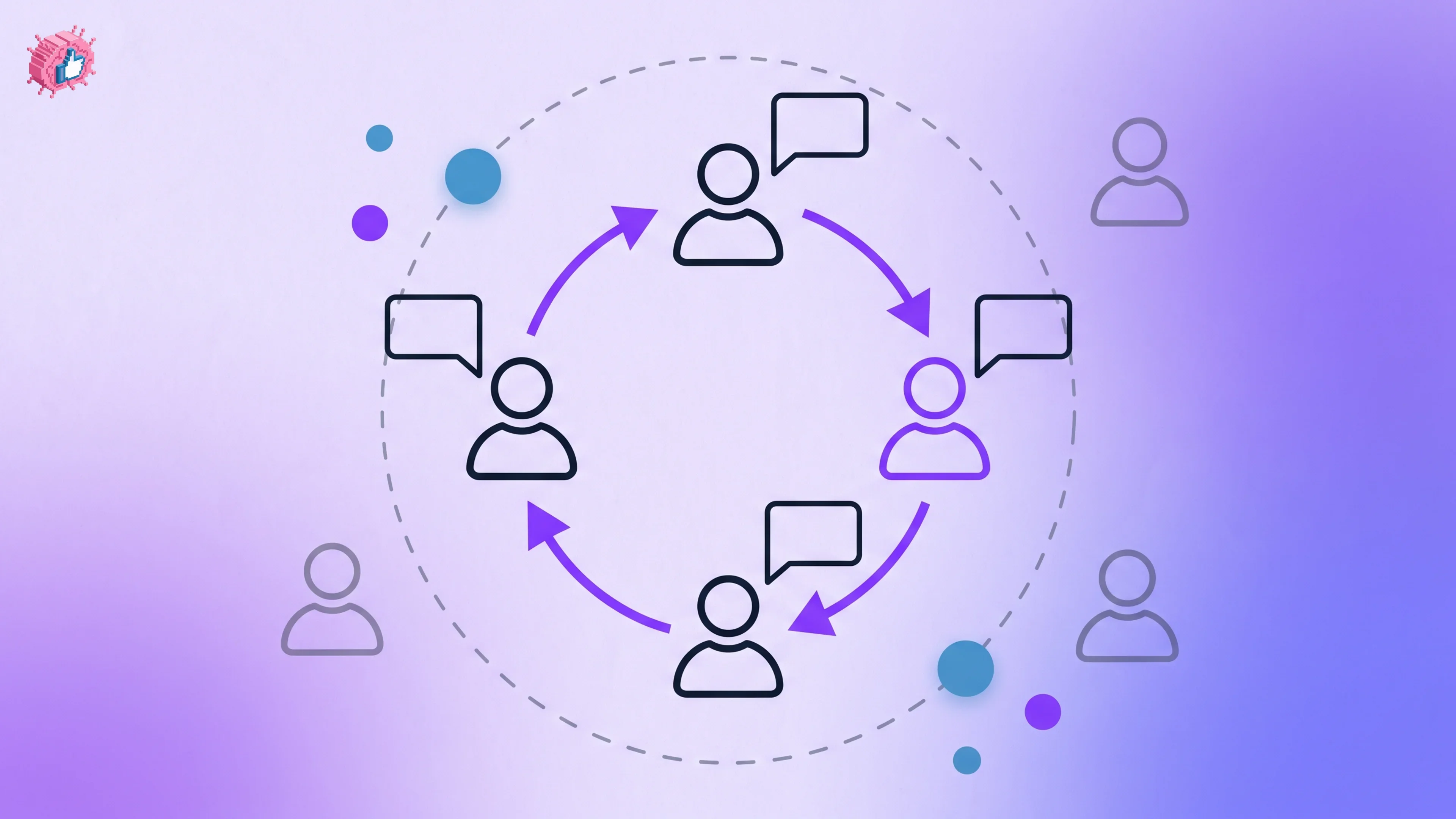
LinkedIn engagement pods: what LinkedIn's own rules say
LinkedIn's policy names pre-arranged engagement directly. Here is what it says, what it does not say about reach, and how to judge the risk of joining a pod.