

10 Brutally Honest Content Repurposing Strategies That Work
Stop creating from scratch. Use these 10 data-backed content repurposing strategies to get more from your work. Practical tips for LinkedIn included.
You spend hours on one piece of content. A blog post, a podcast, or a video. You publish it. You get a small spike in traffic. Then it vanishes into your archive. This is a waste of effort. Your best ideas deserve more than one chance. Most creators are on a treadmill. They produce new material while their best work gathers dust.
This is not about working harder. It is about working smarter. The goal is to multiply the impact of your existing content. Good content repurposing strategies turn one asset into a dozen formats for different platforms. A single customer interview can become a LinkedIn carousel, a series of quote graphics, a short video clip, and a text post. You get more reach and better results from work you already did.
This guide gives you ten repeatable systems for content repurposing. Forget generic advice like "turn a blog post into a tweet." You get workflows, real examples for LinkedIn, and clear steps. You will learn to break down long form content, extract insights, and adapt them into formats that stop the scroll. These methods build authority and make your content budget go further. Your best work should not die after 24 hours. We can give it the lifespan it deserves.
Automate your LinkedIn for 30 days
1. The Pillar-to-Cluster Repurposing Model
The Pillar-to-Cluster model is an efficient content repurposing strategy. It is a system for maximizing the return on a major content investment. You start by creating one large, authoritative piece of content. This is the "pillar." It could be an ultimate guide, a research report, or a webinar.
From this pillar, you pull multiple smaller "cluster" pieces. Each cluster is a standalone piece of content for a specific platform. The goal is to surround your pillar with entry points. This drives traffic back to the main asset from different channels.
How It Works for LinkedIn
This model works very well for LinkedIn. Imagine you published a 4,000-word blog post on "The State of B2B SaaS Marketing in 2024." Instead of just sharing the link, you break it down.
- Monday: A text only post with a controversial statistic from the report.
- Wednesday: A carousel post visualizing the 5 key takeaways.
- Friday: A short video of the author explaining the most surprising finding.
Each post offers value on its own. It also teases the deeper insights in the full report. This approach multiplies your content output without multiplying your research. HubSpot uses this to turn its guides into dozens of social media assets.
Actionable Tips for Implementation
To do this right, you need a system. Do not just randomly pull sentences from your pillar content.
- Extract Key Hooks: Before you publish your pillar, identify 3-5 core insights, surprising statistics, or actionable frameworks. These are your cluster candidates.
- Vary Your Angles: Frame the same insight differently for separate posts. One post might focus on the problem, another on the solution. You can find ideas for different hook styles by reviewing popular LinkedIn content patterns.
- Track Performance: Monitor which cluster posts get the most engagement and clicks on LinkedIn. This data tells you what parts of your pillar content connect with your audience. This helps you refine future pillars.
2. The Data-to-Insight Repurposing Strategy
The Data-to-Insight strategy turns cold data into compelling narratives. It takes quantitative information, like research findings, and gives it a human touch. You add founder perspectives, industry context, or a surprising angle to make data meaningful.
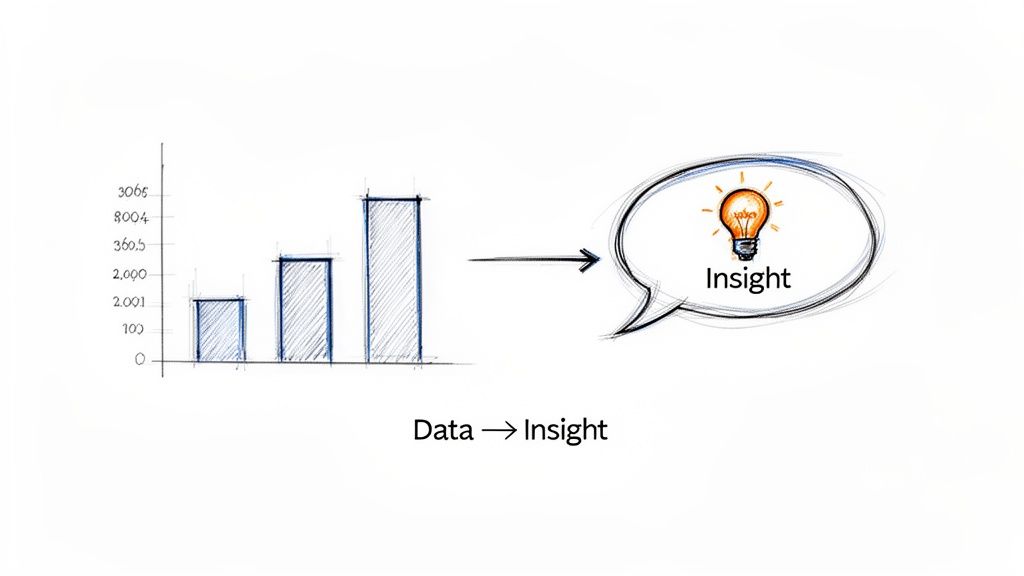
This approach is powerful. It builds credibility while telling a story. B2B audiences value proof points. This method delivers them in a memorable and shareable format. It explains why a fact matters instead of just stating it.
How It Works for LinkedIn
This is a go-to strategy for companies like Gong and LinkedIn. Imagine your company releases a quarterly report on remote work trends. Instead of posting a link to the PDF, you turn key data points into standalone LinkedIn content.
- Monday: A text post highlighting one surprising statistic about meeting length. Add your CEO's opinion on why this trend is happening.
- Wednesday: A carousel visualizing the top three challenges for remote managers, pulled from your survey data.
- Friday: A post comparing an expected finding with the actual, counter intuitive result. Ask your audience if the data surprises them.
Each post offers a single, data backed insight that starts a conversation. This makes your brand a source of industry intelligence, not just a content publisher.
Actionable Tips for Implementation
A great data driven post is a story, not just a number. You need a process to find the narrative within the figures.
- Lead with the So What: Start your post with the implication of the data, not the statistic. Tell people why it matters before you show them the numbers.
- Find Contrarian Angles: Look for data that challenges a common belief. Posts that start with "Everyone thinks X, but our data shows Y" perform well.
- Check the Temperature: Use data tools to see what topics are getting traction. You can find trending topics to see when certain data points might be most relevant.
- Pair Data with Questions: After sharing an insight, post a follow up a few days later. Ask your audience for their experiences related to the data. This extends the conversation and drives engagement.
3. The LinkedIn Article-to-Post Conversion Strategy
This strategy treats long form LinkedIn articles as the main asset. It turns them into a source for native posts. Instead of creating content just for the feed, you publish a detailed article on LinkedIn's platform. Then you systematically cut it up into smaller, high value posts.
From this central article, you create text posts, carousels, or video scripts. Each piece highlights a specific insight from the article. The goal is to maximize the visibility of your core arguments. This drives engaged readers from the feed back to your full length piece.
How It Works for LinkedIn
This method is built for establishing thought leadership on the platform. Imagine you publish a 2,000 word article on "The Future of GTM in a PLG World." You do not just share the article link once.
- Day 1: A text post pulling a strong, contrarian quote from your introduction.
- Day 4: A carousel visualizing the 3 core frameworks you outlined in the middle section.
- Day 7: A short video script based on your article's conclusion, explaining its most critical implication.
Each post is a valuable piece of content on its own. It also acts as a breadcrumb trail back to the main article. This increases the article's lifespan and views. Leaders like Laszlo Bock and Satya Nadella use this to amplify their long form thought leadership. They turn one article into a week of content.
Actionable Tips for Implementation
Success with this strategy requires a methodical plan, not just random excerpts. You need to treat the article as a campaign hub.
- Isolate Core Arguments: Before you publish the article, pull out 4-6 distinct, powerful ideas. Each idea is a potential post. Treat each section of your article as a mini content source.
- Create Unique Hooks: Repackage each idea for the feed. Turn a data point into a question. Transform a paragraph into a 3 slide carousel. An excellent way to find proven post formats is to review popular LinkedIn content patterns.
- Measure Click-Through: Track which post formats and hooks drive the most traffic back to your article. This data tells you which parts of your message connect with your audience. It gives you a clear roadmap for your next article.
4. The Cross-Platform Content Aggregation Strategy
This is one of the more resourceful content repurposing strategies. You aggregate valuable conversations from other platforms instead of just recycling your own content. You find what people are talking about on Reddit, YouTube, or industry forums. You bring those discussions to a professional LinkedIn audience.
The core idea is to capture authentic audience pain points, questions, and insights. You then reframe them for LinkedIn and add your own perspective. This method turns raw, community driven content into focused professional conversations. It saves you from guessing what your audience cares about.
How It Works for LinkedIn
This strategy works because it uses existing high engagement topics. For example, a marketer sees a popular Reddit thread in r/SaaS. Founders are debating the effectiveness of cold outreach. The marketer can repurpose that entire discussion.
- Post 1: A text post summarizing the top three arguments against cold outreach from the Reddit thread. It asks if LinkedIn users agree.
- Post 2: A carousel breaking down a compelling user story from the comments, showing a real world problem.
- Post 3: A poll asking, "Which cold outreach alternative from this discussion would you try first?"
Each post uses a proven, engaging topic. You are not creating a conversation from scratch. You are amplifying and focusing one that already has momentum.
Actionable Tips for Implementation
Success here depends on finding and crediting good sources. You are a curator, not a content thief.
- Monitor Relevant Hubs: Set up a system using saved searches or RSS feeds for key subreddits, forums, or YouTube channels in your niche. You need to consistently watch where your audience talks.
- Credit the Source: Always cite the original platform or community. This builds credibility. Mentioning "Saw a great discussion on Reddit..." makes your content feel more authentic.
- Transform Questions into Hooks: Look for the most upvoted questions in comment sections or forums. These are proven hooks. Turn a question like "How do you guys handle bad leads?" directly into a LinkedIn post.
5. The Conversation Thread-to-LinkedIn-Series Strategy
This strategy turns one deep conversation into a multi-part content series. It takes a single long form discussion, like a podcast or interview, and slices it into several focused LinkedIn posts. Each post explores a single question or key insight from the original conversation.
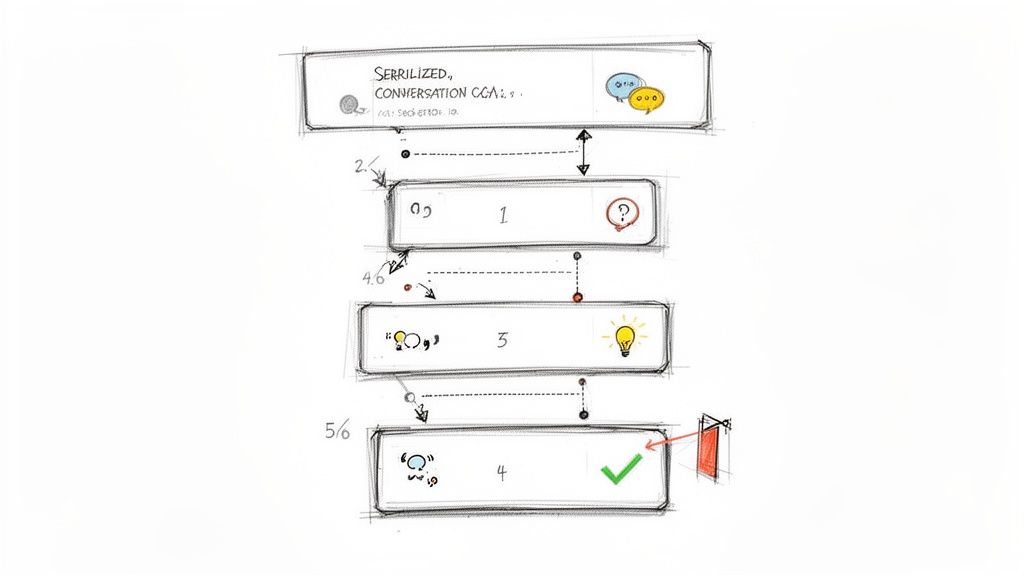
The goal is to build narrative momentum. You create anticipation and encourage followers to track the series over several days. It is an effective way to maximize the value of your best discussions. These are often packed with unmined insights.
How It Works for LinkedIn
This is a powerful content repurposing strategy for LinkedIn. It trains the algorithm to expect consistent value from you. Imagine you recorded a one hour podcast with an industry expert. You could turn that into a week of high engagement content.
- Day 1: Post the most controversial opinion from the guest as a text post.
- Day 3: Share a carousel detailing a 3-step framework the guest explained.
- Day 5: Post a short video clip of the guest’s most insightful story.
Each post stands on its own and promotes the full episode. Andrew Huberman does this well. He breaks down complex neuroscience topics from his podcast into multi-post series that are easy to digest.
Actionable Tips for Implementation
A successful series requires planning, not just random excerpts. You need to structure the narrative to keep people hooked.
- Plan the Arc: Before posting, write all the posts for the series. Structure them like a story. They should have a setup, a point of tension, a new perspective, and a final takeaway.
- Number Your Posts: Clearly label each post, for example, "(1/5)" or "Part 1 of 5". This signals it is part of a series. It encourages people to find the other parts.
- End with a Question: Finish each post with a question related to its topic. This drives comments, which is a key signal to the LinkedIn algorithm to boost your post’s visibility.
6. The Case Study-to-Multi-Format Repurposing Strategy
The Case Study-to-Multi-Format strategy turns a single customer win into a library of content. It starts with one detailed success story and then breaks it down. You extract different parts of the story. You reshape them for various platforms and learning styles.
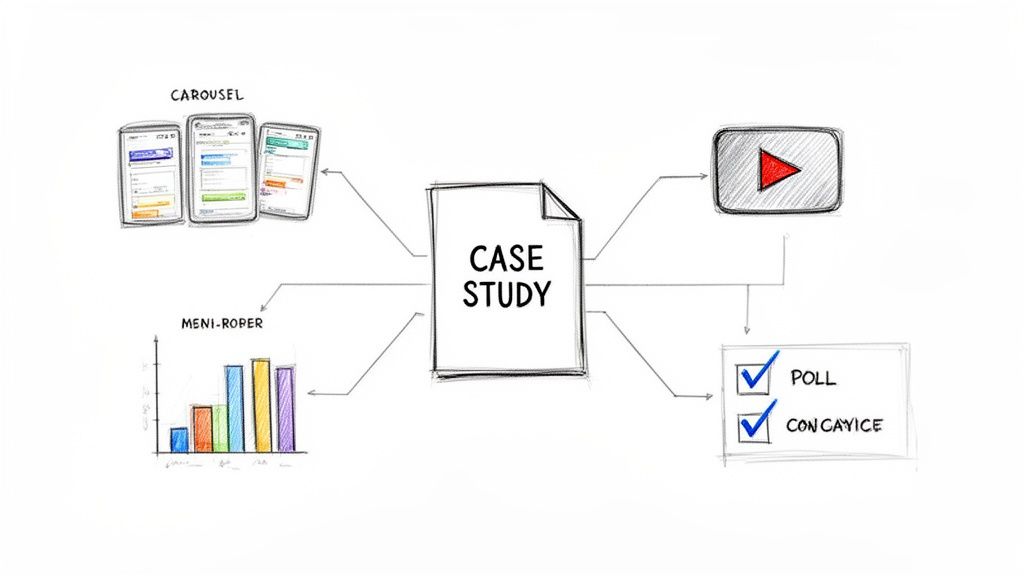
This approach maximizes the value of your most powerful social proof. You create an entire campaign around one success instead of a single post. This demonstrates your expertise from multiple angles. It proves your value without you having to say it yourself.
How It Works for LinkedIn
This is one of the most effective content repurposing strategies for building trust on LinkedIn. Imagine you have a case study showing you helped a client increase their revenue by 40%. You do not just share a link to the PDF. You create a content series.
- Week 1: A narrative text post telling the human story behind the win. Focus on the client’s initial problem.
- Week 2: A carousel post breaking down the Problem → Solution → Results framework. Each slide visually explains one part of the journey.
- Week 3: A short video script pulling a powerful quote from the client interview.
- Week 4: A polling post asking your audience how they would have solved the client’s initial problem.
Notion does this expertly. They turn one customer story into a half-dozen posts covering metrics, lessons learned, and features used. This method systematically builds credibility over time.
Actionable Tips for Implementation
To make this work, you need a plan, not just random posts. Treat each case study like a mini product launch.
- Deconstruct the Story: Before writing, break the case study into four parts, Problem, Solution, Results, and Lessons Learned. Each part is a potential post.
- Isolate Key Metrics: Pull out the most impressive numbers from the "Results" section. Dedicate entire posts to a single powerful statistic with a simple visual.
- Space Your Content: Do not post everything at once. Spread the different formats out over two to four weeks. This creates a sustained campaign that keeps your audience engaged.
- Find Your Hero: Use a structured process to identify which customers have the most compelling stories. An organized approach like the Hero Discovery Framework ensures you build content on your strongest foundation.
Automate your LinkedIn for 30 days
7. The News Hook-to-Personal Insight Repurposing Strategy
This strategy hijacks trending news to make your expertise relevant. You find a current event in your industry. You use it as a launchpad for your unique insights. You are not reporting the news. You are repurposing its momentum to showcase your experience.
The process is simple. Find a trending topic, an industry announcement, or a viral discussion. Then, connect it to a personal lesson, a contrarian opinion, or a prediction. This turns a news item into a piece of thought leadership. It captures attention from the trend while demonstrating your value.
How It Works for LinkedIn
This approach is very effective on LinkedIn, where timeliness drives engagement. Imagine a major tech company announces a new AI policy. Instead of just sharing the news link, you create a post that provides a unique angle.
Your post could analyze the second-order effects of the policy on your industry. Or you might share a story from your career that proves the policy is a mistake. The key is to shift the conversation from "what happened" to "what this means." This positions you as an insightful analyst, not a reporter. Paul Graham does this by using tech news to share contrarian startup advice grounded in his experience.
Actionable Tips for Implementation
Executing this strategy requires speed and a strong point of view. You cannot just summarize the news.
- Structure Your Hook: Follow a proven formula. Start with the [NEWS HOOK], explain [WHY IT MATTERS], then pivot to [YOUR INSIGHT] and close with the [IMPLICATION]. This structure quickly moves the reader from a familiar topic to your unique value.
- Develop a Take: Your goal is to interpret, not to report. Before posting, ask yourself, "What is my unique perspective on this?" A contrarian take or a personal story will generate more discussion than a summary. You can check the strength of your hook with a tool like ViralBrain's Smart Suggestions.
- Wait and Verify: Avoid reacting to breaking news instantly. Give it 24 hours to ensure the story is accurate. This prevents you from commenting on misleading information. It allows you to form a more thoughtful opinion.
8. The Frequently Asked Questions (FAQ)-to-Content Library Strategy
This strategy turns customer curiosity into a repeatable content engine. You collect common questions from sales calls, support tickets, and comment threads. You then transform each one into a standalone piece of content. This builds a searchable library that addresses real audience pain points.
The core idea is simple. You stop guessing what content to create. You directly answer the questions your audience is already asking. This is one of the most direct content repurposing strategies. It mines existing conversations for high demand topics. This reduces the need for new ideation.
How It Works for LinkedIn
This approach builds authority and trust on LinkedIn. It shows you listen to your audience. Imagine your customers frequently ask, "How do we measure the ROI of your software?" You can turn that single question into a week of content.
- Post 1: A text post outlining a common misconception about ROI calculation.
- Post 2: A carousel visualizing the 3 key metrics to track.
- Post 3: A short text post sharing a one sentence answer to the core question.
Each post directly solves a specific, recurring problem for your ideal customer. It positions you as an expert who provides clear answers. Tech companies like Stripe and Calendly do this well. They turn their knowledge bases and common user questions into valuable social content.
Actionable Tips for Implementation
A systematic process prevents this from becoming disorganized. Your goal is to create a machine that captures, organizes, and answers questions.
- Create a Capture System: Use a simple spreadsheet or a shared document to log every question you get from emails, DMs, support tickets, or sales calls.
- Prioritize with the "Rule of Three": Only turn a question into content after it has been asked at least three times. This confirms genuine audience demand.
- Structure Your Answers: Frame your posts for clarity. Start with the question. Address a common mistake. Provide a direct answer. End with an actionable next step.
- Batch and Schedule: Dedicate one session per month to create 5 to 10 FAQ posts. Schedule them throughout the month to maintain a consistent presence.
9. The Personal Story-to-Lesson Extraction Repurposing Strategy
This is one of the more potent content repurposing strategies for building a personal brand. It involves taking a single personal experience, a win or a failure, and mining it for multiple lessons. You then package each lesson as a separate piece of content.
The core idea is to tell the same story in different ways. You can focus on the narrative, highlight a specific takeaway, or present an actionable framework from the experience. This method maximizes the emotional and educational value of a single event. It turns one story into a week's worth of content.
How It Works for LinkedIn
This strategy works very well on LinkedIn where authentic stories drive connection. Imagine you made a costly hiring mistake early in your career. Instead of one post, you create a content series from that single event.
- Post 1 (The Narrative): Tell the full story of the hiring mistake. Focus on the emotional journey and what happened.
- Post 2 (The Lesson): Create a text post about the single biggest lesson you learned about vetting candidates.
- Post 3 (The Framework): Share a carousel with a 3 step framework for avoiding similar hiring mistakes, born from your failure.
Each piece offers a unique angle and provides distinct value. This approach lets you connect with your audience on multiple levels, from emotional storytelling to practical advice. It all comes from one original experience. Brené Brown is a master of this. She adapts personal stories about vulnerability into posts on courage, leadership, and authenticity.
Actionable Tips for Implementation
To use this strategy effectively, you need a system for capturing and dissecting your experiences. Do not just post randomly.
- Document Stories Immediately: Write down the details of an experience right after it happens. This captures the raw emotion and authentic details you will forget later.
- Extract 3-5 Lessons: Before you write the first post, identify at least three distinct, standalone lessons from the story. These are your content pillars for the week.
- Lead with the Lesson: Start your posts with the hook or the lesson, then provide the story as context. This structure grabs attention immediately and keeps readers engaged.
- Test Your Angles: Monitor which story formats, narrative, lesson, or framework, get the most engagement. This data tells you what your audience values most, helping you refine your storytelling.
10. The Industry Research-to-Contrarian Insight Repurposing Strategy
This content repurposing strategy uses existing industry reports as a launchpad for your original analysis. You offer a contrarian interpretation or challenge its assumptions instead of just summarizing a study. This positions you as a sophisticated thinker who sees what others miss.
You use the credibility of published data to introduce a fresh perspective. The goal is to move beyond reporting the news and start making the news. You combine the authority of data with the distinction of a unique viewpoint. This creates content that commands attention.
How It Works for LinkedIn
This approach is highly effective for building authority on LinkedIn. Imagine a new Gartner report on AI adoption is published. The conventional take shared by everyone is, "AI adoption is accelerating across all sectors." Your post would go deeper.
- Post 1 (The Contrarian Take): "Gartner's new report says AI adoption is at 70%. Everyone is celebrating. I see a problem. The data shows most are stuck in pilot projects, not full scale deployment. We're celebrating activity, not impact."
- Post 2 (The Deeper Analysis): A carousel breaking down the "pilot purgatory" phenomenon. Each slide uses a chart from the report but adds your interpretation of the real bottleneck it reveals.
- Post 3 (The Q&A): A text post addressing comments from your first post. "Lots of you asked why companies get stuck. Here are the three non obvious reasons I've seen in my own work..."
Each piece uses the same source material but provides a different layer of original analysis. This turns one report into a week's worth of high value content.
Actionable Tips for Implementation
Executing this strategy requires careful analysis, not just a hot take. Credibility is key.
- Ground Your Argument: Your contrarian view must be rooted in data, direct experience, or sound logic. Explicitly cite your source and explain why you interpret its findings differently.
- Use a Simple Structure: Follow a clear formula. Start with the conventional wisdom. Show why the research supports it. Then introduce your counter perspective and its implications. This guides your audience through your thinking.
- Prepare for Debate: A good contrarian post will generate discussion. Have your follow up points and supporting data ready to engage with comments. This is where you solidify your authority.
Content Repurposing: 10-Strategy Comparison
| Strategy | Implementation complexity | Resource requirements | Expected outcomes | Ideal use cases | Key advantages |
|---|---|---|---|---|---|
| The Pillar-to-Cluster Repurposing Model | Medium — requires a strong foundational pillar and planning | Heavy upfront research and long-form creation; moderate adaptation/design effort | High content volume from one asset; improved SEO and cross-channel consistency | Scaling content operations; teams maximizing ROI from flagship research | Maximizes ROI per asset; consistent messaging; multi-format reach |
| The Data-to-Insight Repurposing Strategy | Medium — needs data analysis and narrative skill | Quality datasets, analysis time, visualization tools | Increased credibility and shareability; multiple post angles from one study | B2B founders, GTM teams, research-led thought leadership | Data-backed authority; differentiated from opinion; repeatable angles |
| The LinkedIn Article-to-Post Conversion Strategy | High — requires discipline to produce long-form and adapt it | Significant longform writing time, post adaptation, visual assets | Sustained traffic, higher native reach, stronger author authority | Creators focused on LinkedIn native ecosystem and long-form thought leadership | Favors LinkedIn algorithm; drives article views; enables hook A/B testing |
| The Cross-Platform Content Aggregation Strategy | Medium — monitoring + careful attribution needed | Listening tools, curation time, sourcing & attribution workflows | Faster ideation, pre-validated topics, relatable audience-focused posts | Community builders, rapid ideation, topical content creators | Authentic audience insights; reduces ideation time; high topical relevance |
| The Conversation Thread-to-LinkedIn-Series Strategy | Medium — editing and sequencing a conversation into a series | Transcripts, editorial planning, scheduling and sequencing | Higher cumulative engagement, repeat visits, narrative momentum | Podcasters, interview hosts, creators with rich conversations | Multiple touches from one source; builds anticipation and return visits |
| The Case Study-to-Multi-Format Repurposing Strategy | High — research-intensive and multi-format production | Deep case research, design/video skills, cross-format production | High credibility, diverse content pieces, strong B2B performance | B2B/SaaS, GTM teams showcasing customer outcomes | Evidence-based content; format versatility; high shareability |
| The News Hook-to-Personal Insight Repurposing Strategy | Medium — speed and relevance are critical | Trending discovery tools, rapid drafting, topical expertise | Immediate spike in engagement and visibility; positions as current expert | Thought leaders reacting to industry/news events | Timely traction; positions creator as topical authority; low competition if insightful |
| The FAQ-to-Content Library Strategy | Low–Medium — requires systematic capture and organization | Customer/support data, capture systems, batching workflow | Consistent, SEO-friendly content; reduced ideation; sales enablement | Solopreneurs, support-led teams, sales/GTM enablement | Pre-validated demand; efficient content pipeline; practical value for audience |
| The Personal Story-to-Lesson Extraction Repurposing Strategy | Low–Medium — depends on story quality and willingness to share | Personal experiences, writing/editing time, hook variations | High engagement and emotional connection; multiple lesson-driven posts | Personal brand builders, founders, solopreneurs | Authenticity; memorable content; scalable from one experience |
| The Industry Research-to-Contrarian Insight Repurposing Strategy | High — needs deep analysis and credible framing | Access to research, careful analysis, citation and follow-up content | Debate-driven engagement, differentiated thought leadership | Senior analysts, thought leaders, creators seeking unique POVs | Combines credibility with original thinking; sparks discussion |
Stop the Content Treadmill
The constant demand for new content is a trap. It pushes marketers and creators onto a treadmill. They churn out ideas day after day. You run faster but never move forward. The ten content repurposing strategies in this article are your way off that machine. They are not about doing less work. They are about making your work do more.
You do not need a hundred new ideas this month. You need to get maximum value from the five ideas you already executed well. Think of your best performing blog post or podcast episode. It is a gold mine. Inside that single piece of content are dozens of smaller assets waiting to be shared. A deep dive into Reddit AMA insights can fuel a month of LinkedIn content. A single customer case study can become a carousel, a text post, a short video, and a thread.
The Shift from Creation to Distribution
The most successful content creators are not always the most creative. They are the most effective distributors. They understand a great idea deserves to be seen by the largest possible audience. That audience is fragmented across different platforms and prefers different formats. This is the core value of a systematic approach to content repurposing. It shifts your focus from a production only mindset to a distribution first mindset.
Instead of asking "what should I create today?", you start asking "how can I get more mileage out of what I created yesterday?". This simple question changes everything. It forces you to build a system that turns one off efforts into a reliable content engine. It transforms your existing content from a static archive into a dynamic library of assets you can use strategically.
Making It Actionable, Not Theoretical
These are not abstract concepts. They are practical frameworks. The Pillar-to-Cluster model gives you a high level structure. The Data-to-Insight strategy ensures your repurposed content is based on proven performance, not guesswork. The Conversation Thread-to-LinkedIn-Series strategy helps you capture raw, authentic ideas and package them for a professional audience. Each strategy is a tool. Your job is to pick the right tool for the job.
Start small to build momentum.
- This Week's Goal: Take one long form piece of content, like a blog post or a podcast.
- The Task: Use the LinkedIn Article-to-Post Conversion strategy to create three distinct LinkedIn posts from it. One should be a text only post with a key takeaway. One should be a carousel summarizing the main points. One should be a personal story related to the topic.
- The Measurement: Track the engagement on all three. Which format performed best? What kind of comments did you receive? This data is your guide for the next round.
This process compounds. The insights from your repurposed LinkedIn content can inform your next long form piece. This creates a feedback loop that continually refines your message and improves performance. This is how you stop guessing and start building a predictable content operation. You do not just get more content. You get better, more resonant content that drives real business outcomes. You stop running in place and start making real progress.
Ready to stop guessing which content to repurpose? ViralBrain analyzes top-performing content in your niche to show you the exact patterns and topics that work. Use data, not feelings, to guide your content repurposing strategies and create posts that get noticed. See how it works at ViralBrain.
Produced via Outrank app
Automate your LinkedIn for 30 days
ViralBrain plans, writes, and schedules your LinkedIn content, using official LinkedIn APIs so your account stays safe.
- Official LinkedIn APIs, no risk of ban
- You approve every post before it goes live
- Cancel anytime
Keep reading

How to Measure Social Media Success: Drive B2B Results
Learn how to measure social media success. Get a no-BS framework to tie metrics to real B2B business goals & drive results, not just likes. For B2B marketers.

What Is Engagement Rate and How to Actually Improve It
Everyone talks about it, but what is engagement rate? Learn the real formula, what a good rate is, and get honest tips to increase it.

What Is Brand Voice? A Guide That Actually Works in 2026
Learn what is brand voice and why it matters. This guide shows you how to build a consistent voice that connects with people, with real templates and examples.