
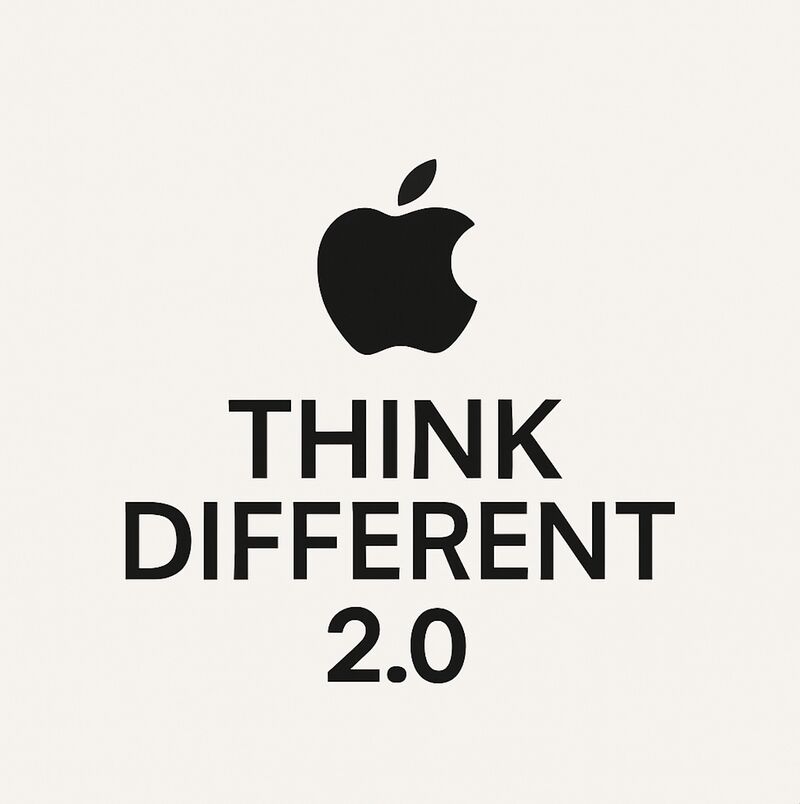
Apple just won the AI war by refusing to fight it I'll admit bias here: Steve Jobs has been my hero since I first met him in the early 2000s. Actually since he launched the Mac. But this isn't nost…
4011325320 viral
AI Strategy10 months ago
LinkedIn Content Strategy & Writing Style
Founder & CEO, Curiouser.AI | Berkeley Instructor | Building Values-Based, Human-Centered AI | LinkedIn Top Voice in AI
2 people tracking this creator on ViralBrain
Stephen Klein positions himself as a principled contrarian and humanist in the AI sector, leveraging his dual perspective as a Berkeley instructor and startup CEO to challenge industry hype. His content strategy centers on a "human-centered" value proposition, frequently using financial forensics and ethical critiques to dismantle the "infinite average" of generative AI while advocating for capital discipline. He is notable for his refusal to treat AI as a purely technical feat, instead framing it through the lens of human talent, societal impact, and the "arithmetic" of business sustainability. By intersecting venture transparency with moral leadership, Klein successfully builds a brand that feels both intellectually rigorous and deeply protective of the human element in a rapidly automating world.
67.7K
30.0K
172
13.0
37
2
Apple just won the AI war by refusing to fight it I'll admit bias here: Steve Jobs has been my hero since I first met him in the early 2000s. Actually since he launched the Mac. But this isn't nost…
OpenAI Announces "Adult Mode" And the AI Will Guess Your Age The AI guesses your age and then offers NSFW sexual content I'm not being glib. Their "age prediction model" estimates whether you're over…

We're Normalizing Public Misogyny? And All Watching It Happen In the past 30 days, five women journalists were publicly insulted on national television for doing their jobs: Catherine Lucey was call…

BREAKING: Disney just bought OpenAI 4–6 weeks of runway. (As usual in this industry, the “deal” was announced before it exists. It’s subject to negotiation, subject to board approval, and may never c…

GenAI in the Hands of Human Talent Will Create A New Realm of Brilliance: And in the hands of the less talented, the cost of infinite average drops to zero. I saw an ad last week from a major brand.…

We’ve spent three years building Curiouser.AI, and we’re now raising on WeFunder. We’re hosting two open webinars next week for anyone curious about what we’re building, and why we believe much of th…

13.0 posts/week
Posts / Week
0.7 days
Days Between Posts
2
Total Posts Analyzed
HIGH
Posting Frequency
171.5%
Avg Engagement Rate
STABLE
Performance Trend
400
Avg Length (Words)
HIGH
Depth Level
ADVANCED
Expertise Level
9/10
Uniqueness Score
YES
Question Usage
0.4%
Response Rate
Writing style breakdown
Overall vibe: highly articulate, concise, and deliberate. A mix of analytical, journalistic, and philosophical. Feels like a sharp op-ed writer with a founder’s perspective.
Register: professional but conversational. Uses contractions, rhetorical questions, and direct address, but vocabulary is elevated and precise.
Analytical (numbers, citations, breakdowns)
Moral/ethical commentary
Rhetorical/punchy lines
Occasional introspective or emotional notes (e.g., posts about misogyny, his daughter)
Not poetic in a flowery sense, but rhythmically crafted. Many lines are structured to sound like aphorisms or quotable insights.
Energy: medium to high, but controlled. Intensity comes from clarity and conviction, not shouting or hype.
Sober concern and moral seriousness (AI safety, misogyny, normalization).
Controlled outrage / sharp skepticism (OpenAI “Adult Mode,” Disney/OpenAI, AI spending).
Optimistic but demanding about human potential and excellence (AI + talent).
Occasional warmth and vulnerability (talking about his daughter, admiration for Steve Jobs).
Never whiny or melodramatic; critiques are grounded in facts, logic, and pattern recognition.
'No story.'
'No soul.'
'Moving wallpaper.'
'That’s it.'
'No idea behind it. No story. No soul.'
'They want the output without the input. The results without the reps.'
'Some have spoken. Most haven’t.'
'Same tools. Opposite outcomes.'
'Floods make the high ground more valuable.'
'This is a press release for two companies that need each other’s story, not each other’s money.'
Snap “Translation:” lines that reframe prior info bluntly.
'Sometimes the best move is the one you don’t make.'
'That’s not cynicism. That’s arithmetic.'
'So stop asking whether AI made it. Start asking whether a human was in it.'
Direct moral framing: talks about what is acceptable, what worries him, what should be challenged, what is scarce (talent, discipline, focus).
Uses data or specifics to ground a larger philosophical point.
First person singular: 'I saw…', 'I’ve been asking myself…', 'I’ll admit bias here…'
First person plural: 'we’re still having the wrong conversation', 'we can design AI to augment work…'
'So stop asking whether AI made it. Start asking whether a human was in it.'
'Stop asking whether AI made it.'
'Start asking whether a human was in it.'
'Maybe the answer is simple…'
'Maybe we are too frightened?'
'I don’t pretend to have answers.'
Tone with reader: treats the reader as intelligent, thoughtful, and capable of following nuanced arguments and data.
Sign in to unlock the full writing analysis
Free tools to help you write, score, and benchmark in the same style.
Other creators worth studying alongside Stephen Klein.

Eric Blaauboer
Schrijver van "Je Laatste: stoppen met roken, op weg naar nicotinix"
139 Viral Score

Stephanie Holland ⚡
GTM Engineer @ mgsh. | Brand-led GTM systems that turn data chaos into pipeline | Clay Solutions Partner | UK + EMEA
151 Viral Score

Alex Vacca 🧠🛠️
Co-Founder @ ColdIQ ($6M ARR) | Helped 300+ companies scale revenue with AI & Tech | #1 AI Sales Agency
124 Viral Score

Bjion Henry
I help agencies/consultancies grow without extra hires • AI Expert for Inbound/Outbound Sales • Ex-Google
64 Viral Score
Dan Hockenmaier
CSO at Faire; danhock.com
82 Viral Score

Lenny Rachitsky
Deeply researched product, growth, and career advice
22 Viral Score
ViralBrain plans, writes, and schedules your LinkedIn content, using official LinkedIn APIs so your account stays safe.
Write like Stephen Klein.