
Expanding your ideal customer definition will slowly kill your startup. Here's how it will happen: You expand your target customer definition to go after a "bigger market", which leads to... Broad…

2435077 viral
Startups11 months ago

LinkedIn Content Strategy & Writing Style
Co-Founder @ Fletch | Positioning & Messaging for B2B Startups
1 person tracking this creator on ViralBrain
Rob Kaminski positions himself as a pragmatic contrarian in the B2B startup space, stripping away the fluff of "brand storytelling" to focus on the cold mechanics of go-to-market strategy. His content centers on the high-stakes intersection of positioning and product-led growth, frequently arguing that clarity and commitment to a niche are more valuable than creative differentiation or broad market appeal. He is notable for his radical transparency regarding the "un-sexy" side of consulting, often sharing internal dialogues and failed messaging experiments to prove that positioning is an iterative conversation rather than a static data point. By blending high-level strategic theory with tactical website teardowns, he serves as a bridge between the visionary founder and the execution-focused marketer, championing the idea that pigeonholing is a competitive advantage rather than a limitation.
67.1K
20.4K
148
1.8
30
1
Expanding your ideal customer definition will slowly kill your startup. Here's how it will happen: You expand your target customer definition to go after a "bigger market", which leads to... Broad…
How can you determine if your new positioning strategy will be effective? This is the million-dollar question every founder asks. Here’s how to test if your positioning strategy is going to work:…

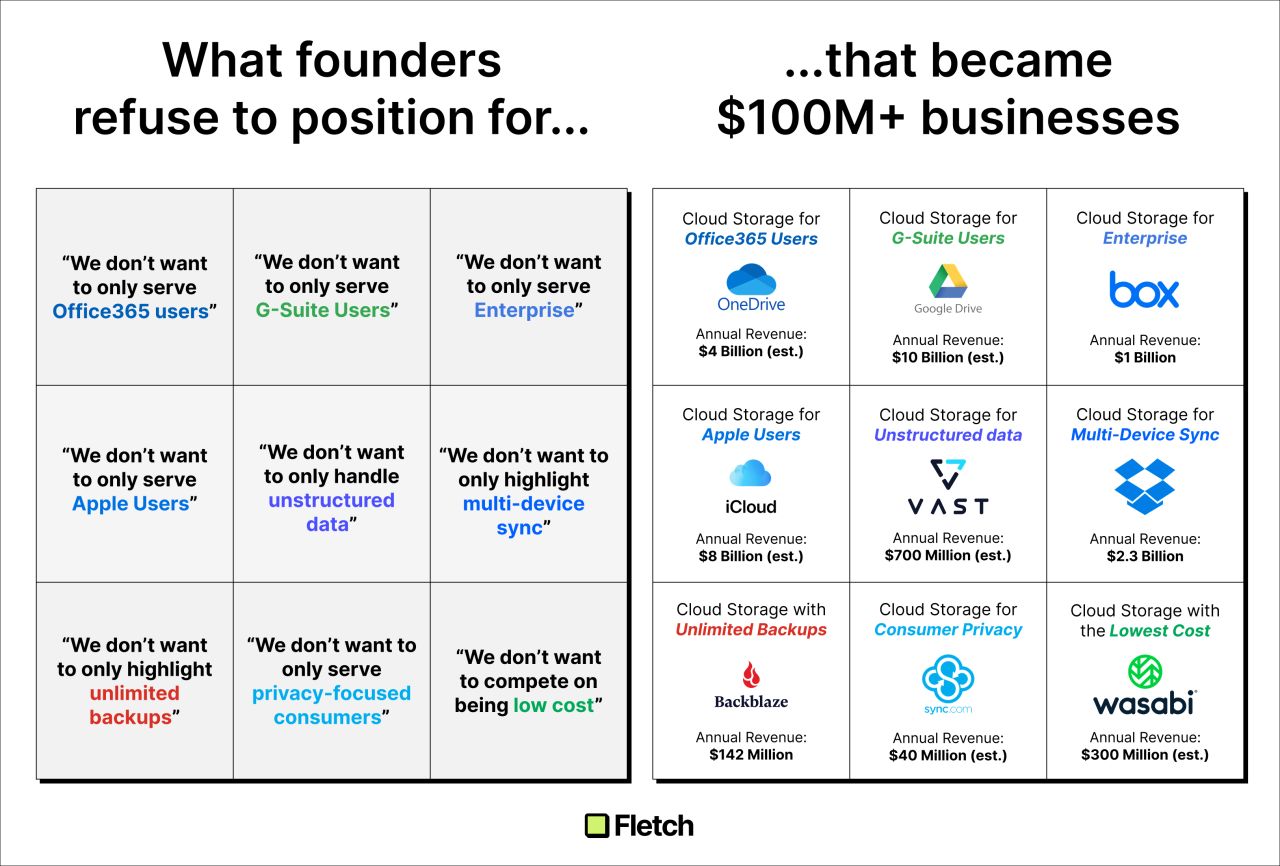
When a founder utters this phrase, I know they’ll never achieve a strong position in their desired market: “We don’t want to pigeonhole ourselves into one part of the market.” These founders fail to…
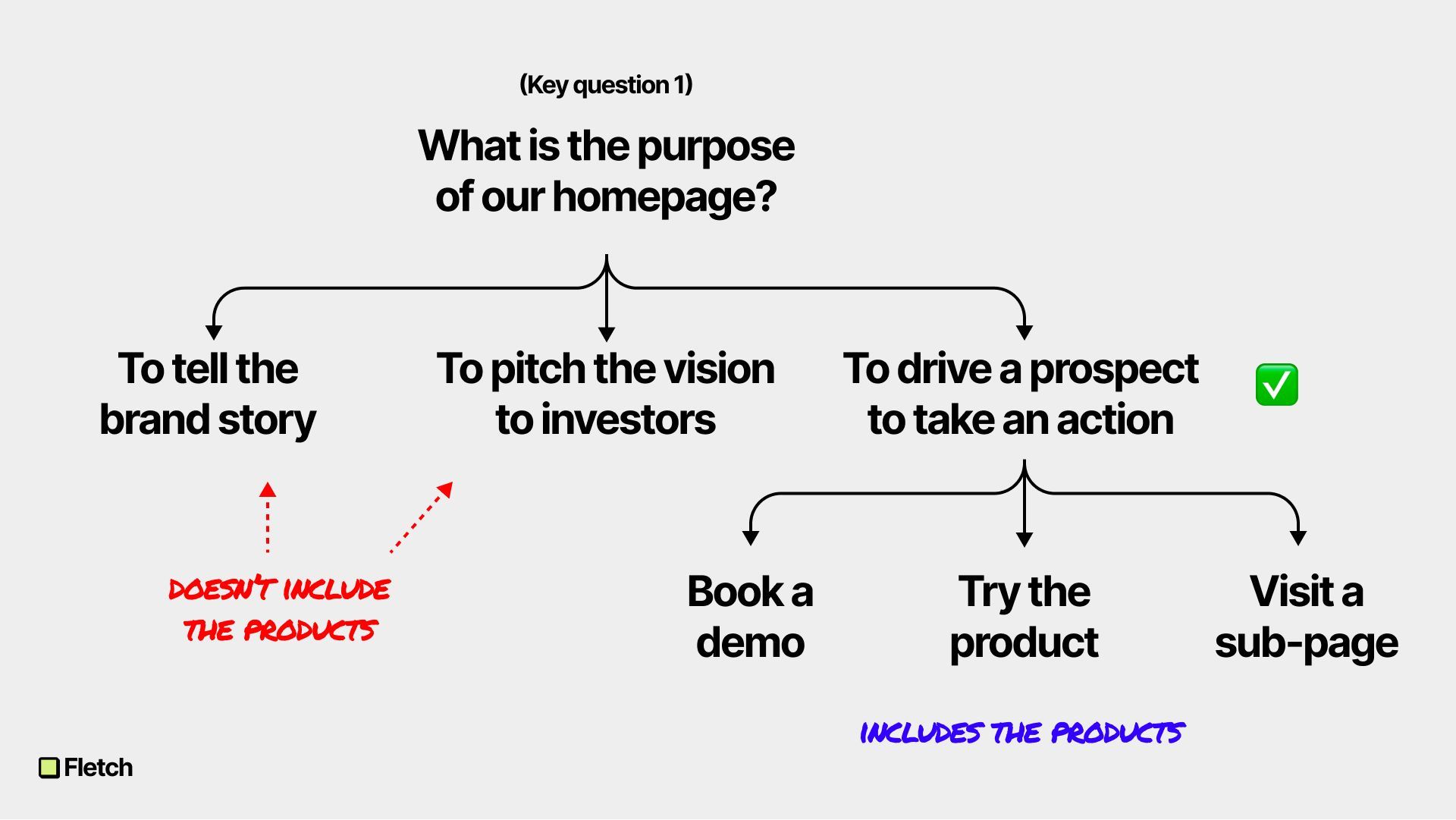
One of the first questions we ask founders when they work with us is this: 👉 “What are you going to use your home page for?” It’s a simple question — Some would say an obvious question. But many…
When first starting Fletch, Anthony and I had this conversation every few hours. It perfectly illustrates what “testing your positioning & messaging” looks like in real life. (I call Anthony… who alw…
B2B founders: “Can’t we position ourselves around an outcome?” This question recently came up in a workshop with a B2B founder with a service-based business that is doing ~$15M in revenue currently.…

1.8 posts/week
Posts / Week
4.3 days
Days Between Posts
1
Total Posts Analyzed
MEDIUM
Posting Frequency
0%
Avg Engagement Rate
STABLE
Performance Trend
300
Avg Length (Words)
HIGH
Depth Level
ADVANCED
Expertise Level
8/10
Uniqueness Score
YES
Question Usage
0.5%
Response Rate
Writing style breakdown
Professional, expert, and B2B-focused, but delivered in a conversational, very human voice.
Tone is direct, confident, and slightly opinionated without being arrogant.
Strongly didactic: the primary goal is to teach and reframe how the reader thinks.
Feels like a seasoned operator talking to peers, not like a marketer writing copy.
The style is methodical and structured, but the surface-level delivery feels casual and easy to read.
Semi-formal conversational: blends business jargon (GTM, positioning, ICP, TAM, category, incumbents) with everyday casual phrasing (“so what?”, “good luck with that”, “both are brutal”, “what went wrong?”, “ahh yeah”, “yo!”).
Uses humor sparingly but effectively, often dry or sarcastic (e.g., the CEO retreat script, “F*** if I know, but I'm going to get another beer”).
Occasionally uses mild profanity for emphasis or realism (“F* if I know”, implied swears like “F*” with asterisks).
Uses exasperated or emphatic constructions in all caps or multiple punctuation marks: “DO YOU SEE THE PROBLEM!?!!?”, “VERY fragmented market.”
Medium-to-high energy but controlled.
The rhythm is punchy and forward-moving, with many short lines and fragment sentences to create momentum.
Serious underlying content (strategy, failure risks) combined with approachable pacing and light bits of humor.
Frequent use of rhetorical questions, often followed immediately by the answer.
Heavy use of contrast structures: X vs Y, “If you do this… it leads to…”, “Both are hard. You can’t avoid the hard, but you can choose which kind of hard…”
Frequent use of analogy/metaphor frameworks (e.g., “Positioning is like a game of musical chairs.”).
Strong reliance on lists, sequences, and stepwise chains (“which leads to… which leads to…”).
Frequent direct audience engagement and explicit reasoning (“Here’s how…”, “Here is how the rest of the conversation went:”).
Uses parentheses for side comments, humor, or meta-commentary (“(because the majority of the work is…)”, “(explains tweak)”, “h/t Tas Bober”).
First-person singular (“I share this because…”, “I call Anthony…”).
First-person plural “we” (both as Fletch the company and inclusive “we marketers/founders”).
Second-person “you” when instructing or warning founders (“You expand your target…”, “You need to talk about your product.”).
The default vantage point is: expert advisor (“Me”) speaking to founders/marketers as peers.
Commands: “Build your go-to-market plan around your positioning.”, “Take a seat in the #1 chair.”, “Remember…”
Softer guidance: “They’d be far better off being clear on the problem they solve…”, “These are usually better markets for founders with stronger sales and marketing skillsets.”
Sign in to unlock the full writing analysis
Free tools to help you write, score, and benchmark in the same style.
Other creators worth studying alongside Rob Kaminski.
Emre Varol
CEO of A2SV - Africa to Silicon Valley | Founder on a Mission | Empowering Africa’s Top Tech Talent | Building Digital Solutions & Connecting Graduates with Global Leaders
224 Viral Score
Wytze de Haan
AI for eventprofessionals ✨
217 Viral Score
David Allen
Founder, David Allen Company
28 Viral Score

Peter Bort
Taking the mindful approach to collaborative law, mediation and Amicable Divorce
72 Viral Score

Jennifer Thompson
Food, Beverage, and Beauty/Wellness Photographer for CPG Brands
23 Viral Score

Ayoub Fandi
GRC Engineering @ Lovable | Engineering the Future of GRC
24 Viral Score
ViralBrain plans, writes, and schedules your LinkedIn content, using official LinkedIn APIs so your account stays safe.
Write like Rob Kaminski.