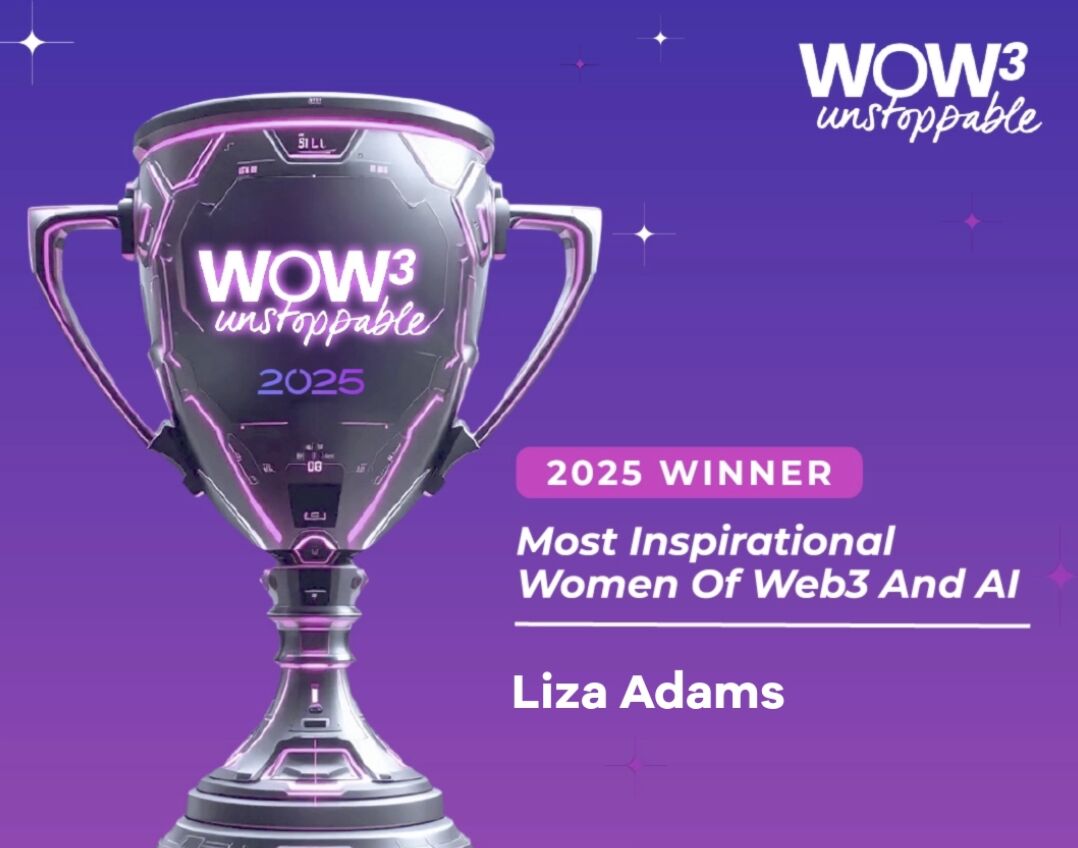
Fei-Fei Li. Daniela Amodei. Melanie Perkins. And somehow... me. Being named to the Most Inspirational Women in AI & Web3 list matters to me. Not because of the title, but because of what it represent…

LinkedIn Content Strategy & Writing Style
AI Marketing & GTM Advisor | Human+AI Org Evolution | Applied AI Workshops | “50 CMOs to Watch” | Keynote Speaker
1 person tracking this creator on Viral Brain
Liza Adams positions herself as a high-level architect of human-AI evolution, moving beyond simple prompt engineering to help GTM leaders design sophisticated organizational workflows. Her content strategy centers on the transition from using AI as a basic tool to building autonomous AI teammates and "thinking systems" that simulate complex business scenarios like stakeholder debates and sales coaching. She distinguishes herself through a pragmatic, tool-agnostic approach that prioritizes human empathy and organizational change management over mere technical implementation. By blending strategic GTM advisory with hands-on experimentation, she provides a unique value proposition where static strategy documents are transformed into interactive, AI-driven training simulators that drive measurable enterprise results.
23.3K
7.2K
111
—
7.0
71
1
Fei-Fei Li. Daniela Amodei. Melanie Perkins. And somehow... me. Being named to the Most Inspirational Women in AI & Web3 list matters to me. Not because of the title, but because of what it represent…

Sam Altman just called "code red" at OpenAI. Google's Gemini jumped from 450M to 650M monthly users in three months. Anthropic is winning enterprise customers. The AI race isn't slowing down. What I…

I watched two AI personas argue about a product while one played a skeptical buyer. Then AI told me what the rep did wrong. Took less than five minutes to build. No code. ChatGPT, Gemini, and Claude…
I built a simulator where three AI customer stakeholders debate an AI sales rep in real time. Then it grades the AI rep's performance and coaches them on what to do next. See the 40-sec demo below. I…
Too busy during the week to keep up with AI but too curious to ignore it? I turned my latest newsletter into a 6-min AI video explainer (below) and a 12-min AI podcast. Same content, different format…
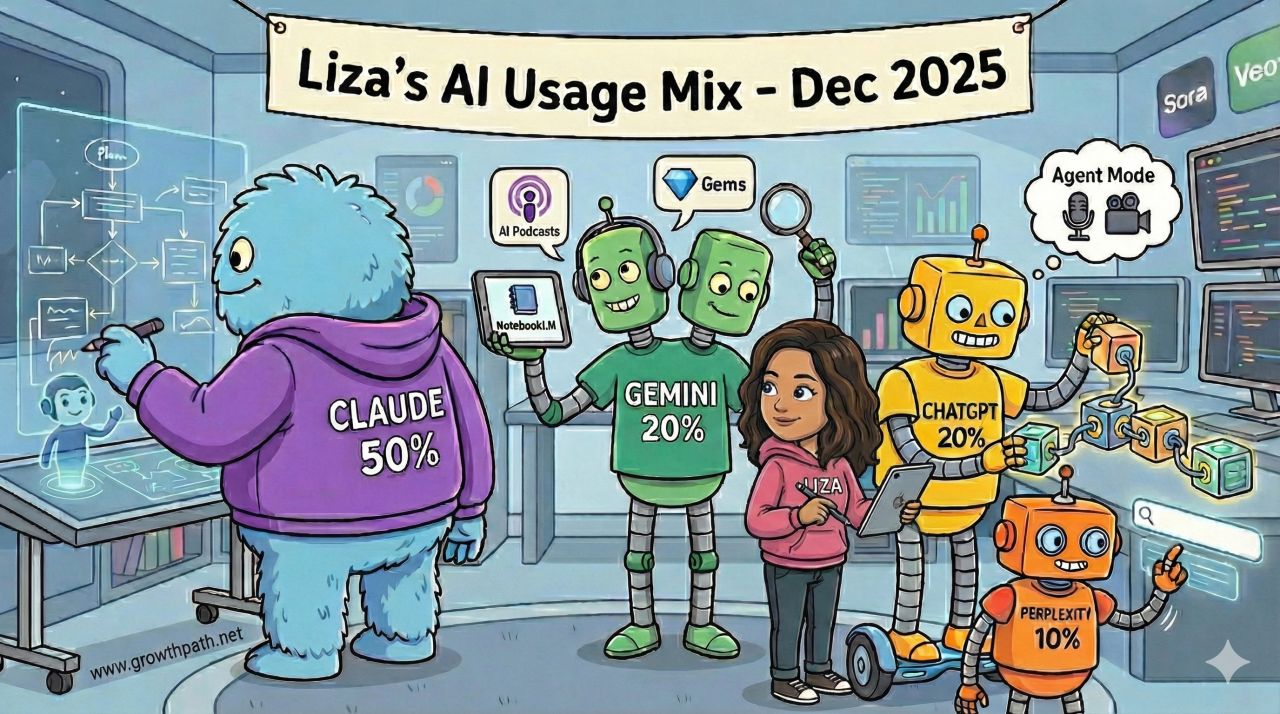
ChatGPT turned 3 yesterday. Unlike the rest of us, it showed up to work this morning fully functional. Below is what I imagine the day-after birthday party looks like for our AI friends... I'm dragg…

7.0 posts/week
Posts / Week
1.1 days
Days Between Posts
1
Total Posts Analyzed
HIGH
Posting Frequency
111.1%
Avg Engagement Rate
DECREASING
Performance Trend
300
Avg Length (Words)
HIGH
Depth Level
ADVANCED
Expertise Level
8.5/10
Uniqueness Score
YES
Question Usage
0.6%
Response Rate
Writing style breakdown
Primary mode: professional, informative, and practical with a distinctly conversational, human tone.
The style is polished but not stiff. It reads like a seasoned operator talking to peers, not a marketer writing ad copy.
The content is insight-driven, grounded in real use cases, and framed around business outcomes and human behavior.
Informative / explanatory (breaking down concepts and frameworks)
Persuasive (subtly selling ideas, events, or a newsletter)
Motivational / encouraging (especially about adoption, careers, and transformation)
Lightly witty (occasional dry humor, but not jokey or meme-heavy)
Overall: semi-formal, “LinkedIn thought leader” professional.
Word choice is plain, modern business English, no jargon for its own sake.
Occasional colloquial phrases appear (“not a pilot anymore,” “garbage in, garbage out,” “on a tear,” “best tool for the job wins”) to keep it approachable.
Energy: medium to high, but controlled. It feels calm, confident, and purposeful, not hyped or breathless.
Optimistic about AI and transformation.
Grounded and pragmatic about the work required (humans, change, learning).
Respectful and appreciative when mentioning people or companies.
Any excitement is channeled into what’s possible (“work that wasn’t possible before”) rather than pure hype.
Framing sentences that crystallize a big idea in one line (e.g., “The hardest part of this work isn't AI. It's us humans.”).
Contrast structures: “They’re not just doing X faster, but doing Y that wasn’t possible before.”
Reframing: turning a fact into a bigger pattern or “the real point.”
Short, punchy declarative sentences as emphasis.
As hooks (“Too busy during the week to keep up with AI but too curious to ignore it?”)
To invite reflection (“I'm curious... what does your AI mix look like right now?”)
Used sparingly but effectively (AI as “teammates,” “thinking systems,” AI tools as a “stack,” “on a tear”).
Occasional personification of AI tools (“they’re unaffected and ready to help”).
Often at the end with questions or CTAs.
In the middle with “you” when explaining use cases or benefits.
First person singular “I” for personal observations, experiences, and opinions.
First person plural “we” sometimes to speak about teams, shared experiences, or the broader community.
Second person “you” to address the reader, especially in CTAs, instructions, or when describing what they could do.
Commands are gentle and practical: “Try the simulator yourself,” “Describe what you want, upload a document, and let AI build the system.”
Suggestions and invitations are frequent and soft: “You’ll walk away knowing…,” “Would love to hear your thoughts,” “Consider what systems you could design.”
Overall, the voice feels like a knowledgeable peer guiding you, not a distant authority lecturing you.
Sign in to unlock the full writing analysis
Nail your LinkedIn strategy with ViralBrain.
Analyze and write in Liza Adams's style. Grow your LinkedIn to the next level.