
Stumbled across 4 recruiting roles at Anthropic. Solid pay ranges $170,000 - $295,000 USD. 😯 Technical Recruiter, Specialized (SF and Seattle) https://lnkd.in/evJPRYGH Recruiter, Technical (SF, Se…
265474411 viral
Recruiting8 months ago

LinkedIn Content Strategy & Writing Style
Applied Generative AI & LLM’s | Future of Work Architect | Global Sourcing & Semantic Search Authority
3 people tracking this creator on ViralBrain
Glen Cathey positions himself as a high-level architect of the future of work, bridging the gap between legacy talent acquisition and the frontier of generative AI. His content strategy centers on moving beyond simple automation to advocate for a fundamental redesign of human-AI collaboration, frequently using metaphors like "paving cowpaths" to challenge leaders to rethink rather than just accelerate existing processes. He is notable for his ability to translate complex technical shifts—such as agentic workflows and LLM benchmarks—into practical talent strategies, focusing on the "17% of human expertise" that remains irreplaceable. His work represents a sophisticated intersection of semantic search authority and macroeconomic foresight, where he balances a deep fascination with AI’s potential against a grounded, empathetic commitment to leadership integrity and gender equity.
72.3K
30.0K
79
4.7
16
4
Stumbled across 4 recruiting roles at Anthropic. Solid pay ranges $170,000 - $295,000 USD. 😯 Technical Recruiter, Specialized (SF and Seattle) https://lnkd.in/evJPRYGH Recruiter, Technical (SF, Se…
If you read nothing else today, read this. It may be the most important thing you read this year. As someone who uses AI every single day for deep knowledge work, I can tell you that what Matt Shumer…
Hiring managers are a part of talent acquisition, but what % of the hiring managers you've worked with (or interviewed with!) actively worked to recruit the candidates in the process? Remember, to re…
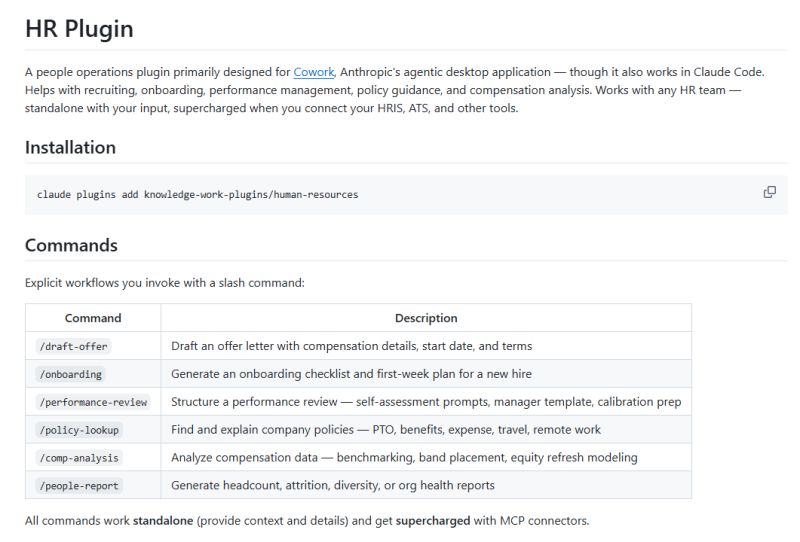
Anthropic just released an HR Plugin for Cowork, and it's worth a look even if you don't have access to or plan to use them so you can get a sense of these kinds of capabilities and skills, such as:…
What makes one candidate "better" than another - assuming skills and experience are equal? What constitutes an "A player?" I often write and talk about making sure you source, talk to, and screen eno…
I’m happy to share that I’ve obtained a new certification: Randstad Gemini AI Skills Accelerator from Randstad! Very cool to have played a part in developing the content & program!
4.7 posts/week
Posts / Week
1.6 days
Days Between Posts
4
Total Posts Analyzed
HIGH
Posting Frequency
78.7%
Avg Engagement Rate
STABLE
Performance Trend
280
Avg Length (Words)
HIGH
Depth Level
ADVANCED
Expertise Level
0.78/10
Uniqueness Score
YES
Question Usage
0.5%
Response Rate
Writing style breakdown
<start of post>
The "skills gap" is the greatest ghost story ever told in corporate America.
We’ve been hearing about it for a decade. We’re told that the reason 10 million jobs sit open is that the workforce simply doesn't have the "technical chops" to fill them.
It’s a convenient narrative. It shifts the burden of training from the employer to the individual.
But here’s the thing... the data tells a different story.
When you look at the "unfilled" roles in most Fortune 500 companies, you don't see a lack of applicants. You see a lack of "perfect" applicants.
→ ATS filters that reject 98% of resumes for missing a single keyword.
→ Hiring managers demanding 10 years of experience in a 3-year-old technology.
→ Salary bands that haven't been adjusted for 2024 inflation.
→ Interview processes that require 8 rounds and a "take-home project."
We aren't suffering from a skills gap. We’re suffering from a "flexibility gap."
I’ve seen this play out in real-time. A company will leave a critical engineering role open for nine months—losing millions in productivity—because they refuse to hire a candidate who has 90% of the skills and train them on the remaining 10%.
Think about that.
We would rather lose millions in "potential" than spend thousands on "development."
For those of us in TA and HR, this is our moment to push back. We are the ones who see the "silver medalist" candidates who could be gold medalists with four weeks of onboarding.
If we don't fix the selection process, the skills gap will continue to be the perfect excuse for stagnant growth.
Stop looking for the unicorn. Start building the stable.
What do you think? Is the skills gap real, or is it just a failure of our hiring systems?
I go deeper into the "Selection Paradox" in the link below. 👇
<end of post>
Sign in to unlock the full writing analysis
Free tools to help you write, score, and benchmark in the same style.
Other creators worth studying alongside Glen Cathey.

Lealem Getahun Simegn
Software Engineer
1,289 Viral Score

Felix Frank ⚙️
Founder @StackOptimise | Co-Founder @Blume
65 Viral Score

Shashank Sharma
Anti-Fragile Human, Thinker, Storyteller, Founder and Marketer | Bittersweet, but unabashedly myself :)
58 Viral Score

Anmol Garg
Standup Comedian | Corporate Babaji
73 Viral Score

Austin Belcak
I Teach People How To Land Amazing Jobs Without Applying Online // Ready To Land A Great Role 2x Faster (With A $44K+ Raise)? Head To 👉 CultivatedCulture.com/Coaching
2 Viral Score

Aditya Kulkarni
paperplane - vacation savings club | Previously Founder-CEO, Stoa | 12 years tinkering around
11 Viral Score
ViralBrain plans, writes, and schedules your LinkedIn content, using official LinkedIn APIs so your account stays safe.
Write like Glen Cathey.