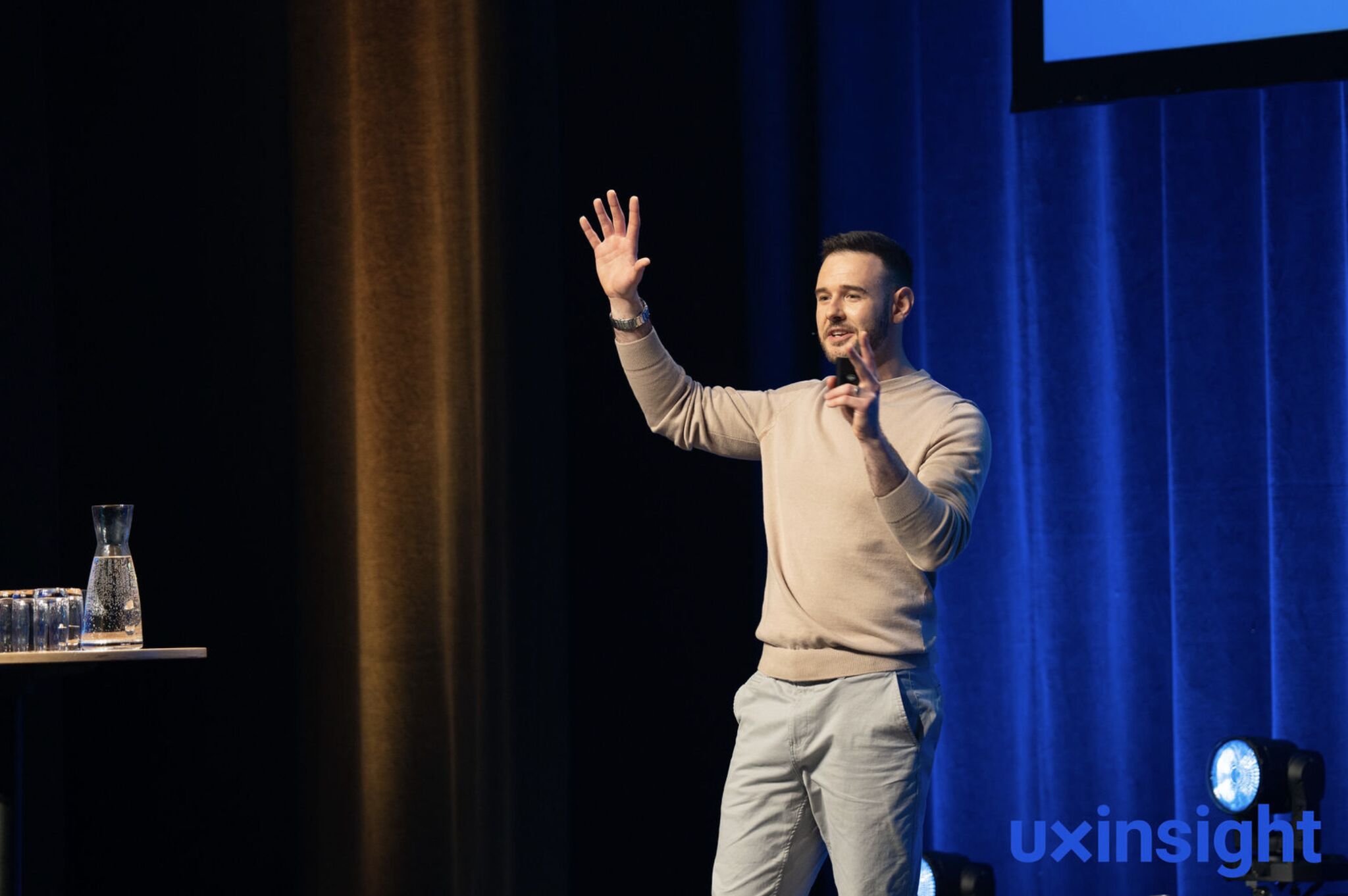
Now that the photos are in, I’ve been reflecting on what a brilliant few days it was at UXinsight Festival 2025. This year, I had the chance to speak at the conference, and introduce the Universal Re…
9413210 viral
User Research12 months ago

LinkedIn Content Strategy & Writing Style
Design Leader | International Speaker | Mentor
1 person tracking this creator on Viral Brain
Dan Robins positions himself as a high-level design leader who bridges the gap between technical research methodology and organizational culture. His content strategy centers on democratizing complex research frameworks through relatable metaphors, such as comparing organizational knowledge sharing to mycelium networks, to advocate for the dismantling of corporate silos. He is notable for his ability to blend professional authority with a human-centric lens, frequently championing neurodiversity and empathy as essential components of effective leadership. By intersecting global speaking engagements with actionable mentorship, Dan moves beyond standard UX discourse to position research as a connective, invisible force that drives collective business growth.
16.7K
15.8K
33
—
0.4
24
1
Now that the photos are in, I’ve been reflecting on what a brilliant few days it was at UXinsight Festival 2025. This year, I had the chance to speak at the conference, and introduce the Universal Re…
Did you know that fungi networks (mycelium) act as nature’s internet, connecting plants underground to share nutrients and warn each other about pests? This "Wood Wide Web" is critical for ecosystems…

It’s not often I share personal reflections on here, but this article by Jamie Williams struck a chord. Jamie writes with rare honesty and clarity about what it’s like to navigate a career with ADHD…
Last chance to grab your ticket for UXinsight Festival 2025 at regular pricing! Next week I’m lucky enough to be joining an truly inspiring lineup of speakers to explore the future of UX research.…
0.4 posts/week
Posts / Week
21.3 days
Days Between Posts
1
Total Posts Analyzed
LOW
Posting Frequency
32.5%
Avg Engagement Rate
STABLE
Performance Trend
175
Avg Length (Words)
HIGH
Depth Level
ADVANCED
Expertise Level
0.78/10
Uniqueness Score
YES
Question Usage
0.6%
Response Rate
Writing style breakdown
Professional, polished, and articulate, with a warm, human tone.
Reflective and thoughtful rather than punchy or aggressive.
Conversational but not casual to the point of slang; suitable for LinkedIn / professional contexts.
Informative and metaphor-friendly; uses analogy to reframe ideas (e.g. mycelium as a model for insights).
Genuinely appreciative and community-oriented (thanking collaborators, highlighting others).
Mid-to-high formality: language is clean and correct, but softened with contractions and occasional light emoji.
No swearing, no internet slang, no edgy humour.
The tone is respectful and inclusive, never confrontational or provocative.
Calm, steady, moderate energy.
Often reflective or quietly enthusiastic, not hyped or overexcited.
Emotion is expressed via words like ‘brilliant’, ‘energising’, ‘inspiring’, and short, affirmative lines such as ‘We’re all navigating something.’
When promoting something (like a festival), enthusiasm increases slightly, marked by an exclamation mark or two, but still remains grounded.
Frequent use of gentle rhetorical questions to invite reflection: ‘How often do we truly stop to consider…?’, ‘Did you know that…?’, ‘Is there really any harm in…?’
Use of metaphors and analogies to connect abstract ideas with concrete imagery (e.g. the ‘Wood Wide Web’ analogy for organisational insight networks).
Parallel structures in descriptive clauses (e.g. ‘how it can lead to both deep engagement and sudden detachment, how curiosity can be both a gift and a challenge, and how…’).
Triadic lists for rhythm (e.g. ‘courage, clarity and care’, ‘new ideas, fresh energy, and some great new friends’).
Starting sentences with ‘And’ or ‘But’ to maintain conversational flow.
Occasional sentence fragments for emphasis (e.g. ‘Already looking forward to UXinsight 2026.’).
Mix of first person singular (‘I’) and plural (‘we’), plus second person (‘you’).
‘We’ is often used in a collective, inclusive sense (‘we need to break down these silos’).
‘You’ appears primarily in gentle prompts, especially when asking the reader to consider an action or perspective.
Soft invitations: ‘I’d love to connect — come say hi!’
Encouraging nudges framed as low-risk, high-reward: ‘The key is to start small with a single step – reach out and start a conversation.’
Reflective prompts: ‘How often do we truly stop to consider…?’
Sign in to unlock the full writing analysis
Nail your LinkedIn strategy with ViralBrain.
Analyze and write in Dan Robins's style. Grow your LinkedIn to the next level.