A few words for the end of the year… Feeling anxious, overwhelmed, or even a bit "lost" and "behind" on AI and where 2026 may take us? The truth is: Everyone is. Just look at the image below. That…
4127055 viral
AI Adoption3 months ago

LinkedIn Content Strategy & Writing Style
Helping B2C Teams Accelerate Growth with Experimentation & AI | Freelance | 2× Award Winner | Keynote Speaker | Community Builder
1 person tracking this creator on Viral Brain
Bjarn Brunenberg positions himself as a high-level architect of AI-driven growth, moving beyond simple CRO tactics to focus on the systemic redesign of product and experimentation teams. His content strategy centers on the transition from manual "doing" to strategic "orchestrating," offering pragmatic frameworks like his four levels of AI maturity to help leaders avoid the trap of "empathy without agency." He is notable for his radical transparency regarding the "apprenticeship crisis", arguing that over-automation threatens the intuition-building friction necessary for junior talent. By intersecting deep experimentation rigor with agentic workflows, Bjarn provides a sophisticated roadmap for B2C teams to buy back "thinking time" and protect their roadmaps from being steered by statistical noise or generic AI outputs.
2.7K
2.1K
30
—
2.4
169
1
A few words for the end of the year… Feeling anxious, overwhelmed, or even a bit "lost" and "behind" on AI and where 2026 may take us? The truth is: Everyone is. Just look at the image below. That…
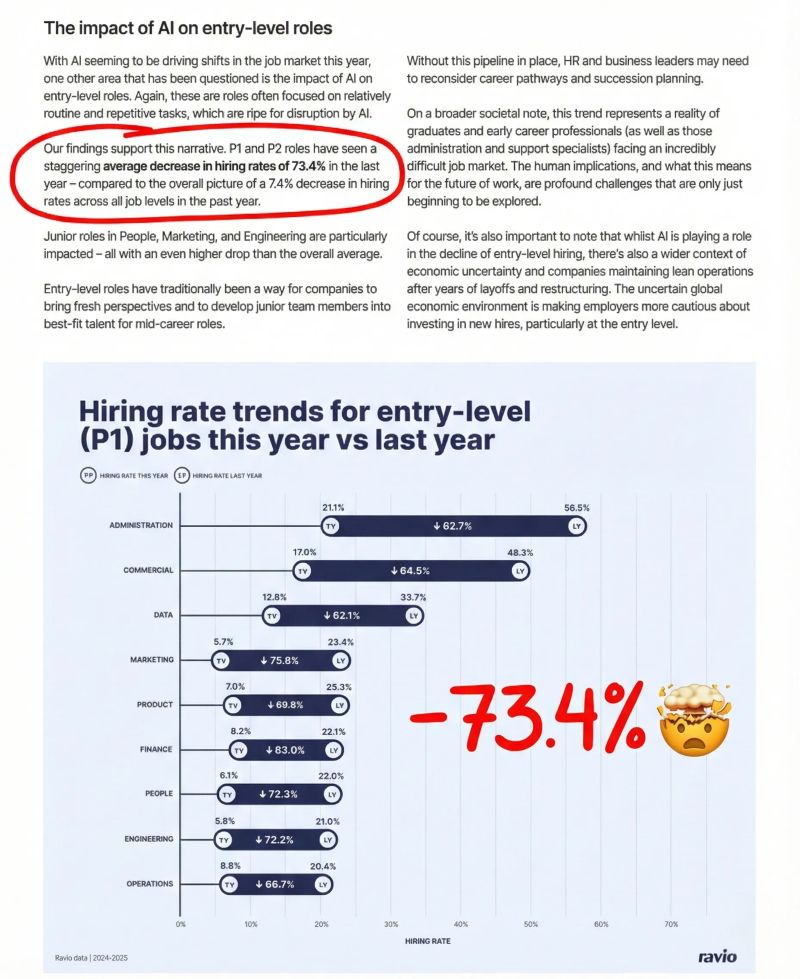
I actually feel sorry for Junior PMs and Experimenters starting today. I just read that entry-level hiring in European tech in 2025 was down by 73.4%! Companies are cutting these roles to bet on AI.…
Traditional experimentation as we know it is a shrinking skillset... The discipline isn’t dying. But the "manual" version of it is. The role of the experimenter is shifting from being the 'doer' to…
Scaling experimentation is not about running more tests. It's about the workflow you let every squad run by default. When I first tried to "scale experimentation" at TomTom, we did what most teams d…
I just hired Santa to turn wish lists into Sora videos...without writing a single line of code! 🎅 ✨ Here is the exact 'North Pole' tech stack I used (and why it's way simpler than it sounds): 1. Th…
92% of people setting NY resolutions don't achieve them. 4 ways to increase your success with AI. I took the 4 classic pillars of goal setting and built an AI workflow for them. If you're serious a…

2.4 posts/week
Posts / Week
3.2 days
Days Between Posts
1
Total Posts Analyzed
HIGH
Posting Frequency
29.9%
Avg Engagement Rate
STABLE
Performance Trend
320
Avg Length (Words)
HIGH
Depth Level
ADVANCED
Expertise Level
0.82/10
Uniqueness Score
YES
Question Usage
0.3%
Response Rate
Writing style breakdown
<start of post>
no one changed the workflow.
They bought tools.
They ran training.
They celebrated “usage”.
And then quietly wondered why nothing moved.
You don’t have an AI problem.
You have an operating model problem.
Because “AI at work” is not one skill.
It’s 3 distinct modes you need to design for.
→ Mode 1: The Draft (Speed)
This is where most teams stop.
AI writes the first version.
It summarises the research.
It generates 20 headline variations.
Helpful.
But it doesn’t change decisions.
You just ship the same thinking… faster.
→ Mode 2: The Mirror (Quality)
This is where the value starts.
what assumptions am I making?
what would a skeptical user say?
where is this plan likely to break in implementation?
what is the simplest version of this?
In this mode, the model is not replacing the team.
It’s raising the team’s standards.
→ Mode 3: The Machine (Leverage)
This is the real unlock, and also the hardest.
You stop asking AI to help with tasks.
auto-cluster feedback into themes weekly
pre-fill experiment briefs from analytics + qual data
generate QA checklists based on past mistakes
flag SRM / tracking anomalies before anyone presents results
keep a living library of “what we learned” that’s actually searchable
From “use AI”…
to “design AI into the default path”.
And yes, this requires role redesign.
If your junior marketer’s job is still “write copy”, you will get generic output.
If their job becomes “Editor-in-Chief of customer truth”, you will get better decisions.
Same person.
Same tool.
Different system.
The mistake I see teams make is trying to scale Mode 1.
More prompts.
More templates.
More “best practices”.
Sign in to unlock the full writing analysis
Nail your LinkedIn strategy with ViralBrain.
Analyze and write in Bjarn Brunenberg's style. Grow your LinkedIn to the next level.