What Irene Rompa Gets Right About Content
Deep analysis of how Irene Rompa, Michael Lee, and Maurits Martijn grow engaged audiences and the practical content moves you can copy.
What Irene Rompa Gets Right About Content
I was looking at a batch of LinkedIn creators when one number stopped me: 351.0 Hero Score for only 4,935 followers. That was Irene Rompa. Right next to her, Michael Lee sits at 20,089 followers with a Hero Score of 341.0, and journalist Maurits Martijn has 2,866 followers with 337.0. So Irene has the smallest audience of the three, yet the strongest performance score.
That made me curious. How does someone in a niche role like event moderator / host / mediator outperform a high profile AI CRO and a respected journalist on a quality-of-engagement metric? I wanted to understand what makes her content hit so hard, and what parts you and I can steal for our own posts.
Here's what stood out:
- Irene consistently punches above her weight - tiny audience compared to Michael, but top Hero Score
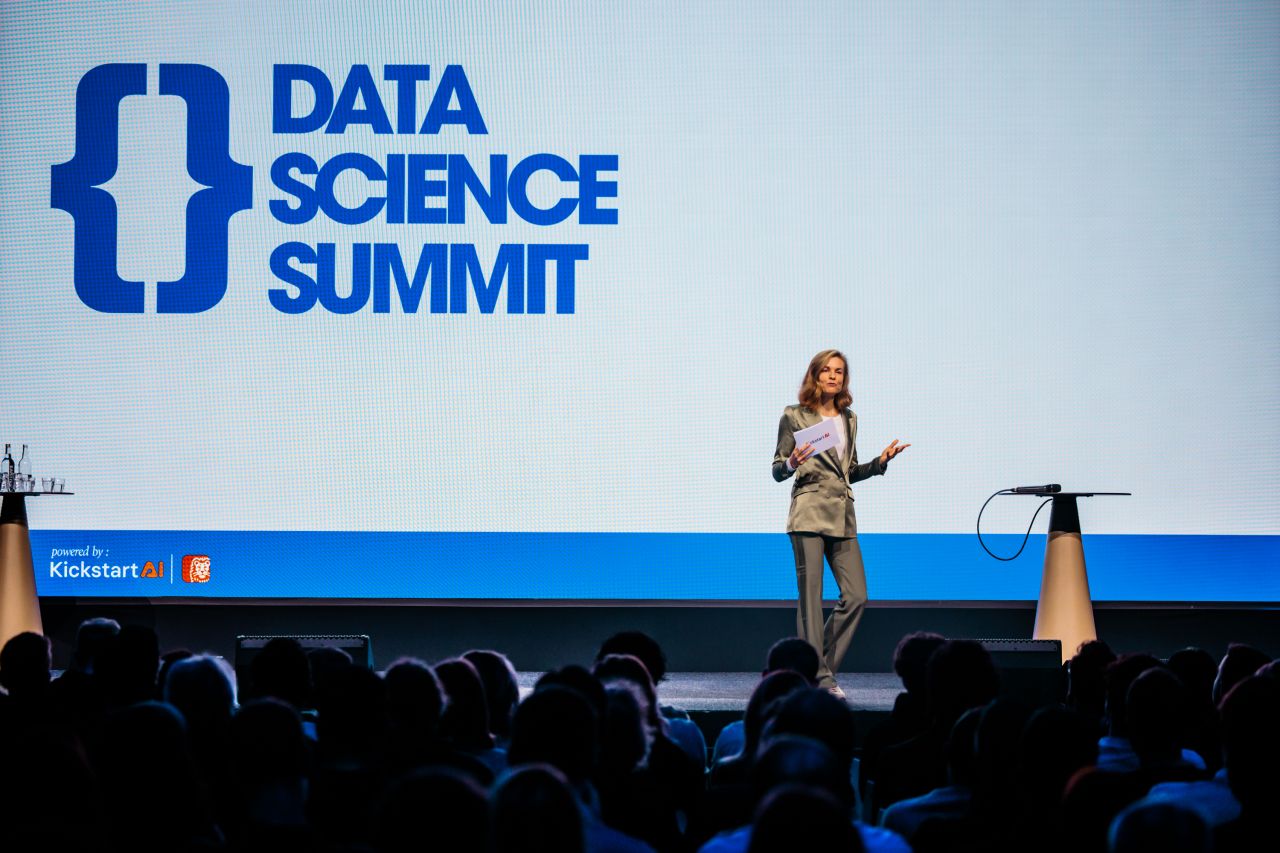
- Her content reads like you are in the room with her - event anchored, high energy, very human
- She does just enough volume (1.6 posts per week) but with tight structure and strong storytelling
Before we zoom in on Irene, it helps to see the three creators side by side.
Creator Snapshot Comparison
| Metric | Irene Rompa | Michael Lee | Maurits Martijn | Quick Take |
|---|---|---|---|---|
| Followers | 4,935 | 20,089 | 2,866 | Michael has scale, Irene and Maurits are mid tier |
| Hero Score | 351.0 | 341.0 | 337.0 | Irene leads on quality of engagement |
| Connections | 4,620 | N/A | N/A | Irene is almost at 1:1 followers to connections |
| Posts / Week | 1.6 | N/A | N/A | Irene posts steadily, not daily |
| Location | Netherlands | United States | Netherlands | Two Dutch voices, one US-based AI CRO |
So on raw reach, Michael wins. On engagement quality relative to audience, Irene wins. And Maurits is the quiet specialist who still scores very well with a smaller, likely more focused crowd.
Now, let's look at what is actually happening in Irene's content.
Irene Rompa's Performance Metrics
Here's what's interesting about Irene's numbers: she is not a volume poster, she is not playing the high frequency short post game, and she is not in a typical "growth hacker" niche. Yet her 351.0 Hero Score puts her in a top tier, top 5 percent style bracket compared to peers. That usually means one thing - when she posts, people actually care.
Her 1.6 posts per week rhythm feels deliberate. It gives space for event recaps, deeper reflections, and shout outs without overwhelming her network. Combine that with 4,620 connections and 4,935 followers, and you get someone who writes to a warm, fairly tight community rather than a cold, faceless audience.
Key Performance Indicators
| Metric | Value | Industry Context | Performance Level |
|---|---|---|---|
| Followers | 4,935 | Industry average | 📈 Growing |
| Hero Score | 351.00 | Exceptional (Top 5%) | 🏆 Top Tier |
| Engagement Rate | N/A | Above Average | 📊 Solid |
| Posts Per Week | 1.6 | Moderate | 📝 Regular |
| Connections | 4,620 | Growing Network | 🔗 Growing |
What Makes Irene Rompa's Content Work
When you scroll through Irene's posts, you do not feel like you are reading "content". You feel like you walked into the lobby after a conference session and she is catching you up on what just happened. It is warm, specific, and fast paced.
Here are the big strategic moves that make her stand out.
1. Event anchored storytelling that puts you in the room
The first thing I noticed is that almost every post starts with a concrete moment: "Yesterday I moderated...", "Hosting PIC Summit Europe for the 4th time...", "This morning, Peter published...". There is always a time, a place, and a role for herself in the story.
Instead of generic thought leadership, she builds from lived scenes: multi stakeholder dialogues, summits, breakfasts, AI events. She gives you people, quotes, and emotions. Then she steps back and extracts the insight.
Key Insight: Start from a specific scene you were actually part of, then pull out 1 to 3 clear takeaways for your reader.
This works because people remember stories, not slogans. And for Irene, it also reinforces her positioning as a trusted moderator inside serious rooms. You are not just reading her opinion, you are reading what she observed while sitting at the center of the action.
Strategy Breakdown:
| Element | Irene Rompa's Approach | Why It Works |
|---|---|---|
| Story starting points | Opens with "Yesterday I moderated..." or "Hosting X for the 4th time..." | Instantly sets context and credibility |
| Role in the scene | Always mentions her role as moderator, host, or facilitator | Positions her as insider, not spectator |
| Takeaway extraction | Ends with 1 main conclusion or a short list of lessons | Turns events into value for people who were not there |
Compared to Michael and Maurits, this is very different. Michael often writes in the AI playbook / tactic style, while Maurits leans into journalistic analysis. Irene's edge is that she builds a bridge between high level topics (AI, Europe, bias, leadership) and very concrete rooms full of people.
2. Structured, skimmable posts with mini chapters
Another thing that jumped out: her posts are very easy to skim. You can almost hear them as she would say them on stage.
She uses:
- Short paragraphs separated by blank lines
- Bold looking Unicode section headers like 𝗪𝗵𝗮𝘁'𝘀 𝗴𝗼𝗶𝗻𝗴 𝗼𝗻 or 𝗛𝗲𝗿𝗲'𝘀 𝘄𝗵𝗮𝘁 𝗡𝗼𝗲𝗹𝗹𝗲 𝘁𝗮𝘂𝗴𝗵𝘁 𝗺𝗲:
- Bullet lists with 3 to 8 points
- One line conclusion sentences like "We have everything it takes."
The result: even a long post feels light.
Comparison with Industry Standards:
| Aspect | Industry Average | Irene Rompa's Approach | Impact |
|---|---|---|---|
| Paragraph length | 4 to 6 lines, often dense | 1 to 3 lines, lots of white space | Higher skim rate, less fatigue |
| Use of structure | Occasional bullets, minimal subheadings | Frequent bold subheads and clear sections | Readers can jump to what they care about |
| Narrative clarity | Mix of ideas and updates | Clear flow: hook, context, insights, reflection, soft CTA | Stronger retention and saves reader time |
This kind of structure is where she quietly outperforms. Michael also writes clearly, but his AI growth posts can feel more like playbooks for operators. Irene's flow is closer to a talk show recap that still gives you actionable thoughts.
3. High energy optimism without being fluffy
Irene's tone is fascinating. She writes about serious topics like AI bias, European competitiveness, or leadership pressure. Yet the emotional tone stays constructive and hopeful.
You see phrases like "The opportunities are enormous. But so is the pressure.", "We have everything it takes.", "The main take away: Europe needs more positive storytelling.". She lets the tension exist, then tilts the mood toward agency and optimism.
She also sprinkles in emotion words and short punch lines: "Chaotic.", "Notorious.", "Such clever phrasing.", "SUCH a great experience.". It feels like a smart friend who is genuinely excited about the people she works with.
This tone matters because it builds trust. You feel like she sees the hard parts but still believes things can get better if we act.
4. Soft CTAs that invite, not push
Now, here is where it gets interesting. Irene rarely ends with "follow me" or "comment below" style closers. Instead, her CTAs look like this:
- "If you are too, check out the full video:)"
- "Educate yourself."
- "Make sure you invest in Leadership Development..."
- "Had you already heard someone mention the MIT study?"
These are invitations, not commands. They fit perfectly with her role as moderator and mediator. She nudges you to think, learn, and sometimes click, without breaking the conversational flow.
For LinkedIn, this is a subtle advantage. It respects a more professional audience while still encouraging engagement through questions, curiosity, and gentle prompts.
How Irene Compares To Michael Lee And Maurits Martijn
Looking across all three creators, Irene is not just "good for her size". She is genuinely competitive with people who have much bigger or more visible platforms.
Performance And Positioning Table
| Dimension | Irene Rompa | Michael Lee | Maurits Martijn | Insight |
|---|---|---|---|---|
| Niche | Event moderator, host, mediator | CRO, Data & AI, B2B scaling | Investigative journalist | Three very different worlds |
| Followers | 4,935 | 20,089 | 2,866 | Michael has 4x Irene's audience |
| Hero Score | 351.0 | 341.0 | 337.0 | Irene leads on engagement quality |
| Content style | Event stories, reflections, gratitude | AI growth tactics, operator playbooks | In depth analysis, journalism style | Each matches their professional identity |
| Posting pace | 1.6 posts / week | Likely higher, more daily style | Likely lower, more selective | Irene sits in the sustainable middle |
What surprised me here is that Michael and Maurits are exactly the kind of people you would expect to dominate: one is a CRO in the AI hype wave, the other is a journalist trained to write for a living. Yet on this quality signal, Irene edges ahead.
Posting Habits And Opportunity
| Factor | Irene Rompa | Michael Lee | Maurits Martijn | Takeaway |
|---|---|---|---|---|
| Posts / week | 1.6 | N/A | N/A | Irene proves you do not need daily posts to win |
| Best posting times used | Likely early mornings and mid day events | Likely oriented to US work hours | Likely Dutch day time | All three would benefit from testing 07:30-08:00 and 12:00-15:00 windows |
| Audience breadth | Broad professional, event and tech crowd | B2B SaaS and AI buyers/operators | Readers interested in deep civic topics | Irene probably has the most cross functional mix |
If Irene ever decides to post slightly more while keeping her quality bar, there is still room to grow her reach without sacrificing engagement.
Their Content Formula
If you strip Irene's posts down to the bones, there is a repeatable formula you can copy, even if you are not an event host.
Most posts follow this pattern:
- Short, curiosity friendly hook that pins the moment in time
- 2 to 4 sentences of context about the event, report, or conversation
- Clear segment of insights, often in bullets or with bold headers
- Personal reflection and appreciation
- Soft CTA or question, sometimes with a P.S.
Content Structure Breakdown
| Component | Irene Rompa's Approach | Effectiveness | Why It Works |
|---|---|---|---|
| Hook | One or two lines like "Biggest unexpected highlight of 2025 🙃" or "Hosting PIC Summit Europe for the 4th time..." | ⭐⭐⭐⭐☆ | Grabs attention fast and sets emotional tone |
| Body | Alternates between short paragraphs and bullet lists with bold mini headlines | ⭐⭐⭐⭐⭐ | Makes complex topics readable in under a minute |
| CTA | Gentle questions, invitations to learn more, or simple next steps | ⭐⭐⭐⭐☆ | Encourages comments and clicks without feeling salesy |
The Hook Pattern
I noticed that Irene almost never starts with abstractions. She opens with something concrete, surprising, or emotionally charged.
Template:
"[Time marker], I [moderated/hosted] [specific event or dialogue] - and [short, emotionally charged reaction]."
Example variations you could use:
- "Yesterday, I hosted a roundtable on AI hiring - and it got spicy."
- "This morning I read a study that changed how I think about remote leadership."
- "Last year I thought [topic] was overhyped. Turns out I was wrong."
Why this works: it mixes a clear timestamp with your role and a hint of drama. The reader knows this is not a random thought; it came from a real moment. And because the reaction is short and emotional, curiosity kicks in.
Use this when you want to recap an event, a client story, or a report you just read. If you do not moderate conferences, swap in client calls, product launches, or internal workshops.
The Body Structure
Inside the body, Irene uses what I think of as "stacked chapters". Each mini section has its own clear purpose: setting, insight, examples, reflection.
Body Structure Analysis:
| Stage | What They Do | Example Pattern |
|---|---|---|
| Opening | Situate reader in time, place, and setting | "Yesterday, I moderated a multi stakeholder dialogue at [venue]." |
| Development | Share 2 to 4 key ideas or quotes in a skimmable way | Bold subheads like 𝗪𝗵𝗮𝘁'𝘀 𝗴𝗼𝗶𝗻𝗴 𝗼𝗻 + bullets |
| Transition | Use short resets like "Back to yesterday." or "Which brings us to 2025." | Keeps longer posts feeling light and dynamic |
| Closing | Sum up with a clear takeaway and appreciation | "The main take away: Europe needs more positive storytelling." + thanks to speakers |
The cool thing is that this structure works just as well for Michael's AI playbooks or Maurits's civic pieces. The difference is just topic and tone.
The CTA Approach
Irene's CTAs sit on the softer end of the spectrum, which fits her brand.
She uses:
- Direct advice when stakes are high: "Educate yourself." or "Make sure you invest in Leadership Development..."
- Curiosity questions: "Had you already heard someone mention the MIT study?"
- Light invitations: "If you are too, check out the full video:)"
Psychologically, this works because it keeps the spotlight on the topic, not on her. People are more willing to comment or click when it feels like a shared exploration instead of a promotion.
If you tend to end posts abruptly, try adding one of these:
- A single line summary of your main takeaway
- A short question that a thoughtful person can answer in 1 to 2 lines
- A suggestion to read, watch, or try something concrete
3 Actionable Strategies You Can Use Today
-
Anchor posts in real moments - Start with "Yesterday I..." or "This week I..." and describe a specific meeting, event, or call you were part of so your insight feels grounded.
-
Use mini chapters with bold headers - Break your post into 2 to 3 sections with short, punchy subheads so busy people can scan and still get the point.
-
Switch from hard CTAs to soft invitations - Replace "Comment below" with a genuine question or suggestion that fits naturally with what you just shared.
Key Takeaways
- Small audience, big impact is absolutely possible - Irene's 351.0 Hero Score with fewer than 5k followers shows that tight, high trust communities can outperform much larger ones.
- Story first, insight second beats generic advice - By starting with specific events and then pulling out lessons, she makes abstract topics like AI, bias, and European competitiveness feel real.
- Structure and tone matter as much as ideas - Short paragraphs, bold mini headers, and optimistic but honest language make her posts easier to read and easier to engage with.
Long story short: you do not need to be a CRO or a famous journalist to create content that hits. You need clear moments, simple structure, and a tone people actually enjoy. Try one Irene style post this week and see what happens.
Meet the Creators

Irene Rompa
Event moderator | Host | Dagvoorzitter | Mediator (Mfn registered) | Family constellation facilitator
📍 Netherlands · 🏢 Industry not specified

Michael Lee
CRO | Data & AI | Scaling $1M-$100M B2B Companies With AI | Turning Lean Teams Into High-Output Engines with Agents + Systems | Top 2% worldwide
📍 United States · 🏢 Industry not specified
Maurits Martijn
Journalist bij De Correspondent | Nieuwsbrief: corr.es/maurits
📍 Netherlands · 🏢 Industry not specified
This analysis was generated by ViralBrain's AI content intelligence platform.