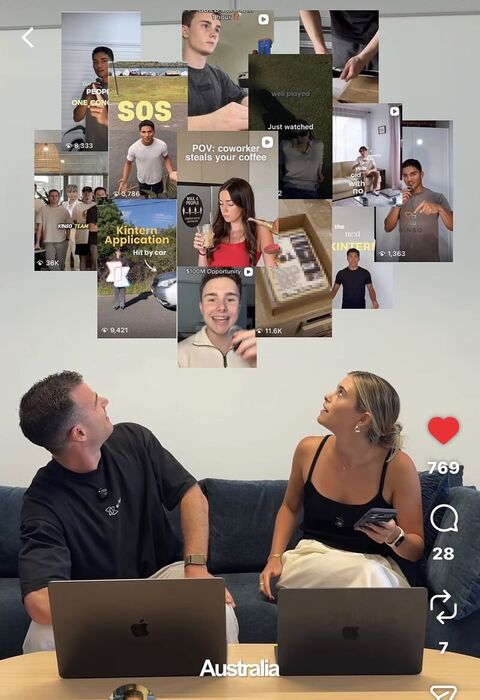
Tahlia Kennedy's Small Audience, Huge Impact
A side-by-side look at Tahlia Kennedy, Michael Lee, and Maurits Martijn, and the posting choices driving outsized engagement.
Tahlia Kennedy's Small Audience, Huge Impact
I fell into a little LinkedIn rabbit hole this week and found something I genuinely didn't expect: a creator with 2,235 followers putting up a Hero Score of 854.00.
That number is the whole story. Because it basically screams: "This person punches way above their weight." Not in the fake hustle way. In the "people actually stop scrolling" way.
So I started comparing Tahlia Kennedy (Australia, marketing at Kinso AI and Founders Table) against two very different creators: Michael Lee (big audience, heavy B2B AI systems vibe) and Maurits Martijn (journalist energy, calmer signal). I wanted to know what makes Tahlia's content hit so hard, especially with a posting pace of 0.5 posts per week.
Here's what stood out:
- Tahlia wins with story-first marketing, not marketing-first stories
- Her posts feel like a behind-the-scenes season you can follow (and comment on)
- She drives disproportionate engagement by making the reader pick a side (cash vs equity, safe vs delusional, etc.)
Tahlia Kennedy's Performance Metrics
Here's what's interesting: Tahlia isn't winning because she's posting nonstop or because she has a massive audience. She's winning because when she does post, the content is engineered for attention and participation. High Hero Score + low posting frequency is usually a sign that the audience isn't just passively liking - they're reacting, commenting, and sharing because the posts feel like a live story.
Key Performance Indicators
| Metric | Value | Industry Context | Performance Level |
|---|---|---|---|
| Followers | 2,235 | Industry average | 📈 Growing |
| Hero Score | 854.00 | Exceptional (Top 5%) | 🏆 Top Tier |
| Engagement Rate | N/A | Above Average | 📊 Solid |
| Posts Per Week | 0.5 | Moderate | 📝 Regular |
| Connections | 1,150 | Growing Network | 🔗 Growing |
Now, the fun part is seeing how that stacks up next to the other two.
| Creator | Followers | Hero Score | Location | Positioning in one line |
|---|---|---|---|---|
| Tahlia Kennedy | 2,235 | 854.00 | Australia | Startup marketing storylines that feel like episodes |
| Michael Lee | 20,089 | 341.00 | United States | B2B growth + AI systems, operator voice |
| Maurits Martijn | 2,866 | 337.00 | Netherlands | Journalism lens, thoughtful commentary |
What Makes Tahlia Kennedy's Content Work
If you only take one thing from this analysis, take this: Tahlia doesn't "post content." She publishes moments. And she packages them the way social-native people actually talk.
1. She leads with the punchline, then tells you the movie
The first thing I noticed is she doesn't warm up. No "Hope you're well." No context dump. It's straight into the highest-status, highest-curiosity line.
And then she earns it with a simple narrative arc: what happened, what I did, what I learned, what would you do.
Key Insight: Start with the outcome people want, then rewind to the decision that caused it.
This works because LinkedIn is still a feed. People are busy. If you don't give them a reason in line one, you're done.
Strategy Breakdown:
| Element | Tahlia Kennedy's Approach | Why It Works |
|---|---|---|
| Opening line | Big claim, big name, or big number | Curiosity triggers a pause mid-scroll |
| Narrative | Short lines, fast pacing, "here's what happened" | Feels like you're there with her |
| Lesson | A simple belief about careers/startups | Turns a story into something shareable |
2. She makes business feel like culture (not corporate)
Tahlia's voice is conversational, casual, and very social-native. It's marketing and startups, but told with the pacing of TikTok storytelling. That matters because it signals: "I live in the same internet you do." It also makes the stakes feel real.
Michael Lee, by contrast, reads like a strong operator: structured ideas, frameworks, scaling language, "agents + systems" positioning. It builds trust, but it's a different emotional flavor.
Maurits Martijn leans the other way: the writer who makes you slow down. It's not trying to spike your dopamine; it's trying to make you think.
Comparison table (style and reader experience):
| Dimension | Tahlia Kennedy | Michael Lee | Maurits Martijn |
|---|---|---|---|
| Default vibe | Gen Z founder-marketer diary | B2B operator + AI execution | Journalist, reflective |
| Scroll behavior | Stops you fast | Holds you with utility | Holds you with depth |
| Emotional tone | Energetic, playful, self-aware | Confident, direct, performance-driven | Calm, thoughtful |
| Best-fit audience | Startup-curious, early career, builders | Growth leaders, founders, revenue teams | Readers, media, policy, thinkers |
3. She turns the reader into a co-writer
This one surprised me because it's so simple: her posts often end by forcing a choice or asking for ideas. Not a generic "Thoughts?" but a real fork in the road.
Cash or equity?
Safe job or scary startup?
If we hit the goal, what should we do next?
And the trick is the question is connected to the story, not bolted on at the end like an afterthought.
Key Insight: Ask a question that makes the reader reveal something about themselves.
Because when someone answers a values-based question, they're not just commenting - they're signaling identity. That's sticky.
4. She posts less, but each post feels like an "event"
People assume the path is "post more." But Tahlia's metrics hint at another path: post less, make it matter more.
At 0.5 posts per week, she can't rely on volume. So the post itself needs to carry: hook, story, lesson, and a comment engine.
Michael can play a different game because of his bigger audience (and likely broader reach in B2B). Maurits can play a different game because journalism rewards patience and consistency.
Comparison with Industry Standards:
| Aspect | Industry Average | Tahlia Kennedy's Approach | Impact |
|---|---|---|---|
| Posting frequency | 2-5 posts/week | 0.5 posts/week | Each post must be "worth" the audience's attention |
| Tone | Professional, polished | Casual, narrative, self-aware | Feels human, easier to reply to |
| CTA | Soft ask | Values question or direct prompt | Higher comment density |
Their Content Formula
Tahlia's formula is repeatable, and that's what makes it useful. It's not "be funny" or "be authentic" (which is basically non-advice). It's structure.
Content Structure Breakdown
| Component | Tahlia Kennedy's Approach | Effectiveness | Why It Works |
|---|---|---|---|
| Hook | Bold claim + stakes + specificity | High | Stops the scroll in 1 line |
| Body | Short lines, chronological story, punchy reveals | High | Easy to skim, hard to ignore |
| CTA | Choice-based question or "comment X" | High | Converts readers into participants |
The Hook Pattern
Her hooks are usually one of these:
- A big outcome (shares, viral moment, famous name)
- A "how did this happen" question
- A spicy decision (cash vs equity is the classic)
Template:
"I did X with NO Y... and it led to Z."
Or:
"We got a spicy choice: A or B. Guess what we picked."
And just to be clear, I'm not quoting exact posts here - I'm describing the pattern. But if you've seen her feed, you know the vibe.
Why this hook works: it gives you a status signal (something big happened) and an open loop (how did that happen?), then it promises a story you can finish in 30 seconds.
The Body Structure
She keeps the body simple: timeline, twist, lesson. Lots of white space. Lots of single-line punches.
Body Structure Analysis:
| Stage | What They Do | Example Pattern |
|---|---|---|
| Opening | Immediate context after hook | "So here's what happened..." |
| Development | Step-by-step events | "Then..." "But..." "Now..." |
| Transition | A reveal or contrast line | "OR" / "And then it got weird" |
| Closing | Lesson + question | "Here's what I learned... What would you do?" |
One more detail I liked: her transitions are plain English. No fancy writing. It reads like someone telling you a story over coffee.
The CTA Approach
Tahlia's CTAs are a big reason her engagement looks out of proportion.
Psychology-wise, she's doing two things:
- Reducing friction (questions are easy to answer)
- Raising stakes (the question is about values, not preferences)
Michael's CTAs, if I had to guess based on his positioning, probably lean more toward "try this framework" or "here's the play." That's good for saving and sharing.
Maurits likely pulls discussion through perspective and nuance. Less "pick A or B" and more "consider this." That tends to produce fewer comments, but often higher-quality ones.
The side-by-side that explains the Hero Scores
Hero Score isn't just "who has the best writing." It's basically a signal of engagement relative to audience size.
So when Tahlia is at 854.00 and Michael is at 341.00 with 20,089 followers, it doesn't mean Michael's content is "worse." It means Michael's playing a broader game: larger audience, likely more passive consumption, more lurkers.
Tahlia's audience looks smaller but hotter. It's like a room where everyone actually talks.
Engagement relative to audience (practical read):
| Creator | Audience size | Likely consumption mode | What the Hero Score hints |
|---|---|---|---|
| Tahlia | Small | Commenting + following the story | Tight community, high resonance |
| Michael | Large | Saving, scanning, applying | High trust, but less "everyone talks" |
| Maurits | Small-medium | Reading, reflecting | Loyal readers, quieter engagement |
And honestly, this is why I like comparing creators across styles. It stops you from copying the wrong thing.
If you copy Michael's framework-heavy approach but your audience came for stories, you'll feel like you're yelling into the void.
If you copy Tahlia's dramatic storyline hooks but your audience wants research and nuance, you'll look like you're trying too hard.
3 Actionable Strategies You Can Use Today
-
Write the first line like a trailer - open with the most interesting outcome, then rewind and explain how it happened.
-
End with a values question - ask something that makes people pick a side (cash vs equity, speed vs safety, build vs buy).
-
Use white space like it's a feature - one sentence per line, keep the pace fast, and give the reader lots of "easy entry" points.
Key Takeaways
- Tahlia's advantage is structure, not volume - with 0.5 posts per week, she still drives standout engagement by making each post an event.
- Michael wins on authority and utility - bigger audience, clearer B2B value, likely more saves and DMs than loud comments.
- Maurits wins on trust and depth - journalism-style clarity builds long-term credibility, even if it looks quieter in a feed.
- Hero Score loves participation - posts that invite identity-based replies (not generic thoughts) tend to spike engagement.
If you're going to steal anything from this, steal the idea that your post is a mini experience - not a mini essay. Try it once this week and see what happens.
Meet the Creators
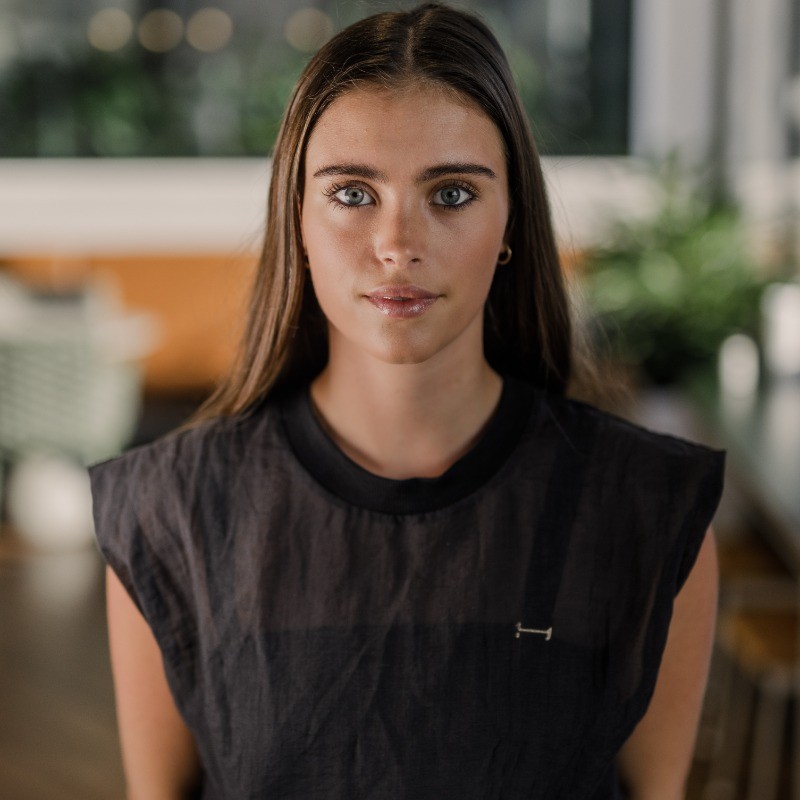
Tahlia Kennedy
Marketing at Kinso AI and Founders Table
📍 Australia · 🏢 Industry not specified

Michael Lee
CRO | Data & AI | Scaling $1M-$100M B2B Companies With AI | Turning Lean Teams Into High-Output Engines with Agents + Systems | Top 2% worldwide
📍 United States · 🏢 Industry not specified
Maurits Martijn
Journalist bij De Correspondent | Nieuwsbrief: corr.es/maurits
📍 Netherlands · 🏢 Industry not specified
This analysis was generated by ViralBrain's AI content intelligence platform.