Tahlia Kennedy’s Kinternship: A Game-Show Marketing Stunt
A breakdown of Tahlia Kennedy’s Kinso AI kinternship stunt and how to design game-show campaigns that drive community growth.
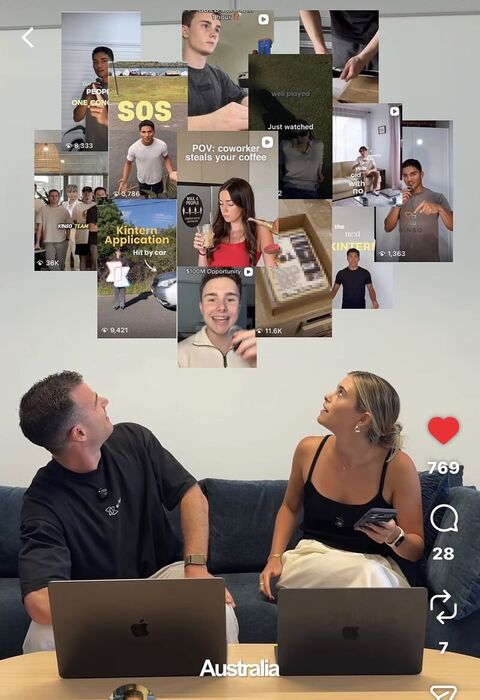
Tahlia Kennedy recently shared something that caught my attention: "To build a $100M business, we have to pull marketing stunts no business has done before (in 13 days you'll watch it unfold)." Then she followed it with the kind of line that instantly signals a real campaign, not a fluffy idea: "What if we created a internship and call it a 'kinternship' (obviously)."
That tiny post has a lot going on. It’s not just an internship announcement. It’s a public challenge, a community prompt, and a structured content series wrapped in a playful format ("Think The Bachelor, but for marketing!"). And it’s a useful case study for anyone trying to build attention without burning trust.
In this piece, I want to expand on what Tahlia’s getting right, what makes the "kinternship" concept work, and how you can borrow the mechanics (without copying the surface-level gimmicks) to build your own repeatable growth engine.
Why "marketing stunts" work when they’re actually systems
A lot of teams hear "stunt" and think: one viral moment, one big spike, one lucky break. But the best stunts are closer to product design than party tricks. They have:
- A clear hook (simple enough to repeat)
- A format that creates episodes (so the story keeps moving)
- Built-in participation (so the audience feels like part of it)
- Constraints (so it doesn’t sprawl into chaos)
Tahlia’s framing matters here. She doesn’t say, "We want to go viral." She says, "To build a $100M business, we have to pull marketing stunts no business has done before." That positions the stunt as an input to a bigger ambition, not the ambition itself.
Key insight: A stunt isn’t a moment. It’s a container that produces moments.
The "kinternship" hook: a name people want to repeat
Calling an internship a "kinternship" is silly in exactly the right way. It’s a coined term that:
- Signals brand personality quickly
- Makes the initiative feel proprietary (even if the structure is familiar)
- Improves shareability because it’s a single word people can quote
This matters because most internship announcements sound identical. "We’re hiring interns" is informational. "We’re running a kinternship" is a premise. Premises travel.
There’s also a smart bit of timing baked into the post: "in 13 days you'll watch it unfold." A countdown creates anticipation, and anticipation creates returning viewers.
Casting as content: why video applications are the real acquisition channel
Tahlia mentions they "got flooded with video applications from all over Australia" but could only select five. That detail does three things:
- It establishes demand (social proof without bragging)
- It raises perceived stakes (competition = drama)
- It creates a pool of user-generated content (UGC) even before the show begins
Video applications are underrated marketing assets because they’re honest. They show the audience how people talk about your brand when you’re not controlling every word. Even if you never publish the raw applications, you can extract themes:
- Why people want to be involved
- Which messages resonate
- What your community is actually like
If you’re building a community-led brand, your applicants are often your best copywriters.
The game-show format: episode structure beats random posting
"The whole 3 weeks are going to be run like a game show." That’s the strategy hiding in plain sight.
A game show gives you:
- A beginning (introductions)
- A middle (challenges, conflict, learning)
- A finale (winner, outcomes, recap)
And most importantly: it gives you a reason to post every day without sounding repetitive. The plot is the posting plan.
Key insight: When content has a format, consistency stops feeling like effort and starts feeling like production.
The bingo card mechanic: constraints that create creativity
Tahlia says, "Each Kintern gets a bingo card with a series of challenges on it." This is a strong move because bingo cards:
- Turn vague goals ("do marketing") into concrete actions
- Make progress visible (which is satisfying to follow)
- Encourage variety (a grid naturally pushes different challenge types)
- Enable comparison (audiences love seeing different approaches)
If you’ve ever struggled with content fatigue, this is the antidote: pre-commit to constraints.
What makes a good challenge?
A good challenge has four qualities:
- Clear output: a deliverable you can show (a landing page, a script, a 30-second video)
- Time-boxed: done in hours or a day, not weeks
- Judgable: you can evaluate it with simple criteria (clarity, conversions, novelty)
- Teach-able: viewers learn something by watching
In other words, challenges should produce artifacts, not just effort.
"Now we need your help": turning spectators into collaborators
The post ends with: "Now we need your help (pls)…. What would you like to see them do?"
That’s not just engagement bait. It’s distributed ideation. If you ask your audience to propose challenges, you’re doing three valuable things:
- Market research: you discover what your audience finds interesting
- Commitment: commenters become emotionally invested in outcomes
- Permission: you can later say, "You asked for this" when you publish
This is how a campaign becomes community property (in a good way). When people feel partial ownership, they share more naturally.
Ideas for Kinternship challenges (that people will actually watch)
If you want the game-show vibe without turning it into pure theatre, balance entertainment with real marketing work. Here are challenge ideas that map to outcomes:
Awareness challenges
- Pitch the product in one sentence, then test 10 variations with strangers
- Create a 15-second hook video and iterate based on retention
- Write a contrarian LinkedIn post that sparks debate (without being reckless)
Conversion challenges
- Build a landing page in 90 minutes and run a $50 experiment
- Redesign onboarding email #1 to increase reply rate
- Create a "no-code" lead magnet and drive 100 sign-ups
Community challenges
- Host a 20-minute live session teaching one tactic learned that day
- Interview a customer and publish a 5-clip highlight pack
- Run a micro-challenge for followers and report results publicly
Brand + creativity challenges
- Produce a "brand manifesto" in 60 seconds, then get community votes
- Turn one feature into three different story angles (fear, desire, proof)
- Write a competitor teardown that stays respectful and useful
The key is to design tasks that are watchable and measurable. Viewers should be able to say, "I learned something" or "I want to try that." Ideally both.
The metrics that matter for a stunt like this
If you run a campaign like Tahlia’s, don’t judge it only by likes. Track:
- Attention: view-through rate, saves, profile clicks
- Participation: comments with suggestions, challenge submissions, shares
- Conversion: email sign-ups, demo requests, waitlist growth
- Talent pipeline: quality of applicants, referrals, future hires
- Brand lift: inbound DMs, partnership interest, press mentions
A three-week format is long enough to generate real business outcomes, not just vibes.
The risk: stunts that outshine the product
There’s one trap with any flashy format: people remember the show but not the brand.
The fix is simple (but not easy): make the product or customer outcome part of the challenges. If every episode teaches a real marketing principle tied to your offer, the audience connects the dots. Entertainment pulls them in; usefulness makes them stay.
Borrow the mechanics, not the gimmick
What I like most about Tahlia Kennedy’s post is that it’s playful while still being structured. "Kinternship" isn’t just a cute name. It’s a campaign architecture:
- a hook people repeat
- a countdown people anticipate
- a game structure people follow
- a community prompt people contribute to
If you’re trying to grow a brand today, that’s the play: design marketing like a product. Build a container that creates stories, artifacts, and participation—then let your audience help steer it.
This blog post expands on a viral LinkedIn post by Tahlia Kennedy, Marketing at Kinso AI and Founders Table. View the original LinkedIn post →