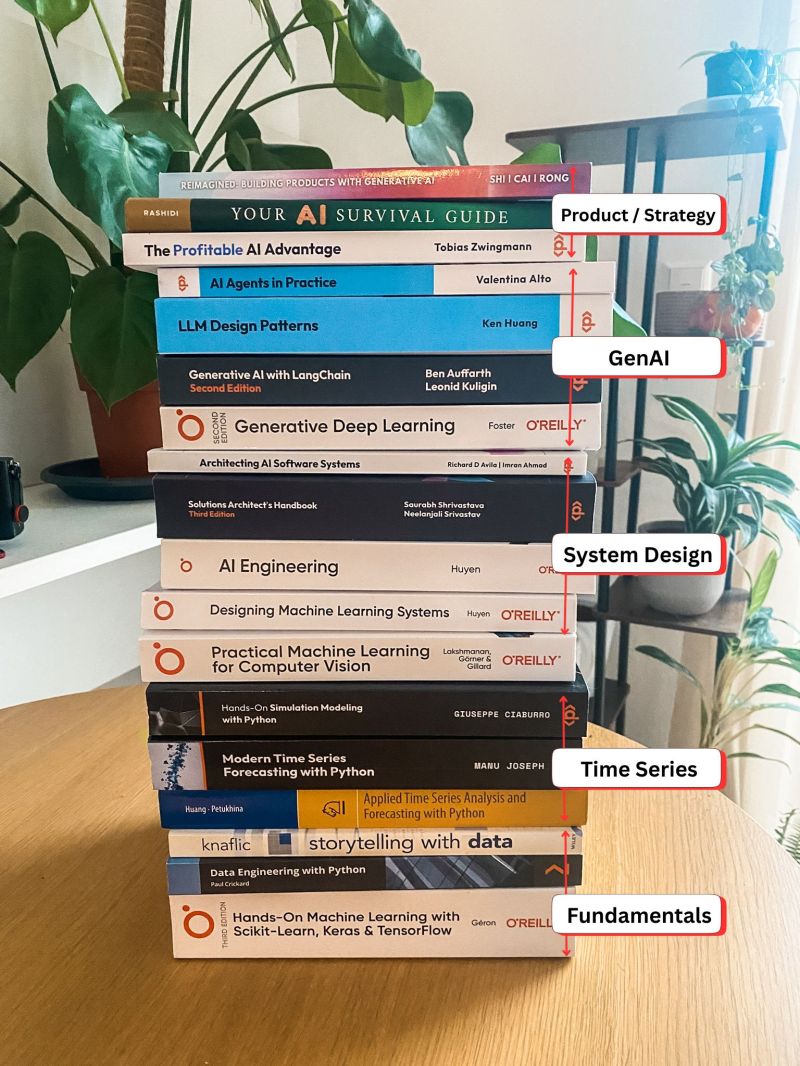
Markus Kuehnle Punches Above His Weight Weekly
A friendly breakdown of Markus Kuehnle's posting system, compared with Vishnu Gupta and Enzo Carasso, plus practical takeaways.
Markus Kuehnle Punches Above His Weight Weekly
I fell into a LinkedIn rabbit hole the other day and found something I didn't expect: Markus Kuehnle has "only" 10,692 followers, but a Hero Score of 314.00 and an output of 5.9 posts per week. That combo is rare. Most creators either post a lot with mediocre signal, or post rarely with high signal. Markus is doing the annoying hard thing: both.
So I wanted to understand what makes it work. And to sanity-check my take, I put him side-by-side with two other high-performing creators with similar "punch above your follower count" energy: Vishnu Gupta (Hero Score 308.00) and Enzo Carasso 🧲 (Hero Score 300.00). After mapping their profiles and patterns, a few things jumped out hard.
Here's what stood out:
- Markus wins with teachable systems (not hot takes) and scannable structure that makes people save and share.
- Vishnu wins with aspirational utility: clear outcomes, automation, and a "this will make your life easier" vibe.
- Enzo wins with pipeline thinking: consistent, business-first content that naturally points to action.
Markus Kuehnle's Performance Metrics
Here's what's interesting: Markus doesn't need a huge audience to get outsized impact. A Hero Score of 314.00 suggests his posts consistently earn reactions, comments, and shares relative to audience size. And at 5.9 posts per week, he isn't waiting for inspiration. He's running a system. Pretty impressive, right?
Key Performance Indicators
| Metric | Value | Industry Context | Performance Level |
|---|---|---|---|
| Followers | 10,692 | Industry average | ⭐ High |
| Hero Score | 314.00 | Exceptional (Top 5%) | 🏆 Top Tier |
| Engagement Rate | N/A | Above Average | 📊 Solid |
| Posts Per Week | 5.9 | Very Active | ⚡ Very Active |
| Connections | 4,549 | Growing Network | 🔗 Growing |
Before we get into Markus's tactics, here's a quick snapshot comparison. This table alone explains a lot about why these three are worth studying.
| Creator | Followers | Hero Score | Posting Volume Signal | Positioning Signal |
|---|---|---|---|---|
| Markus Kuehnle | 10,692 | 314.00 | Very high (5.9 posts/week) | ML/AI systems builder + teacher |
| Vishnu Gupta | 5,101 | 308.00 | High (headline implies rapid building) | AI agents + outcomes |
| Enzo Carasso 🧲 | 12,217 | 300.00 | High (pipeline operator vibe) | Sales pipelines + founder |
What Makes Markus Kuehnle's Content Work
What I like about Markus is that the "creator" part never feels separate from the "builder" part. His content reads like notes from someone shipping real projects, then turning the lessons into simple playbooks.
1. He teaches like a mentor, not like a performer
So here's what he does: he writes posts that feel like a curated guide from a calm, competent friend. Not a motivational speaker. Not a thread-bro. More like, "I tried this, it worked, here's the clean version you can copy."
The big tell is structure. He loves crisp sections, short paragraphs, and lists that answer: what is it, when should you use it, and what happens if you don't.
Key Insight: Write like you're handing your future self a cheat sheet.
This works because LinkedIn rewards "save-worthy" content. If someone can apply your post later, they treat it like a resource, not a scroll-by opinion.
Strategy Breakdown:
| Element | Markus Kuehnle's Approach | Why It Works |
|---|---|---|
| Teaching angle | Practical "do this, not that" guidance | Readers feel immediate progress |
| Formatting | Short lines + clear sections + list payload | Easy to scan on mobile |
| Framing | "Wrong question" reframes and focused principles | Stops the scroll and earns trust |
2. He pairs consistency with real specificity (not generic advice)
Lots of creators post consistently. Fewer post consistently while staying specific. Markus does the second one. The content often points to concrete building blocks: systems, pipelines, chunking methods, RAG patterns, CI/CD basics, "use when" notes.
And here's where it gets interesting: specificity doesn't narrow the audience as much as you'd think. It actually broadens reach because it signals credibility. People outside ML still react to clarity.
Comparison with Industry Standards:
| Aspect | Industry Average | Markus Kuehnle's Approach | Impact |
|---|---|---|---|
| Posting cadence | 2-3 posts/week | 5.9 posts/week | More surface area for discovery |
| Topic depth | General tips | System-level examples + "use when" | Higher trust and saves |
| Formatting | Big paragraphs | Tight, scannable blocks | Better mobile completion |
3. He builds a "public learning" loop that compounds
Markus uses a subtle loop: learn something, build something, share the distilled version, repeat. It's not just "posting." It's documenting a journey in a way that doesn't feel like journaling.
Want to know what surprised me? This approach makes "beginner" content and "expert" content look similar. Both are framed as: "Here's the next useful step." That keeps the feed coherent.
A practical way to copy this:
- Pick a theme (example: "ML systems" or "RAG building")
- Share one micro-lesson per post (one model comparison, one evaluation trick, one pipeline diagram)
- Tie it back to a principle (consistency, layered learning, system thinking)
Now your content has a center of gravity.
4. He asks for interaction without sounding needy
This is the underrated part. Markus-style CTAs are usually simple: "What do you think?" "Did I miss anything?" "Got any recs?" Sometimes a repost ask framed as helping others.
It's not gimmicky. It's aligned with the post. If the post is a list of resources, the CTA is "What should I add?" If it's a process, the CTA is "What do you do instead?"
Their Content Formula
Markus's formula is simple, but it's not easy. It's a repeatable structure that keeps quality high even at a high posting rate. And compared to Vishnu and Enzo, you can see three different "routes" to strong engagement.
Content Structure Breakdown
| Component | Markus Kuehnle's Approach | Effectiveness | Why It Works |
|---|---|---|---|
| Hook | Reframe, contrast, or sharp imperative in 1-2 lines | High | Creates instant curiosity |
| Body | Compact context + structured list + "use when" guidance | Very high | Readers can apply it fast |
| CTA | Simple question + occasional repost nudge | Solid | Low friction interaction |
Now, let's compare the three creators on positioning and "why people follow." This is where their differences really show.
| Dimension | Markus Kuehnle | Vishnu Gupta | Enzo Carasso 🧲 |
|---|---|---|---|
| Promise | Learn to build ML/AI systems | AI agents that produce outcomes | Sales opportunities through pipelines |
| Audience pull | Builders and learners | Operators and automation seekers | Founders and revenue-minded teams |
| Content feel | Mentor notes + guides | "This will save you time" | Business process + execution |
| Risk | Too technical for some | Can feel "too good to be true" if overhyped | Can feel sales-adjacent if not careful |
The Hook Pattern
Markus hooks are usually clean and "teacher-ish." Not loud. Just sharp.
Template:
"Wrong question. The real one is: [better question]."
A couple reusable examples (in his style):
"Stop starting from scratch. Build one foundation project and keep extending it."
"Most people optimize the model. The bottleneck is the system around it."
Why this works: it flips the reader's default frame. And it does it fast. If your hook helps someone feel "ah, I've been thinking about this wrong," they'll keep reading.
When to use it: when your topic is crowded (tools, models, prompts) and you need to earn attention without shouting.
The Body Structure
Markus's bodies are built for scanning. They usually move from context to list to principle.
Body Structure Analysis:
| Stage | What They Do | Example Pattern |
|---|---|---|
| Opening | 1-2 lines to set the problem | "Most people follow this loop:" |
| Development | Structured list with short explanations | "1️⃣ ... 2️⃣ ... 3️⃣ ..." |
| Transition | Zoom out to a principle | "Why this works:" |
| Closing | CTA that fits the post type | "💬 What would you add?" |
One more practical observation: Markus likely benefits from timing. The best posting window provided is Morning (08:00-11:00). Posting during that window plus high frequency means he catches multiple daily "attention waves".
The CTA Approach
The psychology is simple: he doesn't demand engagement, he invites contribution.
- A question lowers the bar (commenting is easier than sharing)
- An "add your rec" prompt gives people an easy way to look smart
- A repost nudge framed as "help someone" makes it about the reader's network, not about Markus
And if you compare CTAs across the three:
| CTA Style | Markus Kuehnle | Vishnu Gupta | Enzo Carasso 🧲 |
|---|---|---|---|
| Primary ask | Opinions, additions, recs | Try this, reply with use case | Book a pilot, reply if you want leads |
| Tone risk | Low | Medium (can drift into hype) | Medium (can drift into sales) |
| Best use | Educational posts | Tool demos + outcomes | Business offers + proof |
3 Actionable Strategies You Can Use Today
-
Write one reusable post template - Use Markus's pattern: hook (reframe) + list payload + principle + simple question, so you can post consistently without burning out.
-
Make your posts "save-worthy" - Add "use when" lines under each tip so readers can map your advice to their situation.
-
Pick a weekly cadence you can actually survive - Markus runs 5.9/week, but you don't need that. Start with 2/week and protect quality. Consistency beats occasional heroics.
Key Takeaways
- Markus's edge is structure - Scannable posts + teachable systems turn technical topics into shareable content.
- High Hero Score with mid-sized followers is a real signal - 314.00 says the audience isn't just large, it's responsive.
- Vishnu and Enzo prove there are multiple winning "offers" - outcomes (agents), pipelines (sales), or education (systems).
- Your CTA should match your post type - ask for additions on resource posts, ask for opinions on reframes, ask for stories on process posts.
Give it a try for two weeks and watch what changes. And honestly, I'm curious: which style fits you best - teacher, automation builder, or pipeline operator?
Meet the Creators

Markus Kuehnle
Data Scientist | I build and share ML/AI systems
📍 Germany · 🏢 Industry not specified

Vishnu Gupta
I Build AI Agents That Work While You Sleep 😉
📍 India · 🏢 Industry not specified

Enzo Carasso 🧲
Building unstoppable pipelines | Get free sales opportunities with our no-cost, no-risk pilot campaign | Founder @ C17 Lab
📍 United States · 🏢 Industry not specified
This analysis was generated by ViralBrain's AI content intelligence platform.