How to Turn LinkedIn Posts Into Inbound Leads (The Content-to-Pipeline Playbook)
LinkedIn generates 80% of all B2B social media leads. Here's the exact playbook for turning your posts into a lead generation engine: content strategy, DM sequences, lead magnets and the comment-to-call pipeline.
Most people treat LinkedIn like a megaphone. They post, they hope for likes, they feel good about the vanity metrics. Then they go back to cold outreach to actually generate business.
That's backwards.
LinkedIn generates 80% of all B2B social media leads. 89% of B2B marketers use it for lead generation. The platform is a pipeline machine, but only if you treat it like one.
The gap between "I post on LinkedIn" and "LinkedIn generates inbound leads for my business" isn't talent or luck. It's a system. A specific way of creating content, engaging with the right people and converting attention into conversations.
Most founders and consultants are stuck in a frustrating middle ground. They're posting regularly, getting decent engagement, maybe even building a nice following. But their DMs are full of other creators saying "great post!" and completely empty of actual prospects saying "can we talk?" If that sounds familiar, the problem isn't your content. The problem is you're missing the conversion layer between content and pipeline.
Here's the full playbook.
The Content-to-Pipeline Funnel
Before tactics, you need to understand the funnel. Every lead that comes from LinkedIn follows this path:
Awareness > Engagement > Conversation > Conversion
Awareness: Someone sees your post in their feed. They read it. Maybe they like it. They might forget about you entirely. This is where most creators stop. They celebrate the impressions and move on, which is like celebrating that people walked past your store. Walking past isn't walking in.
Engagement: That same person sees another post from you. And another. They start commenting. They visit your profile. They're warming up. This stage usually takes 5-7 touchpoints over 2-4 weeks. Most people underestimate how many impressions it takes before someone thinks "I should pay attention to this person." The answer is more than you'd expect.
Conversation: They DM you a question. Or you DM them after they engage with a specific post. This is where the relationship starts. This is also where most people chicken out, because sending DMs feels "salesy." More on that later.
Conversion: The conversation moves to a call. The call moves to a proposal. The proposal moves to a client.
This funnel takes time. Expecting a post to directly generate a sale is like expecting a first date to end in a marriage proposal. The content creates the conditions. Your engagement strategy closes the loop.
Pro tip: Map your last 5 clients backwards. How did they find you? If any came through LinkedIn, trace the path. When did they first engage? What post triggered the DM? How long between first engagement and first call? This tells you how long your funnel actually takes, not how long you wish it took.
The 10:1 Content Ratio
This is the most important ratio in LinkedIn lead generation: for every 1 promotional post, you need 10 value posts.
70% Educational content: Teach something useful. Share frameworks. Break down processes. Solve problems your ideal client has. This is the content that makes people think "this person knows their stuff." It's the long game, and it's the game that wins.
20% Engagement content: Personal stories, hot takes, discussion starters. Content that makes people comment and feel connected to you. This is what turns a faceless expert into a real person. People don't hire LinkedIn profiles. They hire people they feel they know.
10% Promotional content: This is where you mention your offer, share a case study with a CTA, or invite people to book a call. Notice how small this slice is. That's deliberate.
Why 10:1? Because LinkedIn's algorithm punishes overtly promotional content. But more importantly, your audience needs to trust you before they'll buy from you. Trust is built through consistent value, not pitches.
If every third post is "book a call with me," you're not building an audience. You're running ads without a budget. And nobody follows an ad.
Here's a useful mental model: think of each value post as a deposit in a trust bank account. Each promotional post is a withdrawal. If you keep withdrawing without depositing, the account goes to zero and people unfollow, mute or mentally tune you out. The 10:1 ratio keeps the account healthy.
Pro tip: When you do post promotional content, bury the CTA in value. Don't write "We help companies do X. Book a call." Write a full post teaching something useful, include a specific result you got for a client, and then end with "If you want help implementing this, DM me." The post is valuable even if they never reach out. That's the standard.
Why Sales Content Wins (Even If You're Not in Sales)
Here's a data point that surprised us. In our analysis of 10,222 posts, Sales content had the highest engagement rate of any topic at 1.01%.
Why? Because content that teaches people how to sell, close, negotiate and generate revenue attracts buyers. Decision-makers. People with budgets. The exact audience you want if you're trying to generate B2B leads.
Think about who reads posts about sales strategy: VPs of sales, founders, revenue leaders, business development managers. These are the people with purchasing authority. They're the ones who can actually sign a contract. If your content consistently attracts this audience, you're building a network of potential buyers without ever sending a cold email.
This doesn't mean you need to write about sales techniques. The principle is broader: content that helps people make money, save money or grow their business attracts the kind of audience that has money to spend. Educational content about practical business outcomes is inherently lead-generating because it self-selects for serious professionals.
Compare that to posting motivational quotes or generic career advice. Those posts might get more likes (everyone loves a good "believe in yourself" graphic), but the audience they attract is not the audience that buys B2B services. Your content is a filter. Make sure it's filtering for the right people.
Pro tip: Look at your last 10 posts. For each one, ask: "Would a VP or founder with a budget find this useful?" If the answer is consistently no, you're building the wrong audience. Shift your content toward practical, business-outcome-focused topics. You might get fewer likes initially, but the likes you do get will come from people who can actually hire you.
Writing Posts That Qualify Prospects
Not all engagement is created equal. A post that gets 500 likes from random people is less valuable than a post that gets 50 likes from your exact target buyer. Here's how to write content that attracts the right people.
Name the pain specifically
Generic: "Many businesses struggle with growth."
Specific: "If your sales team is booking 20 calls a month but only closing 2, you don't have a lead problem. You have a qualification problem."
The specific version makes your ideal client think "that's me." Everyone else scrolls past. That's exactly what you want. You're not trying to go viral to the entire LinkedIn population. You're trying to go viral within your target market.
When you name a specific pain, you're doing two things at once. First, you're showing the reader that you understand their world. Second, you're signaling to non-ideal readers that this post isn't for them, which is just as valuable. Irrelevant engagement clutters your analytics and wastes your time.
Frame the solution without giving away the implementation
Teach the "what" and the "why" for free. Keep the "how" (the specific implementation) for your paid engagement.
Example: "Most B2B companies waste 40% of their ad budget on the wrong audience segments. The fix is building a scoring model based on intent signals, not demographics." You've identified the problem and pointed toward the solution. The reader who needs help building that scoring model will DM you.
This is not about being stingy with knowledge. Give away your best insights. Give away the strategy. Give away the diagnosis. The implementation, the hands-on work of actually doing it, that's what people pay for. A doctor can tell you exactly what's wrong with your knee and exactly what surgery you need. You still can't operate on yourself.
Pro tip: If you're worried about "giving away too much for free," you're thinking about it wrong. The more you give away, the more people trust your expertise. And the people who could actually implement it themselves were never going to hire you anyway. Your real buyers are the ones who read your content and think "I need someone who thinks like this on my team."
Use specificity as a filter
Numbers qualify prospects. "We helped a 50-person SaaS company increase their close rate from 8% to 23% in 90 days" will attract exactly the kind of company that needs that result. Vague claims attract vague interest.
Notice how "50-person SaaS company" does heavy lifting. A 500-person enterprise reads that and thinks "too small for my situation." A 10-person startup reads it and thinks "too big for my budget." But a 30-80 person SaaS company reads it and thinks "that's basically us." You've qualified your prospect before they even DM you.
Write for the conversation, not the like
A subtle but important shift: before you post, ask yourself "What kind of comment do I want this to generate?" If the answer is "great post!" you're writing for validation. If the answer is "We're struggling with exactly this, how did you approach X?" you're writing for pipeline.
Content that generates questions generates leads. Questions are buying signals. When someone asks "how did you implement that?" or "what tool did you use for the scoring model?" they're telling you they have the problem you solve. That's a warmer lead than any list you could buy.
Pro tip: End your posts with a specific question, not a generic one. "Thoughts?" generates nothing useful. "What's your close rate this quarter, and are you happy with it?" generates responses from people who are thinking about their close rate. Those people are your prospects.
The DM Strategy
This is where most people get squeamish. But DMs are where pipeline happens. The key is warm outreach, not cold spam.
Here's the uncomfortable truth: you can post incredible content every day for a year and never generate a single lead if you don't convert engagement into conversations. Posts build awareness. DMs build pipeline. You need both.
Who to DM
Anyone who engages with your content meaningfully. This means:
- People who leave thoughtful comments (not just "great post!")
- People who share your content with their own commentary
- People who like multiple posts over time (pattern engagement)
- People who view your profile after engaging with a post
- People who comment on your lead magnet posts (they've literally raised their hand)
Not everyone who engages is a prospect. That's fine. The DM is a qualifying conversation, not a sales pitch. You're finding out if there's a fit, not trying to close.
When to DM
Within 24 hours of their engagement. The post is still fresh in their mind. The connection feels natural, not random.
After 48 hours, the window closes. They've moved on. They've engaged with 50 other posts since yours. The DM feels out of context. Speed matters here more than perfection. A slightly clumsy DM sent at the right moment beats a perfectly crafted DM sent a week later.
What to say
Bad DM: "Hey [name], thanks for connecting! I help businesses like yours grow their pipeline by 3x. Would you be interested in a free consultation?"
Nobody wants this. It's a cold pitch dressed up as a warm message. The disguise fools no one. You know that feeling when someone at a networking event asks your name, shakes your hand and immediately launches into their elevator pitch? This DM is the digital version of that.
Good DM: "Hey [name], loved your comment on my post about [specific topic]. You mentioned [specific thing they said]. I'd be curious to hear more about how you're handling that at [their company]. We ran into something similar with a client last quarter."
The good DM does three things:
- References something specific (proves you're not mass-messaging)
- Shows genuine interest in their situation
- Opens a conversation without asking for anything
The ask comes later. After 2-3 genuine exchanges, if there's a fit: "Would it be useful to jump on a quick call? I have some thoughts on [their specific challenge] that might save you some time."
Notice the language: "would it be useful" not "can I sell you something." "Some thoughts" not "our comprehensive solution." "Save you some time" not "increase your revenue by 300%." Understatement builds trust. Hype destroys it.
Pro tip: Keep a simple spreadsheet or CRM note for LinkedIn prospects. Name, what they commented on, what you talked about in DMs, any follow-up needed. This sounds like overkill until you're managing 15 conversations simultaneously and accidentally DM someone the same message twice. (Ask me how I know.)
The DM Cadence
Not every DM conversation will lead to a call. That's expected. Here's a rough cadence:
- DM 1 (day of engagement): Reference their comment, ask a genuine question
- DM 2 (when they reply): Share a relevant insight or resource related to their situation
- DM 3 (when natural): If there's a fit, suggest a quick call
If they don't reply to DM 1, don't follow up. They're not interested, and a follow-up DM crosses the line from warm outreach into cold persistence. Move on. There are plenty of other people engaging with your content.
If the conversation is going well but a call doesn't make sense yet, that's fine too. Stay in touch. Comment on their posts. Be present. The timing will come.
The Lead Magnet Play
Lead magnets are the bridge between content and pipeline. They give your audience something valuable enough to trade their contact information for.
On LinkedIn, lead magnets work particularly well when tied to high-engagement content.
The Comment Keyword Strategy
You've seen these posts: "Comment 'PLAYBOOK' and I'll send you the full template."
They work. Here's why: the comment boosts your post's visibility (more comments = more algorithmic reach), the keyword gives you a clear list of interested prospects and the follow-up DM is expected rather than intrusive. The person commented a keyword. They know a DM is coming. They want the DM. This is the rare situation where sliding into someone's DMs is not only acceptable but anticipated.
The most commented content categories in our data naturally generate more DM opportunities:
- Social Media Marketing: 210 average comments
- Content Marketing: 147 average comments
- Entrepreneurship: 123 average comments
A lead magnet post in one of these categories can generate hundreds of warm leads from a single post.
Pro tip: When running a keyword comment post, don't just send the resource and disappear. Send the resource with a short personal note: "Here's the playbook! Curious, which part is most relevant to what you're working on?" That one question turns a resource delivery into a qualifying conversation. About 20-30% of people will reply, and those replies tell you who's a real prospect.
What to offer
Playbooks: Step-by-step guides on a specific process. "The exact cold email sequence that booked 47 meetings in 30 days." Playbooks work because they promise a complete system, not just tips.
Templates: Something they can use immediately. "The proposal template that closed $2M in contracts this year." Templates work because they reduce work. People will trade their contact info to save 3 hours of formatting.
Tools: Spreadsheets, calculators, checklists. "Our lead scoring matrix (the one we actually use)." Tools work because they're practical. Nobody frames a template on their wall, but they do use it every week.
Data: Original research or analysis. "We analyzed 500 [industry] campaigns. Here are the 7 patterns that separated winners from losers." Data works because it's rare. Most people share opinions. Few people share original data.
The lead magnet needs to be genuinely useful. If people download it and feel tricked, you've burned the relationship. If they download it and think "this person really knows what they're doing," you've earned a warm prospect.
Pro tip: Your best lead magnet is usually something you already have. That internal process doc your team uses. That spreadsheet you built to track campaigns. That onboarding checklist you've refined over 50 clients. Package what you already use into something shareable. This takes an hour, not a week. And because it's something you actually use, it's inherently better than something you'd create from scratch for marketing purposes.
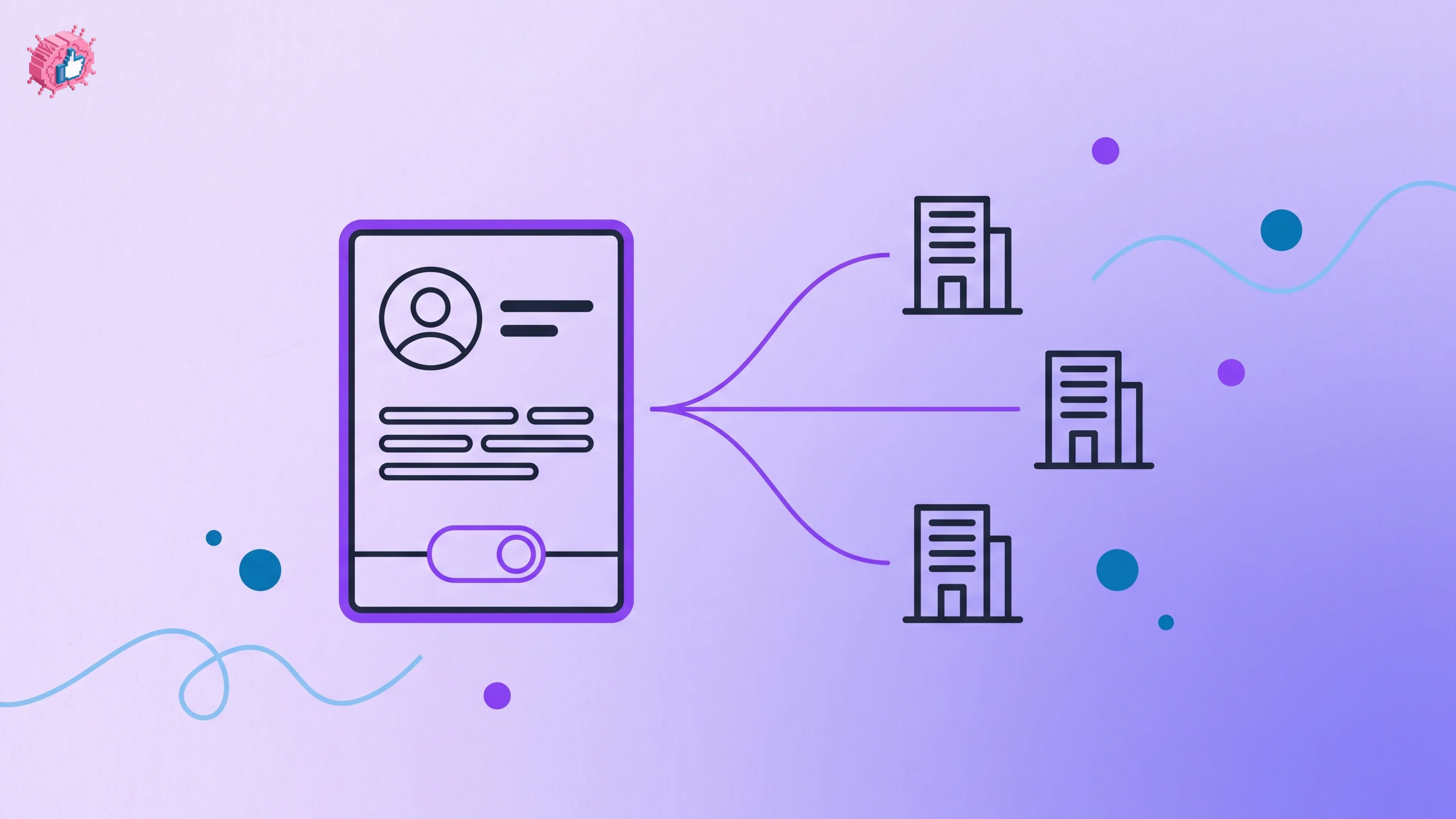
Your Profile as a Landing Page
Every engaged follower will eventually visit your profile. When they do, your profile needs to convert them the same way a landing page would.
Think of this flow: someone reads your post, thinks "this is smart," taps your name, lands on your profile. What do they see? If the answer is a headshot from 2019, a headline that says "CEO," and an about section that reads like a resume, you've just wasted all the goodwill your post created. It's like writing a brilliant ad that links to a 404 page.
Headline
This is the most important line on your profile. It appears every time you comment, every time you show up in search results, every time someone hovers over your name.
Bad: "CEO at Company X"
Good: "Helping B2B SaaS companies double their pipeline | 500+ clients served"
Your headline should answer: "What do you do, who do you do it for and why should I care?"
About Section
First person. Start with the problem you solve, not your resume.
"If your sales team is burning through leads without closing, I can help. Over the past 8 years, I've helped 500+ B2B companies fix their pipeline. Here's what I typically find..."
Then: your approach, your results, your social proof. End with a clear CTA: "DM me 'pipeline' if you want to talk."
Featured Section
Pin three things:
- Your best-performing post (social proof that you create valuable content)
- Your lead magnet (the playbook, template or resource people can grab)
- A case study or testimonial (proof that your work gets results)
Most people leave this section empty. That's like having a store with no window display. You have prime real estate on your profile that potential clients will see. Use it.
Pro tip: Update your featured section monthly. Your best-performing post changes. Your lead magnet should evolve. Fresh featured content signals that you're active and current, not someone who set up their profile in 2022 and forgot about it.
The Full Loop
Here's the system in its entirety. Read this and you have the complete picture:
1. Post valuable content 3-5x per week (70% educational, 20% engagement, 10% promotional). Use images for at least half your posts (87% higher engagement).
2. Build engagement by commenting on other creators' posts 10-15 times daily. Respond to every comment on your own posts. This grows your visibility and your network simultaneously. The commenting habit is as important as the posting habit. Maybe more important, because comments put you in front of other people's audiences.
3. Drop a lead magnet every 2-3 weeks. "Comment [keyword] and I'll send you the [resource]." Collect the names. Track who downloads. Note who asks follow-up questions.
4. DM warm prospects within 24 hours. Reference their specific comment or engagement. Start a conversation, not a pitch. Be a human, not a sales script.
5. Move conversations to calls. After 2-3 genuine exchanges, offer to jump on a quick call about their specific challenge. Frame it as helpful, not salesy. Because if you've done steps 1-4 well, it genuinely is helpful.
6. Convert calls to clients. Not every call becomes a client. But every call is a relationship. Relationships compound. The prospect who doesn't buy today might refer someone who does next month. Or they might buy in six months when the timing is right. Your pipeline is longer than you think.
Pro tip: Print this loop (or save it as your phone wallpaper, whatever works). The system is simple. The hard part is doing it consistently. Most people do steps 1-2 for a few weeks, skip steps 3-5 entirely, wonder why LinkedIn "doesn't work for lead generation" and go back to cold outreach. The magic is in steps 3-5. That's where content becomes pipeline.
The Numbers You Should Track
High-quality content converts 2-5% of engaged users into qualified leads. Roughly: 1,000 post engagements (likes, comments, shares) generates 20-50 marketing qualified leads (MQLs).
That might sound like a lot of engagement for not many leads. But consider the quality: these are people who already know you, already trust your expertise and already have the problem you solve. They convert at 3-5x the rate of cold leads. And they're dramatically cheaper to acquire than leads from paid advertising.
Track these weekly:
- Post engagement rate: Are your posts getting better over time?
- Profile views: Are more people checking you out?
- Connection requests: Are the right people connecting?
- DMs sent and received: Are conversations happening?
- Calls booked: Are conversations converting?
- Pipeline value: What's the revenue potential?
If your engagement is growing but your DMs aren't, your content is good but your outreach needs work. If your DMs are happening but calls aren't booking, your messaging needs refinement. The metrics tell you where the funnel breaks.
Pro tip: Create a simple weekly dashboard. Five minutes every Friday. Record the numbers. Look at the trend over weeks, not days. A bad week means nothing. A bad month means you need to adjust. The dashboard keeps you honest and prevents you from making emotional decisions based on a single post that underperformed.
Common Mistakes That Kill Your Pipeline
Even with the right system, certain mistakes can undermine your lead generation. Here are the ones we see most often:
Selling too early. Your third post shouldn't be a pitch. Build trust first. The 10:1 ratio exists for a reason. People need to see you as a helpful expert before they'll consider you as a vendor.
Ignoring comments. Every comment on your post is a conversation starter. When someone leaves a thoughtful comment and you don't reply, you're telling them their input doesn't matter. Reply to everyone, especially in the first hour after posting.
Targeting vanity metrics. Likes feel good. But 1,000 likes from the wrong audience is less valuable than 50 likes from your ideal buyers. Write for your target market, not for maximum reach.
Inconsistency. Posting 5x per week for two months, then disappearing for three weeks, then coming back with "I've been quiet but..." is worse than posting 2x per week consistently for a year. The algorithm penalizes inconsistency, and your audience forgets you exist.
Not having a CTA. Not every post needs a CTA. But your profile should always have one. And your promotional posts (the 10%) should always have a clear next step. If someone is ready to take action, make it easy for them.
The Long Game
LinkedIn lead generation is not a 30-day experiment. It's a 6-12 month investment that compounds.
Month 1-2: You're building content consistency and starting to attract an audience. Leads are sparse. This is the phase where most people quit because they expected faster results. Don't quit. You're building the foundation.
Month 3-4: Your engagement grows. You start getting DMs. Your first lead magnet post generates 20-30 warm leads. You have your first "someone booked a call because of a LinkedIn post" moment. It feels like magic. It's not magic. It's compound interest on content.
Month 5-6: The flywheel kicks in. Inbound messages increase. Your content library is deep enough that new visitors can binge your posts. Leads become consistent. You start getting referrals from people who've never even talked to you but have been following your content for months.
Month 7-12: LinkedIn becomes a predictable channel. You know what content drives pipeline. You know which lead magnets convert. You know your DM-to-call ratio. The system runs with 30-60 minutes of daily effort. At this point, your LinkedIn presence is an asset that generates business while you sleep. (Well, while other people scroll while they should be sleeping.)
The founders who commit to this for a year never go back to pure cold outreach. Because inbound leads close faster, cost less and start with built-in trust. The trust you built through six months of consistent content isn't just nice to have. It's a competitive advantage that cannot be bought.
If you want to accelerate this process with data on what's actually driving leads for creators in your space, ViralBrain shows you which content patterns generate the most engagement so you can focus your effort where it counts.
Data sourced from ViralBrain's database of 10,222 LinkedIn posts across 494 creators.