

10 B2B Content Marketing Practices That Actually Work
Stop guessing. Here are 10 brutally honest b2b content marketing best practices, backed by data, to help you grow faster. No fluff, just what works.
Most B2B content marketing is a waste of time. Companies spend thousands on blog posts nobody reads. Their LinkedIn updates get three likes, one from the CEO. The problem is not effort. The problem is a broken strategy built on generic advice.
This is not another list of vague tips like "know your audience." This guide details specific b2b content marketing best practices that drive pipeline and revenue. It is a direct playbook for marketers and founders tired of creating content that goes nowhere.
You will learn how to reverse engineer good content, align your work with sales goals, and use data to make smarter decisions. We will also cover practical systems for content repurposing, building a real personal brand, and using AI to speed up your workflow without losing quality.
Each practice includes a simple explanation of why it matters, a checklist, and the key metrics you should track. The examples are concrete. They are drawn from what is working today, particularly on platforms like LinkedIn. This is a roundup of systems, not suggestions. We will skip the theory and focus on actionable frameworks you can use immediately to get better results.
Automate your LinkedIn for 30 days
1. Reverse Engineer High Performing Content Patterns
The fastest way to create content that works is to study what already works. Reverse engineering is a systematic analysis of good content from industry leaders. You break down their posts into core components like the hook, structure, and call to action (CTA). This process reveals the underlying patterns that drive engagement for a specific B2B audience.

This method gives you a proven blueprint. It saves you from guessing what your audience wants. It is one of the most effective B2B content marketing best practices because it replaces creative guesswork with data backed frameworks. You adapt proven structures to your own expertise and voice. This ensures relevance without sacrificing authenticity. For example, analyzing posts from top SaaS founders on LinkedIn often reveals a common "Mistake I Made" hook that builds immediate trust and authority.
Why This Matters
Relying on proven content patterns shortens your learning curve. You do not start from a blank page. You begin with a structure known to capture attention. This is crucial on noisy platforms like LinkedIn, where the first line of your post determines its fate. It lets you focus on the substance of your message, knowing the delivery format is already optimized for engagement.
How to Implement This
- Gather Your Data. Identify 5 to 10 thought leaders or competitors in your niche. Collect links to their 20 most engaged posts from the last six months.
- Deconstruct Each Post. Create a spreadsheet to document the hook, the body structure, the CTA, and any formatting choices.
- Identify Commonalities. Look for recurring patterns. Do most viral posts start with a contrarian opinion? Is the "Us vs. Them" framework common? Platforms like ViralBrain offer a library of named patterns you can learn about.
- Adapt, Don't Copy. Choose a pattern that fits your topic. Infuse it with your unique insights, data, and voice. The goal is to use the structure, not steal the content.
- Test and Measure. Apply a pattern to your next three posts. Track engagement metrics like comments and views. Compare performance against your previous content to validate the pattern's effectiveness.
2. Account Based Marketing (ABM) Content Alignment
Stop shouting into the void. Account Based Marketing (ABM) content alignment is creating content for a specific, high value account, not a broad audience. It turns your marketing from a shotgun blast into a sniper shot. It aligns sales and marketing to create personalized stories for key decision makers. The goal is to show a target company exactly how your solution solves their unique business problems.
This strategy moves beyond generic personas. It addresses the explicit pain points of a Chief Financial Officer at a specific Fortune 500 company. Instead of a blog post about "improving ROI," you create a LinkedIn post detailing how a peer in their industry cut costs by 15% using your platform. This is one of the most effective B2B content marketing best practices because it proves you've done your homework. It shows you respect the buyer's time.
Why This Matters
Broad content gets ignored. ABM content gets read because it's hyper relevant. A decision maker sees content that speaks directly to their role, industry, and known challenges. This builds immediate trust. It positions your company as a strategic partner, not just another vendor. It shortens the sales cycle by warming up key stakeholders before sales even makes the first call.
How to Implement This
- Define Your Ideal Accounts. Work with your sales team to create a tight list of 5 to 15 high value target companies. These are your "Tier 1" accounts where personalized content will yield the highest return.
- Map the Buying Committee. For each account, identify the 3 to 5 key stakeholders involved in the purchase decision. Research their specific priorities and pain points on LinkedIn.
- Create Account Specific Narratives. Develop content pillars addressing the unique metrics and challenges of each stakeholder. A CFO cares about cost savings. A CTO cares about integration and security. Your content must reflect this.
- Execute a Coordinated Campaign. Use LinkedIn’s native targeting to serve your content directly to decision makers at target accounts. Coordinate with sales to ensure your content themes align with their outreach messaging.
- Measure Account Level Engagement. Track metrics like content views, shares, and comments from individuals at your target companies. Use analytics tools to see if your key accounts are engaging with the content. This gives sales valuable intelligence.
3. Data Driven Analytics and Performance Measurement
You can't improve what you don't measure. Data driven analytics involves systematically tracking content metrics to see what works and what flops. Instead of relying on vanity metrics like likes, this approach focuses on performance data that directly informs your content strategy. This includes everything from engagement patterns to lead attribution.
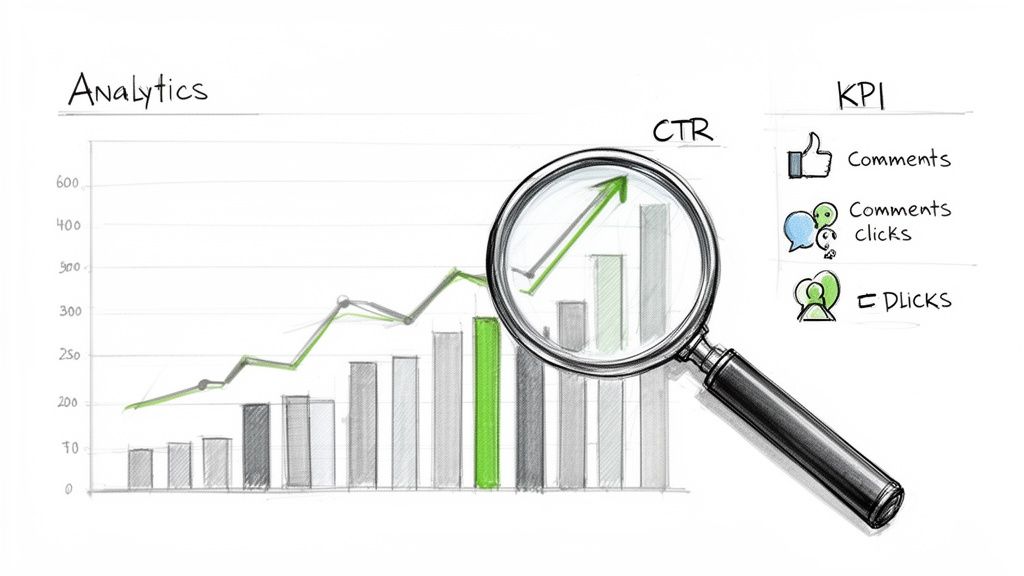
This process turns your content creation into a science. One of the core b2b content marketing best practices is moving beyond guesswork. You must use hard numbers to guide decisions. For instance, analyzing your LinkedIn posts might reveal that question based hooks get three times more comments than statement hooks. That single insight can reshape your entire content calendar. It ensures you create posts engineered for interaction, not just impressions.
Why This Matters
Relying on analytics stops you from wasting time and budget on content that does not work. It provides clear, objective feedback on your efforts. It connects content performance to actual business goals like lead generation and sales. When you know which specific CTA, format, or topic drives conversions, you can double down on those tactics. You can stop the spray and pray approach for good.
How to Implement This
- Define Your KPIs. Before publishing, decide what success looks like. Key metrics include engagement rate, click through rate (CTR) on links, lead volume from content, and content assisted conversions.
- Set Up Tracking. Use UTM parameters on all links shared in your content. This tracks traffic sources accurately in your analytics platform. It shows you exactly how much traffic and how many leads your content generates.
- Use Specialized Tools. Leverage platforms like ViralBrain to get deeper insights into what’s performing. These tools can analyze performance by hook type, content structure, or pillar, connecting patterns to outcomes.
- Review Weekly. Schedule a weekly review of your content analytics. Look for high performing outliers and underperforming posts to identify trends quickly.
- Segment Your Data. Analyze performance by content pillar, format, and distribution channel. This helps you understand what your audience wants to see in different contexts.
4. Authentic Personal Branding and Voice Development
Authentic personal branding is building a distinct, genuine voice that connects with your target audience. In B2B, people buy from people they trust. This approach moves beyond corporate jargon. It focuses on sharing real human perspectives. It’s about building authority by showing your work, your lessons, and your unique point of view.
This method is one of the most powerful B2B content marketing best practices because trust is your biggest asset. Founders who share their building journey or sales professionals who discuss real deal learnings build credibility that a faceless brand cannot. It separates you from the noise. It makes your content memorable and relatable. People follow you for how you think, not just what you sell.
Why This Matters
Corporate content often feels sterile and untrustworthy. An authentic personal voice cuts through this. It creates a direct line of communication with your audience. Prospects feel like they know the person behind the business. This shortens sales cycles and builds a loyal community. This is how you attract high intent leads who are already sold on your expertise before the first call.
How to Implement This
- Define Your Core Angle. Identify your unique perspective. Are you the contrarian, the industry insider, or the first principles thinker? Document three core values or beliefs that guide your professional outlook. This is the foundation of your voice.
- Share Wins and Losses. Document your journey, not just the highlights. Post about a project that failed and what you learned. This transparency builds more trust than a feed of constant wins.
- Find Your Content Pillars. Choose 2 or 3 topics where you have deep expertise and a strong opinion. All your content should relate back to these pillars, reinforcing your authority in that specific niche.
- Engage Authentically. Spend 15 minutes a day leaving thoughtful comments on other people's posts in your industry. Don’t just write "great post." Add your own perspective or ask a relevant question to build genuine connections.
- Be Consistent. Post 3 to 5 times per week for at least six months. Building a personal brand is a long game. Traction comes from showing up consistently with a clear message over time, not from one viral post.
5. Content Repurposing Across Multiple Channels
Creating great content is hard work, so don't just use it once. Content repurposing takes your best material and adapts it for different platforms. This means a single high value idea can become a LinkedIn post, a YouTube video script, an email newsletter, and a thread on Reddit. It's about maximizing your return on effort.
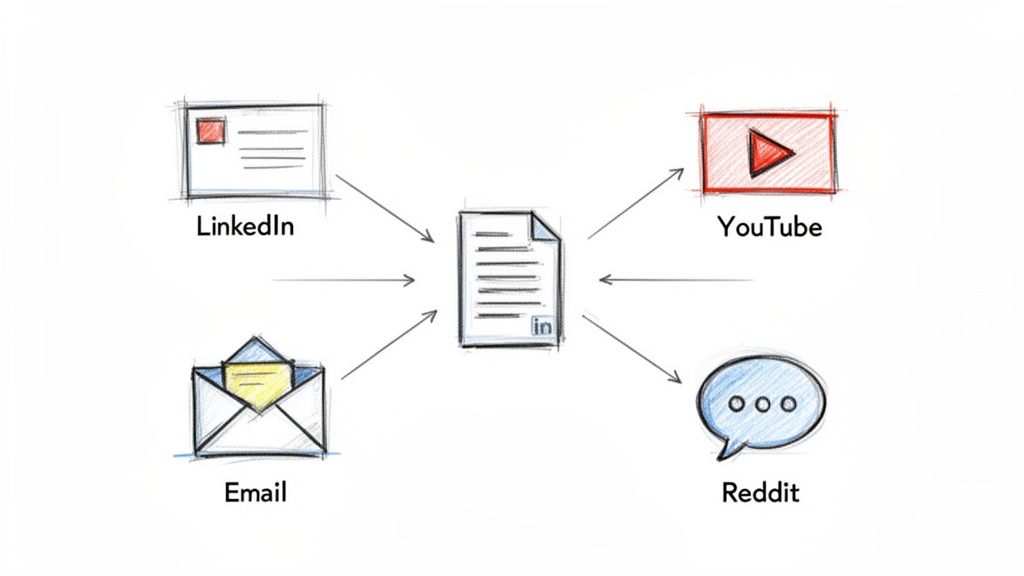
This approach is one of the most efficient b2b content marketing best practices because it multiplies your reach without multiplying your workload. Instead of constantly brainstorming new topics, you focus on distributing proven ideas to new audiences in formats they prefer. A successful blog post can be broken down into five different LinkedIn posts, each highlighting a unique angle or key takeaway.
Why This Matters
Your audience does not live on a single platform. A buyer might discover your brand on LinkedIn, get nurtured through your email list, and see your expertise reinforced on YouTube. Repurposing ensures your message is consistent and present wherever your prospects are. It builds brand recognition and authority across the entire customer journey.
How to Implement This
- Identify Your Winners. Start with your top performing content. Look at your blog, LinkedIn posts, or videos with the highest engagement. These are proven concepts worth repurposing.
- Create a Repurposing Matrix. Map out how a single content pillar can be adapted. For example, a webinar can become a blog post, a series of LinkedIn carousels, short video clips, and a customer email.
- Adapt for Each Channel. Do not just copy and paste. Rewrite the hook for each platform. Convert a long form article into a visual carousel for LinkedIn. Turn a listicle into a script for a short form video.
- Use AI for Assistance. Tools like ViralBrain can help translate content between formats, like turning a Reddit discussion into a structured LinkedIn post. This speeds up the adaptation process.
- Track Cross Channel Performance. Monitor how repurposed content performs on each platform. You might find that a concept that did well on your blog performs even better as a LinkedIn carousel. Use this data to refine your distribution strategy.
6. Strategic Hook Development and Copy Psychology
The first line of your content determines if the rest gets read. Strategic hook development is crafting opening lines that stop the scroll by using proven psychological triggers. It’s not about clickbait. It’s about earning your audience's attention in a crowded feed. You use curiosity, specificity, or pattern interrupts to compel a reader to engage.
This discipline is one of the most critical B2B content marketing best practices because a brilliant post with a weak hook is invisible. Your opening line is the gatekeeper to your entire message. For example, a hook like "I fired my best engineer after 3 months, here's why" creates an immediate curiosity gap. It pulls the reader in far more effectively than "The importance of team alignment."
Why This Matters
Your content competes with thousands of other posts for a few seconds of attention. A powerful hook acts as a filter. It attracts your ideal audience while repelling those who aren't a fit. Mastering this skill gives your content a fighting chance on platforms like LinkedIn, where the algorithm heavily weights initial engagement. It turns passive scrollers into active readers.
How to Implement This
- Analyze Winning Hooks. Use a tool like ViralBrain’s hook library or manually collect 15 to 20 top performing posts in your niche. Categorize their opening lines by type, such as curiosity, controversy, or specificity.
- Lead with the Punchline. Do not waste time on a long introduction. Put your most compelling, surprising, or valuable piece of information right in the first sentence.
- Use Specific Numbers. Vague claims are weak. Instead of "We grew our sales," write "Our CAC dropped from $2,400 to $340 in 6 months." Concrete data builds instant credibility and captures attention.
- Create a Curiosity Gap. Frame a hook that poses a question or creates a mystery the reader needs to solve. For example, "What if everything you know about pricing is backwards?" makes the reader want to know the answer.
- Test and Iterate. Do not stick to one hook type. Experiment with different psychological triggers each week. Track how engagement changes and identify which styles your audience responds to most.
Automate your LinkedIn for 30 days
7. Consistent Publishing Cadence and Content Calendar Planning
Most B2B content fails because of impatience, not poor quality. A consistent publishing cadence is maintaining a regular, predictable posting schedule. This builds audience expectations and signals to platform algorithms that you are a reliable source. Success in B2B content comes from consistency over virality. Showing up regularly establishes authority and keeps your audience engaged.
This approach is one of the most fundamental b2b content marketing best practices because it creates momentum. Sporadic posts get lost in the noise. A steady drumbeat of content builds brand recognition and trust. For example, top LinkedIn creators who post 3 to 5 times per week become familiar faces in their audience's feed. This makes them the go to experts when a need arises.
Why This Matters
Algorithms on platforms like LinkedIn reward consistent activity. Regular posting increases your visibility and keeps your profile active. This helps you stay top of mind with your network. It trains your audience to expect content from you. This turns casual followers into a loyal community. This predictability is a key differentiator in a crowded B2B space.
How to Implement This
- Set a Realistic Schedule. Start with a manageable cadence, like 2 to 3 posts per week. Consistency is more important than volume. You can increase the frequency once the habit is established.
- Build a Content Calendar. Plan your content at least one month ahead. Map out key themes, pillar topics, and post formats. Align your calendar with industry events or seasonal trends to maintain relevance.
- Batch Your Content Creation. Dedicate a specific block of time each week to write and prepare multiple posts at once. This reduces the daily pressure of creating content from scratch. It ensures you never miss a scheduled post.
- Schedule in Advance. Use tools to schedule your posts ahead of time. This helps you maintain your cadence even during busy periods. It ensures your content goes live at optimal times for engagement.
- Track and Stay Accountable. Monitor your consistency alongside engagement metrics. Commit to your schedule for at least three to six months before evaluating its full impact. Progress is often slow at first.
8. Audience Engagement and Community Building
Content is a conversation, not a monologue. Audience engagement moves you from broadcasting one way messages to building real relationships. B2B success on platforms like LinkedIn comes from creating a responsive community of followers who trust, amplify, and even defend your work. You are not just pushing content. You are creating a space for interaction.
This approach turns passive readers into active participants. One of the most critical B2B content marketing best practices is dedicating time to the comments section and direct messages. When you reply thoughtfully and consistently, you signal that you value your audience's input. This builds loyalty. It encourages the algorithm to show your content to more people. Top creators treat the first two hours after posting as a critical engagement window.
Why This Matters
An engaged audience provides invaluable feedback and social proof. Their comments and shares boost your content's visibility, giving it a longer lifespan and wider reach. More importantly, building a community creates a moat around your brand. Competitors can copy your product, but they cannot easily replicate the trust and loyalty you've built with your audience. This community becomes your best marketing channel.
How to Implement This
- Commit to the First Hour. Block off 60 minutes after you post on any platform. Use this time to reply to every single comment with a thoughtful response, not just a "thanks."
- Prompt a Response. End your posts with a clear question or a prompt that invites discussion. Low friction questions like "Agree or disagree?" or "What did I miss?" work well.
- Engage Proactively. Spend 15 minutes each day leaving meaningful comments on posts from others in your niche. This puts you in front of new, relevant audiences.
- Identify and Nurture Superfans. Use analytics to find your most frequent commenters. Acknowledge them publicly or reach out privately to thank them. Make them feel seen.
- Feature Your Audience. Turn audience questions or insightful comments into new content. Credit the person who inspired it. This shows you are listening and rewards participation.
9. Thought Leadership Through Original Insights and Frameworks
Anyone can summarize an industry article. True thought leadership is about creating the original ideas that others cite. This involves developing proprietary frameworks, sharing unique data, or offering contrarian viewpoints that challenge the status quo. Instead of just participating in the conversation, you define its terms.
This practice moves you from a commodity content creator to a genuine authority. For example, instead of writing "5 tips for cold email," you could create "The 3 Part Reply Rate Framework" based on your own tested data. This is one of the most powerful B2B content marketing best practices because it builds a defensible brand and intellectual property that competitors cannot easily replicate.
Why This Matters
Original insights give your audience a reason to follow you specifically, not just consume content about your topic. When you create a memorable framework or publish unique research, your work gets shared, cited, and credited back to you. This builds immense brand equity and generates high quality inbound interest from prospects who already see you as an expert. It's the difference between being a voice in the crowd and being the person with the microphone.
How to Implement This
- Mine Your Expertise. Document your unique processes. What repeatable system do you use to get results for clients or your company? This is the raw material for a framework.
- Analyze Your Data. Aggregate proprietary data from your customers, platform, or sales process. Turn these internal findings into public insights that no one else has.
- Package Your Idea. Give your framework a memorable name. Create a simple visual model to explain it. People remember and share concepts they can easily visualize and name.
- Stress Test Your Take. Before publishing a strong contrarian view, validate it with data or firsthand experience. A contrarian take without evidence is just an opinion. One with proof is thought leadership.
- Distribute and Reinforce. Share your framework or insight across all channels. Reference it in podcasts, webinars, and future content to build recognition and associate the idea with your brand. The goal is to make your framework part of the industry's vocabulary.
10. AI Powered Content Generation and Smart Optimization
Using artificial intelligence is no longer optional. It is a standard workflow for efficient content teams. AI tools accelerate content creation by handling the heavy lifting of ideation, drafting, and pattern analysis. This allows you to focus on strategy and adding your unique human perspective, which AI cannot replicate. It’s a core component of modern B2B content marketing best practices because it introduces speed and data into a traditionally creative process.
For example, platforms like ViralBrain can analyze top performing posts and generate new drafts based on those proven structures. Instead of starting from scratch, you begin with a framework known to work. This makes content production faster and more predictable. It frees up time to engage with your audience and build relationships.
Why This Matters
AI removes the bottleneck of the blank page. It provides a structured starting point. This is critical for maintaining content velocity without sacrificing quality. It turns content creation from a purely artistic endeavor into a systematic process. By automating repetitive tasks like drafting initial outlines or suggesting different hooks, AI lets you operate more like a content strategist and less like a line writer.
How to Implement This
- Define AI's Role. Decide where AI fits in your workflow. Use it for first drafts, brainstorming hooks, repurposing content, or generating visual assets. Never use it to replace final editing or strategic oversight.
- Provide Specific Context. Give AI tools clear instructions. Include your target audience, desired tone, key takeaways, and specific data points. The quality of your prompt determines the quality of the output.
- Use Pattern Translation. Leverage tools like ViralBrain to analyze a high performing post and generate a new draft using its underlying structure. This combines the reverse engineering method with AI powered speed.
- Edit for Authenticity. Always review and revise AI generated content. Your job is to inject your personal voice, stories, and unique insights. The AI draft is the skeleton. You provide the substance.
- Explore AI Features. Test different AI capabilities. Use AI image generators for custom visuals. Find trending topics and angles for timely content. Generate variations of a post to A/B test different hooks or CTAs.
B2B Content Marketing Best Practices — 10-Point Comparison
| Strategy | Implementation complexity | Resource requirements | Expected outcomes | Ideal use cases | Key advantages |
|---|---|---|---|---|---|
| Reverse-Engineer High-Performing Content Patterns | Medium — requires systematic analysis | Moderate — access to high-performing posts, analytics, time | Faster creation of proven formats, higher engagement | Creators optimizing for niche/platform fit | Data-driven templates, reduced guesswork |
| Account-Based Marketing (ABM) Content Alignment | High — deep personalization and coordination | High — account research, CRM/data integration, bespoke content | Higher conversion and ROI for target accounts | B2B sales targeting high-value enterprise accounts | Highly personalized messaging, stronger sales alignment |
| Data-Driven Analytics and Performance Measurement | Medium–High — tooling + analysis skills | Moderate–High — analytics platforms, expertise, tracking setup | Continuous improvement, validated ROI, reduced waste | Teams measuring impact and refining strategy | Actionable insights, performance attribution |
| Authentic Personal Branding and Voice Development | Medium — introspection and consistent practice | Low–Moderate — time, coaching, content refinement | Stronger trust, audience loyalty, differentiated presence | Founders, solopreneurs, individual thought leaders | Authentic connection, durable audience affinity |
| Content Repurposing Across Multiple Channels | Medium — adaptation and format work | Moderate — editing resources, scheduling tools, format skills | Increased reach and content ROI, multi-channel presence | Teams maximizing mileage from flagship content | Efficiency, broader audience reach |
| Strategic Hook Development and Copy Psychology | Low–Medium — craft and test hooks | Low — copywriting skill, simple A/B tests | Higher click-through and initial engagement | Short-form social posts and ad creatives | Stop-the-scroll impact, repeatable frameworks |
| Consistent Publishing Cadence and Content Calendar Planning | Low–Medium — process and discipline | Moderate — scheduling tools, content batching time | Predictable growth, better algorithm distribution | Teams building long-term presence and habits | Reliability, reduced last-minute pressure |
| Audience Engagement and Community Building | Medium — ongoing two-way effort | High — time for moderation, responses, community management | Loyal advocates, increased organic reach and insights | Brands seeking organic amplification and retention | Relationship-driven growth, feedback loop |
| Thought Leadership Through Original Insights and Frameworks | High — original research and validation | High — expertise, research time, case studies | Long-term authority, media and partnership opportunities | Experts aiming for top-tier credibility and influence | Defensible differentiation, sustained relevance |
| AI-Powered Content Generation and Smart Optimization | Low–Medium — tool setup and prompt design | Moderate — AI tools, data, human editors for curation | Faster ideation and scalable drafts, consistency at scale | Small teams needing volume and idea generation | Speed, pattern-based suggestions, consistency |
Stop Talking. Start Doing.
You now have a detailed blueprint. This article outlined ten specific B2B content marketing best practices. We covered everything from reverse engineering viral patterns to aligning content for Account Based Marketing. We discussed data, personal branding, repurposing, and using AI to sharpen your workflows. This is more than a list of ideas. It is a system for creating content that drives actual business results, not just vanity metrics.
But knowledge alone doesn't move the needle. The gap between knowing what to do and actually doing it is where most marketers fail. They read articles like this, feel inspired for an hour, and then go back to their old habits. They continue creating generic content, guessing what their audience wants, and wondering why their pipeline is empty.
The Real Work Starts Now
The most successful B2B marketers are not necessarily the most creative. They are the most disciplined. They build systems. They execute with consistency. They understand that a single well researched, data backed insight is worth more than a hundred generic blog posts. They treat content not as a creative outlet but as a strategic asset designed to attract, engage, and convert specific accounts.
Your next step is not to implement all ten practices at once. That's a recipe for burnout. The goal is to build momentum. Pick one single practice from this list and commit to implementing it this week.
- If you struggle with ideas, spend an hour reverse engineering the top five performing posts from a leader in your industry. Document the patterns, hooks, and formats they use.
- If your engagement is low, focus on audience building. Spend 30 minutes every day leaving thoughtful, insightful comments on posts from your ideal customers. No generic "great post" comments. Add real value.
- If your content feels disconnected from sales, select one target account. Create a single piece of content that directly addresses a pain point for a key decision maker at that company.
This is how you build a powerful content engine, one gear at a time. Each small, deliberate action strengthens your system. Mastering these B2B content marketing best practices is about replacing guesswork with process. It's about moving from random acts of content to a calculated, repeatable strategy that generates predictable outcomes. The difference between the brands that dominate their niche and those that fade into the background is execution. It is the consistent application of proven principles.
Your strategy, your personal brand, and your sales pipeline depend on what you do next. Stop gathering information and start applying it. The tools are here. The frameworks are clear. The only variable left is you.
Ready to stop guessing and start executing with a data driven system? ViralBrain helps you identify high performing content patterns and uses AI to help you create and repurpose content that gets results. See how it works at ViralBrain.
Powered by Outrank app
Automate your LinkedIn for 30 days
ViralBrain plans, writes, and schedules your LinkedIn content, using official LinkedIn APIs so your account stays safe.
- Official LinkedIn APIs, no risk of ban
- You approve every post before it goes live
- Cancel anytime
Keep reading

How to Post a Carousel on LinkedIn the Right Way
Learn how to post a carousel on LinkedIn with this guide. Get direct tips on PDF creation, uploading, and writing captions that get noticed in 2026.

How to Measure Social Media Success: Drive B2B Results
Learn how to measure social media success. Get a no-BS framework to tie metrics to real B2B business goals & drive results, not just likes. For B2B marketers.

What Is Engagement Rate and How to Actually Improve It
Everyone talks about it, but what is engagement rate? Learn the real formula, what a good rate is, and get honest tips to increase it.